


Williams Grand Prix Engineering Limited, competing in 2026 as Atlassian Williams F1 Team, is a British Formula One team and constructor. It was founded by Frank Williams and Patrick Head. The team was formed in 1977 after Frank Williams's earlier unsuccessful F1 operation, Frank Williams Racing Cars (which later became Wolf–Williams Racing in 1976). The team is based in Grove, Oxfordshire, on a 24 ha site.

Frank Williams founded Williams in 1977 after his previous team, Frank Williams Racing Cars, failed to achieve the success he desired. Despite the promise of a new owner, Canadian millionaire Walter Wolf, and the team's rebranding as Wolf–Williams Racing in 1976, the cars still were not competitive. Eventually, Williams left the rechristened Walter Wolf Racing and moved to Didcot, Oxfordshire to rebuild his team as Williams Grand Prix Engineering. Frank recruited Patrick Head to work for the team, creating the Williams–Head partnership.
The team's first race was the 1977 Spanish Grand Prix, where the new team ran a March chassis for Patrick Nève. Williams started manufacturing its own cars the following year.

ford-cosworth engines (1977–1983)
fw06

1978-1979


The Williams FW06 was the first car produced by the combination of Frank Williams and Patrick Head for their Williams Grand Prix Engineering Formula One team. As was the standard arrangement for the many small British garagiste teams, the car was powered by the Cosworth DFV 3.0 litre V8 engine.
After a season running a customer March chassis in 1977 with limited results, just as in 1975 Frank Williams decided on a completely independent car for the new season. The FW06 was Patrick Head's first full F1 design. Inspired by the shortcomings of the March and his quick fix improvements done to the FW04 he took no chances and penned a simple and light car that handled well. It had a conventional design but was as tightly packaged as possible. As was normal at the time, some parts for the car were not bespoke items, but bought off the shelf. For example the radiators were sourced from a Volkswagen Golf. However reliability was an issue to begin with.
Williams finished ninth in the constructors' championship in 1978, matching the best performance by the team in its first incarnation achieved in 1975.

Alan Jones
Clay Regazzoni
fw07

1979-1982

fw07b/c

fw07d
The Williams FW07 was a ground effect Formula One racing car designed by Patrick Head, Frank Dernie, and Neil Oatley for the 1979 Formula One season. Developed versions of the car were further used in the 1980, 1981 and 1982 seasons. It was the first car that won a championship for Williams Racing when it won both the Drivers' and Constructors' in 1980.
It was closely based on the Lotus 79, even being developed in the same wind tunnel at Imperial College London. Some observers, among them Lotus aerodynamicist Peter Wright felt the FW07 was little more than a re-engineered Lotus 79, just having a stiffer chassis. The car was small and simple and extremely light, powered by the ubiquitous Ford Cosworth DFV.
The FW07 became FW07B in 1980, and Alan Jones, now with Carlos Reutemann, developed the FW07 further, working especially on setup and suspension strengthening. The car was now so efficient in creating downforce from its ground effect design that the front wings were unnecessary.
The FW07B evolved into the FW07C for 1981, and further work was done to the suspension, especially after the FIA banned the moveable skirts needed for effective ground effect.
The FW07D was an experimental six-wheeled test car (four driven rear wheels, and two undriven front wheels) tested by Alan Jones on a single occasion at the Donington Park circuit. With the FW07D proving the concept, its unique design was incorporated into the six-wheeled FW08B.

Alan Jones,
Clay Regazzoni,
Carlos Reutemann,
Desiré Wilson,
Kevin Cogan,
Rupert Keegan,
Emilio de Villota
Keke Rosberg,
Mario Andretti
fw08


fw08b
1982-1983
The Williams FW08 was a Formula One car designed by Frank Dernie, which debuted at the 1982 Belgian Grand Prix held at the Zolder circuit. An evolution of the FW07 that it replaced, the car was used by Finnish driver Keke Rosberg to win the 1982 World Drivers' Championship.
The FW08 was a development of the Williams FW07 but featured a shorter wheelbase and much stiffer chassis to cope with the higher g-loading that the minimum ride height regulations introduced in 1981 demanded. While McLaren and others pioneered the use of carbon fibre chassis, Patrick Head stuck to aluminium honeycomb for the new car.
The FW08 was updated for the 1983 Formula One season to become the FW08C. Under new regulations all ground effect was out and flat bottom cars were in. The FW08C was retired after the 1983 European Grand Prix at Brands Hatch.

Derek Daly
Keke Rosberg
Jacques Laffite
Jonathan Palmer

honda engines (1983–1987)
fw09

1983-1984


fw09b
The Williams FW09 was a Formula One car designed by Frank Dernie and Neil Oatley. It was the first Williams chassis to be powered by a turbocharged Honda V6 engine, for which Frank Williams negotiated a deal towards the end of 1982 and the beginning of 1983.
Honda was already supplying the small Spirit team for 1983, but was enthusiastic about supplying Williams, who not only had the reigning World Champion Keke Rosberg as lead driver, but were one of the leading constructors in Formula One who had previously won both the Drivers' and Constructors titles on two occasions, a résumé that neither Spirit nor their young Swedish driver Stefan Johansson could match. Williams had agreed to help develop the engine under Grand Prix race conditions. Spirit folded shortly afterwards.
The chassis was built from aluminium with carbon fibre used at stress points and was based on the reasonably successful 1983 Williams FW08C. The engine cover had to be redesigned as the car was powered by a smaller, but more powerful (850 bhp ) V6 engine rather than the 530 bhp Cosworth V8 that powered the FW08C.
A modified version of the car dubbed the FW09B was introduced in Round 10 of the season at Brands Hatch for the 1984 British Grand Prix. The car featured 'coke bottle' type sidepods pioneered by McLaren. The FW09 was retired following the 1984 season. It was replaced in 1985 by the all carbon fibre and more successful Williams FW10.

Jacques Laffite
Keke Rosberg
fw10


1985
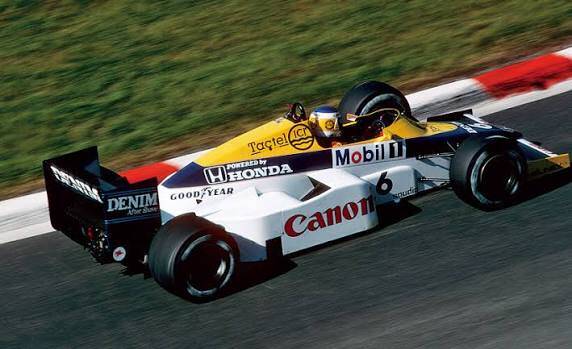
The Williams FW10 is a Formula One car designed by Frank Dernie for use by the Williams team in the 1985 Formula One World Championship. It was initially powered by Honda's 1983 and 1984 V6 engine, the RA163E, before the 1985 spec engine, the RA165E was introduced at Detroit. The turbo engines in the FW10's were driven by Briton Nigel Mansell and Finland's 1982 World Champion Keke Rosberg.
Technical director Patrick Head decided to make the FW10 an all-new car- making the monocoque entirely from much stiffer carbon composite, rather than the aluminium honeycomb construction of previous years - the first Williams F1 car ever to be made predominantly of this material.
The Honda engine proved to be extremely powerful, with Head claiming around 1000–1250 bhp in qualifying, and up to 900 bhp in race configuration.
An upgraded version of the car, dubbed the FW10B, was introduced late in the season, which enabled the team to win the final three races of the year. Williams ended in third place in the Constructors' Championship.

Nigel Mansell
Keke Rosberg
fw11
1986-1987


fw11b
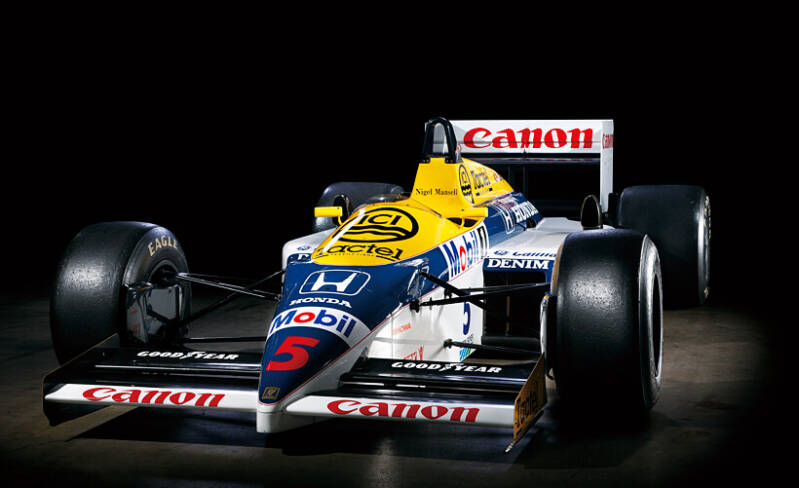
The Williams FW11 is a Formula One car designed by Frank Dernie for the Williams team. The original FW11 was used in the 1986 Formula One World Championship while an updated version, the FW11B, was used in the 1987 Championship. In both years, the car was powered by a Honda 1.5-litre turbocharged V6 engine, and driven by Briton Nigel Mansell and Brazilian Nelson Piquet.
The original FW11 won nine races of the 1986 Championship, with both Mansell and Piquet challenging for the Drivers' title before dramatically losing out to Alain Prost in his McLaren in the final race of the season in Australia. The FW11B won nine races of the 1987 Championship, and Piquet won the Drivers' title despite winning fewer races than Mansell. In both years, Williams comfortably won the Constructors' title.
The FW11B was the last Williams car with a turbocharged engine until the FW36 in 2014.
The FW11 was not a technical showcase by any means, but solid engineering, exceptional aerodynamics, the engine's outright power and superior fuel economy (even better than the TAG-Porsche engines used by McLaren), and Piquet and Mansell helped the car take 18 wins, 16 pole positions and 278 points over two seasons of racing.

Nigel Mansell
Nelson Piquet
Riccardo Patrese

judd engines (1988)
fw12


1988
The Williams FW12 was a Formula One racing car used by the Williams team for the 1988 season. An updated version, the FW12C, was used for 12 of the 16 races of the 1989 season. The FW12 was Williams's first naturally aspirated car since the FW08 and FW08C used in the 1982 and 1983 season.
In its original guise the FW12 featured a Judd CV 3.5 V8. In 1988 the car was unsuccessful for Williams after two years of domination with the FW12's predecessor, the FW11 and FW11B, through use of the V6 Honda turbo engine.
The Judd V8, in its first year of F1 competition, was only developing some 600 bhp (447 kW; 608 PS), which resulted in the car being sluggish, and accounted for its lack of straight line speed.
After winning the Formula One Constructors' Championships in both 1986 and 1987 and the Drivers' Championship with Piquet in 1987, Williams dropped to seventh in the standings in 1988, scoring only 20 points.

Nigel Mansell
Martin Brundle
Jean-Louis Schlesser
Thierry Boutsen
Riccardo Patrese

renault engines (1989–1997)
fw12c


1989
During the 1988 season, Williams worked with their new engine supplier Renault to develop the RS1 3.5 V10 engine. Williams designed a test mule for the engine named FW12B, very much like the Judd-powered car Williams used for the 1988 season except the mule was designed to accommodate the extra length of a V10 engine and not a V8 like the race cars used. For the 1989 season the Renault V10 engine was used. This was the first Renault powered Williams F1 car and also saw Renault's re-entry into Formula One after stopping the supply of their turbocharged engines following the 1986 season.
The updated and revised FW12C showed its potential in the season opening Brazilian Grand Prix with Patrese qualifying 2nd and leading the race from the start.
By the time of the Italian Grand Prix at Monza, it had become obvious that while the Renault V10 was continuing to get better and better, the limit of the FW12C itself had been reached, with the team starting to fall behind both McLaren, with their Honda V10 engine, and Ferrari with their V12, while also being consistently challenged by Benetton which had the lightest and most fuel efficient of the top running engines, the Cosworth built and developed Ford V8 of which they had exclusive use.
Overall, the Judd and Renault powered Williams FW12 and FW12C cars scored 1 win, 1 pole position, 2 fastest laps and 9 podium finishes in their 29 races.

Thierry Boutsen
Riccardo Patrese
fw13


1989-1990
The Williams FW13 was a Formula One racing car used by the Williams team for the last four races of the 1989 Formula One season and, when updated as the FW13B, for the whole of the 1990 season.
The FW13 was designed by Argentine Enrique Scalabroni and featured a distinctive oval-shaped air intake, as well as the Renault RS1 3.5-litre V10 engine, Renault's first non-turbo Formula One engine which was rated at approximately 650 bhp.
For the 1990 season, the car was updated, becoming the FW13B. It featured revised sidepods and suspension upgrades, as well as Renault's RS2 3.5-litre V10 engine. The FW13B proved fast and reliable. The general feeling around the F1 paddock was that the FW13B was potentially the fastest car on the grid in 1990 and that the only thing holding it back from consistently challenging McLaren, Ferrari and Benetton more often was Williams not having a true number 1 driver.

Thierry Boutsen
Riccardo Patrese
fw14


1991-1992
The Williams FW14 is a Formula One car designed by Adrian Newey, used by the Williams team during the 1991 and 1992 Formula One seasons.
The FW14 was a completely new design, except for the engine, and its promising performance was enough to convince Nigel Mansell to rejoin Williams from Ferrari and delay his retirement plans.
Powered by a 3.5-litre V10 Renault engine with its design and development led by Bernard Dudot, the car is considered one of the most technologically sophisticated to have competed in Formula One. By 1992 the FW14B featured semi-automatic transmission, active suspension, traction control and, for a brief period, anti-lock brakes. With the aerodynamics as designed by Newey and the active suspension invented by designer/aerodynamicist Frank Dernie, the car was far ahead of its competitors, such as the McLaren MP4/7A, Ferrari F92A or Lotus 107, and it made for a strong package. The FW14B was so successful that its successor (the initial FW15), which was available mid-season in 1992, was never used.
Both versions of the FW14 won a combined 17 Grands Prix, 21 pole positions, and 289 points before being replaced with the FW15C for 1993.

Nigel Mansell
Riccardo Patrese
fw15

1993
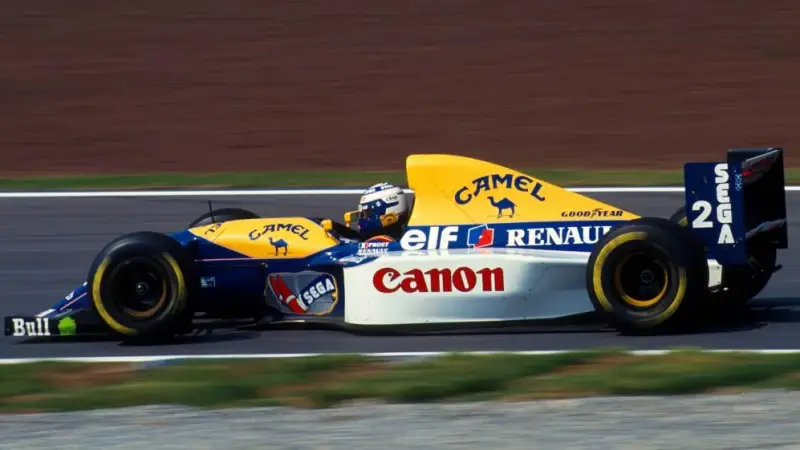
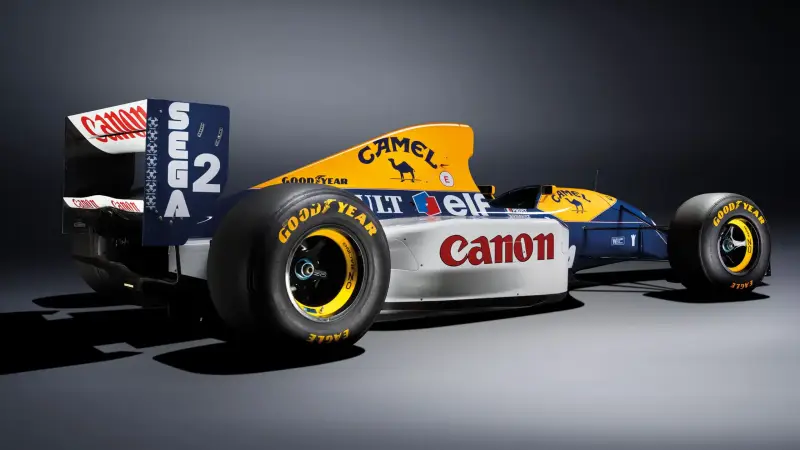
The Williams FW15C is a Formula One car designed by Adrian Newey and built by Williams Grand Prix Engineering for use in the 1993 Formula One World Championship.
As the car that won both the Drivers' and Constructors' Championships in the last season before the FIA banned electronic driver aids, the FW15C (along with its racing predecessor FW14B) was, in 2005, considered to be one of the most technologically sophisticated Formula One cars of all time, incorporating anti-lock brakes, traction control, active suspension, and a semi-automatic and fully-automatic gearbox.
The car was available in August 1992, but given the success and improved reliability of the FW14B, prudence dictated that the new car did not make its debut until the following year's season-opener in South Africa.
Renault went into their fifth year with Williams and again proved to be the class of the field, with their RS5 67° V10 engine producing at least 760–780 bhp, at least 80–100 hp more than Benetton and McLaren's Ford V8.

Damon Hill
Alain Prost
fw16
1994

fw16b

fw16c
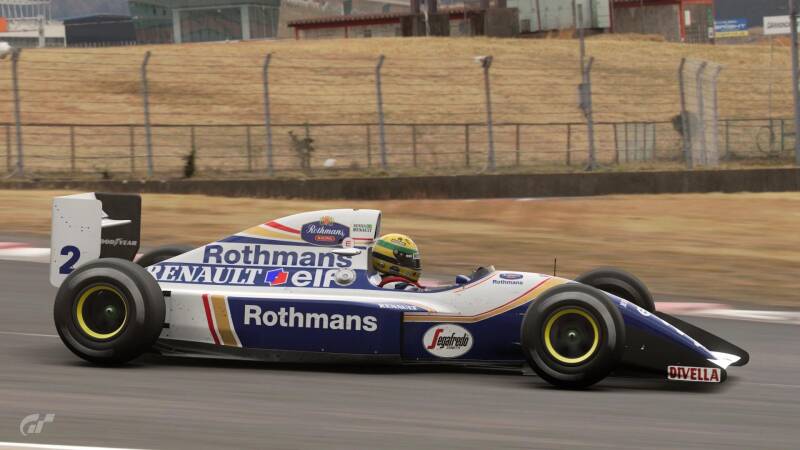
The Williams FW16 is a Formula One car designed by Adrian Newey for the British Williams team. The FW16 competed in the 1994 Formula One season, with Williams winning the Constructor's Championship, and British driver Damon Hill finishing runner-up in the Drivers' Championship. It is notable as the last car to be driven by three-time world champion Ayrton Senna before his fatal accident during the San Marino Grand Prix. The car was designed around the major regulation changes that the FIA had introduced in the off-season, banning the various electronic devices that had been used by the front running cars during the preceding two seasons.
The FW16 was a passive evolution of the FW15C that had preceded it. The car was powered by a 67-degree V10 engine by Renault Sport termed the RS6 specification, delivering approximately 830 hp.
The heavily revised B-spec car was labelled the FW16B from the German race onwards and was much improved from the original car. It was developed by Hill, but the Benetton B194 and Michael Schumacher were dominant in the first half of the season. This version of the car proved to be very fast and competitive. Hill battled Schumacher for the championship but lost by a single point in the final race in Australia, Nigel Mansell won that race, securing the Constructors' Championship for Williams.
The FW16C was a test car fitted with a 3-litre engine per the 1995 F1 regulations. It was used between 20 and 22 December in 1994 at Paul Ricard by Damon Hill, Jean-Christophe Boullion, and Emmanuel Collard.

Damon Hill
Ayrton Senna
Nigel Mansell
David Coulthard
fw17

1995
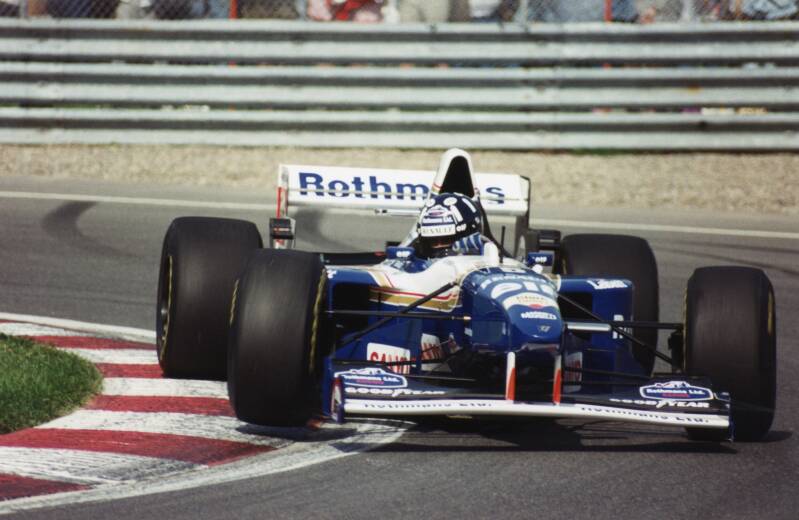
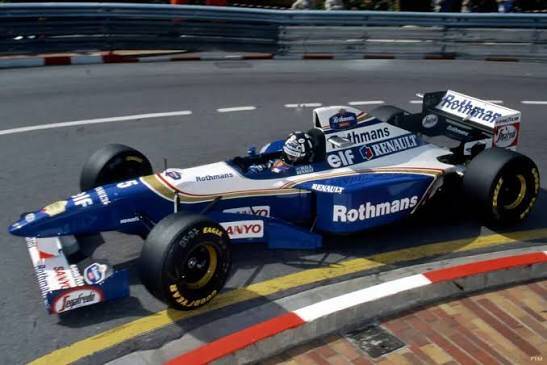
The Williams FW17 is a Formula One racing car designed by Adrian Newey, with which the Williams team competed in the 1995 Formula One World Championship. It was driven by Damon Hill, who was in his third year with the team, and David Coulthard, who was in his first full season after a part-time role in 1994.
With what was regarded as the best chassis and aerodynamics in the field combined with the best engine, the 1995 season was disappointing for the team, who were beaten to both titles by Michael Schumacher and Benetton. Although the FW17 was superior in qualifying trim, taking 12 pole positions, Schumacher was usually more competitive on race day. The reliability of the FW17 was also inferior to the Benetton's, with mechanical issues costing both drivers victories.
The FW17 is notable for being the first Williams car to race with a raised nose, and was the first 'clean sheet' design from the team since 1991.
The team eventually finished second in the Constructors' Championship, with 112 points.

Damon Hill
David Coulthard
fw18
1996
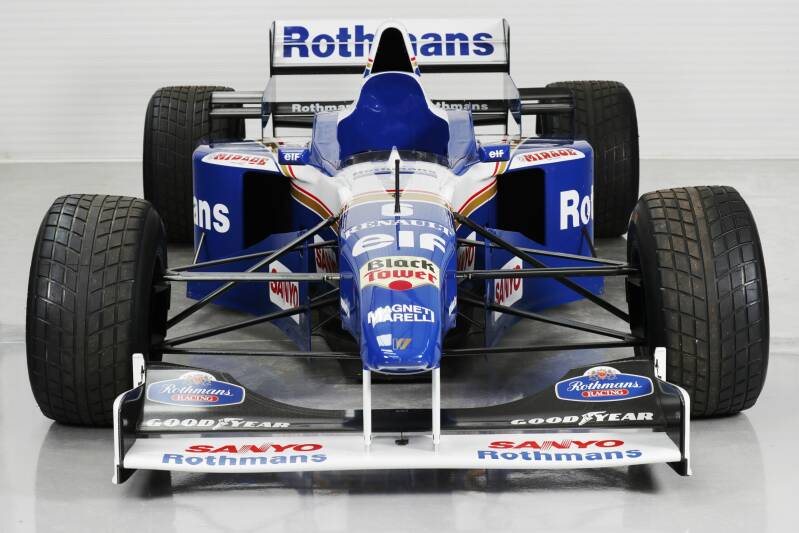
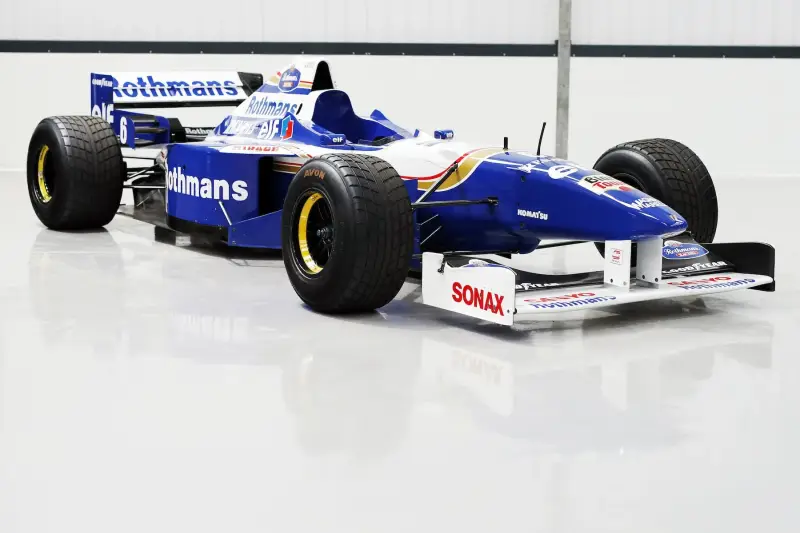
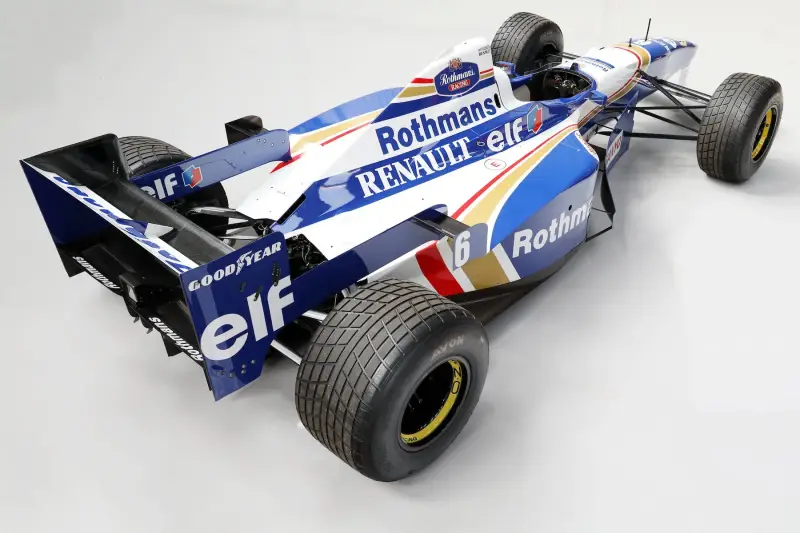
The Williams FW18 is a Formula One car used by the Williams F1 team to compete in the 1996 Formula One season. Designed by Adrian Newey and Patrick Head, it is one of the most successful F1 designs of all time.
The FW18s were driven by Damon Hill and Jacques Villeneuve. The car proved to be the most successful of the entire 1996 field; winning 12 of the 16 races during the season, with Hill winning 8 and Villeneuve winning 4. The FW18 was also the car in which Damon Hill won the Drivers' Championship title, making him the first son of a World Champion to become a Champion himself. The FW18 was also the second of three cars during the 1990s to enjoy a 1–2 finish on its Grand Prix debut, the first being the Williams FW14B at the 1992 South African Grand Prix and the third being the McLaren MP4/13 at the 1998 Australian Grand Prix.
Powered by a 3.0 litre Renault V10 engine, the FW18 drew heavily on the 1995 Williams car, the FW17, but featured new driver protection as regulated by the FIA for the new season.
The FW18 scored 175 points in its time and was one of the most successful Formula One cars of the 1990s.

Damon Hill
Jacques Villeneuve
fw19


1997
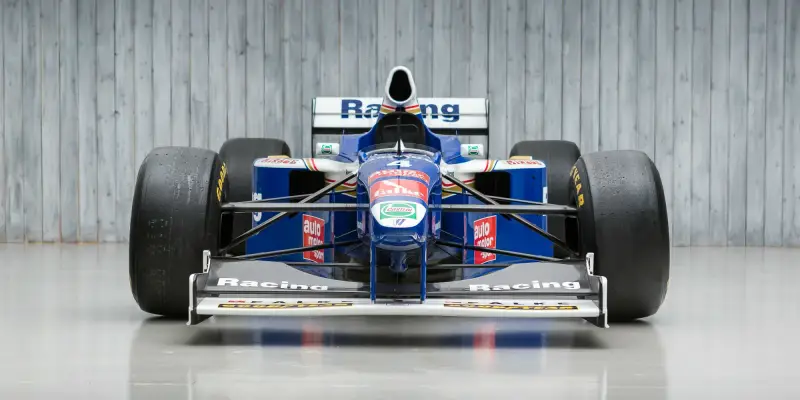
The Williams FW19 was the car with which the Williams team competed in the 1997 Formula One World Championship.
To this date, the FW19 remains the last Williams car to win either championship. It was also the last Renault-powered Formula One car to win a world championship title until the Renault R25 in 2005 and also the last Renault-powered non-full-works Formula One car outside the Enstone-based team to win a world championship title until the Red Bull RB6 in 2010.
Villeneuve later said that the FW19 was his favourite Formula One car but that it operated best in a very small window which therefore made it tough out of which to extract the maximum performance.
The car was a logical development of the extremely successful FW18, which had comfortably won both titles in 1996. It was also the last Williams chassis to receive input from designer Adrian Newey, who left the team to join McLaren before the season began.
In total, of the season's 17 Grand Prix the Williams Renault FW19 would record 8 victories, 11 pole positions, 9 fastest laps, 15 podiums and 5 front row lockouts. Rothmans Williams Renault ultimately retained their Constructors title with 123 points. Villeneuve's winning total was confirmed with 81 points, whilst Frentzen would be promoted to 2nd place in the Drivers Championship on 42 points after Michael Schumacher was disqualified.

Jacques Villeneuve
Heinz-Harald Frentzen

mecachrome engines (1998)
fw20


1998
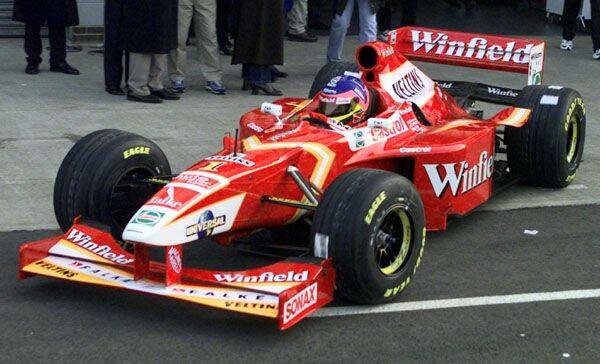
The Williams FW20 was the car with which the Williams Formula One team competed in the 1998 Formula One World Championship. It was driven by Jacques Villeneuve, the reigning champion, and Heinz-Harald Frentzen, who was in his second year with the team.
Ahead of the season, Williams were adversely affected by the departure of Chief Designer Adrian Newey to McLaren, and Renault's withdrawal from F1 as an engine supplier. Newey and Renault had made Williams the dominant team.
The FW20 was the first non-Newey designed car since 1990. Cosmetically the FW20 resembled the FW19 with journalist Joe Saward noting the FW20 followed the same basic design concept as the FW19 with adaptations made to comply with 1998 regulations. The car was equipped with a Mecachrome-badged version of what was essentially the previous year's Renault engine.
1998 was Williams' first season without a win since 1988 and they would finish a distant third behind McLaren and Ferrari in the constructors championship. At the end of the season, Villeneuve and Frentzen would depart for British American Racing and Jordan Grand Prix respectively.

Jacques Villeneuve
Heinz-Harald Frentzen

supertec engines (1999)
fw21


1999
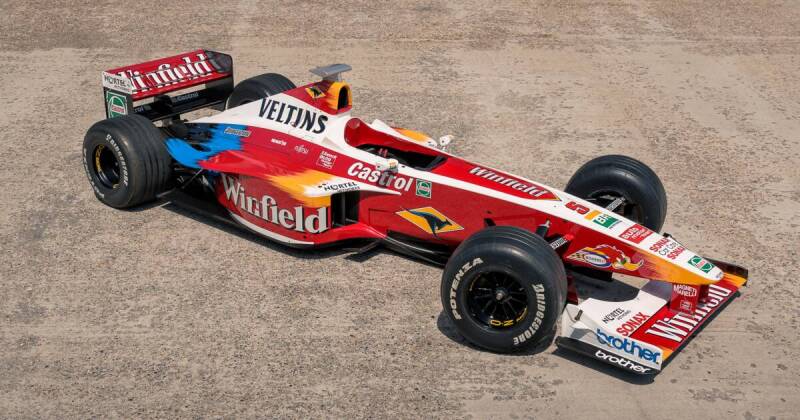
The Williams FW21 was the car with which the Williams team competed in the 1999 Formula One World Championship. It was driven by German Ralf Schumacher, who had swapped from Jordan with compatriot Heinz-Harald Frentzen, and Italian Alessandro Zanardi, who had last raced in Formula One in 1994 but had since won the CART championship twice.
This was also the team's last season using a Renault engine (badged as a customer Supertec) until one was fitted in the race winning FW34 in 2012; with a new works deal with BMW for the 2000 season.
Schumacher had a successful season and was a consistent front-runner with the all-new design of the FW21, scoring points in eleven of the sixteen Grands Prix.
The team resided in fourth place in the Constructors Championship for much of the year, unable to challenge McLaren and Ferrari and being generally outpaced by Jordan. The team eventually fell behind Stewart and finished fifth in the Constructors' Championship with 35 points, all scored by Schumacher and thus Williams ended up with their worst season since 1990.

Alessandro Zanardi
Ralf Schumacher

bmw engines (2000–2005)
fw22


2000
The Williams FW22 was the car with which the Williams team competed in the 2000 Formula One World Championship. The car was driven by German Ralf Schumacher in his second season with the team and British rookie Jenson Button who replaced Alessandro Zanardi in the team who was dropped after just one season with the Grove outfit.
This was the first Formula One car powered by a BMW engine since the Megatron-badged Arrows A10B in 1988. An evolution of the previous season's FW21, it marked the first year of the team's collaboration with BMW as an engine supplier, a partnership that would last until the end of 2005; this was also the first Formula One car since 1987 to use fully factory supported BMW engines.
The FW22 proved to be extremely promising. Schumacher finished fifth in the Drivers' Championship with 24 points while Button finished eighth with 12; the combined 36 points placed Williams third in the Constructors' Championship, behind the dominant Ferrari and McLaren teams.

Ralf Schumacher
Jenson Button
fw23


2001
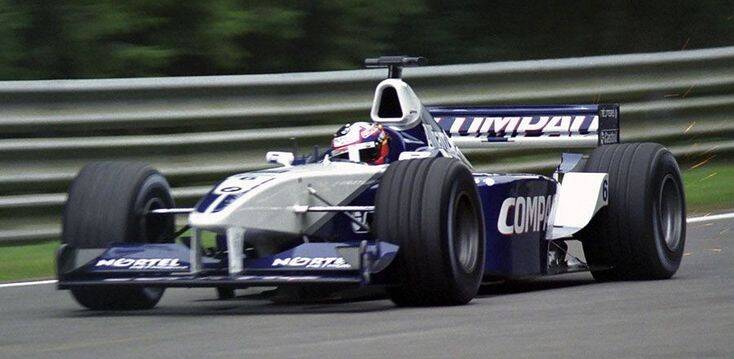
The Williams FW23 was the car with which the Williams team competed in the 2001 Formula One World Championship. It was driven by German Ralf Schumacher, who was in his third year with the team, and Colombian Juan Pablo Montoya, a previous Formula 3000 and CART champion who was making his F1 début.
This was the first Williams car supplied with Michelin tyres since the FW07 in 1981.
The powerful engine, well-designed chassis, the Michelin tyres' tendency to work well in hot conditions and the efforts of two quick drivers resulted in a haul of four victories and the team's re-emergence at the top of the sport, alongside Ferrari and McLaren. The car was especially strong on faster circuits such as Hockenheim and Monza, where the BMW engine put Williams at a distinct advantage over their rivals.
However, Williams was not able to mount a title challenge for the BMW engines were more unreliable than their rivals and the chassis was not as competitive on high-downforce tracks. The team still finished a clear third in the Constructors' Championship, with 80 points.

Ralf Schumacher
Juan Pablo Montoya
fw24


2002
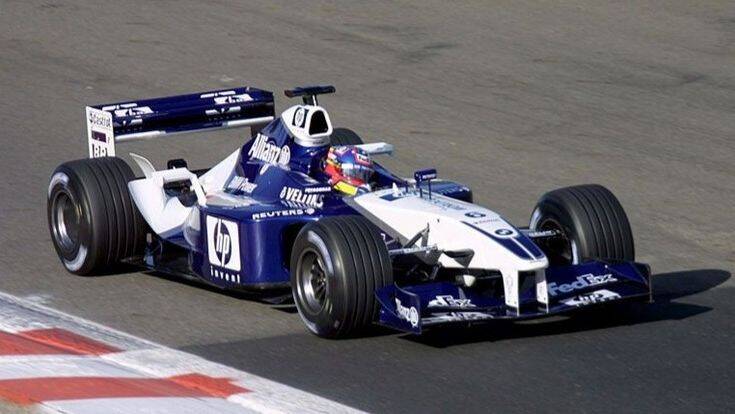
The Williams FW24 was the Formula One car with which the Williams team competed in the 2002 Formula One World Championship.
The car was closely based on the previous year's FW23, and powered by a development of the ultra-powerful BMW engine from 2001. Ralf Schumacher scored the team's only win of the season in Malaysia, and Juan Pablo Montoya finishing second saw the team register their first 1–2 finish since the 1996 Portuguese Grand Prix.
Williams finished second in the Constructors' Championship but over 100 points behind Ferrari, with Montoya and Schumacher third and fourth respectively in the Drivers' Championship.
On 3 December 2002, Nico Rosberg conducted his first ever test in a Formula One car in a Williams FW24 Circuit de Catalunya. At the time, he became the youngest person ever to drive a Formula One car.

Ralf Schumacher
Juan Pablo Montoya
fw25


2003
The Williams FW25 is a Formula One car designed by Williams and powered by a BMW V10 engine. The car was used by Williams for the 2003 championship. Three drivers would drive the FW25 in the 2003 season, with Marc Gené replacing regular racer Ralf Schumacher for the Italian Grand Prix after the German suffered a large testing accident at Monza's Lesmo 1 corner prior to that race. The other regular driver Juan Pablo Montoya started all of the season's Grand Prix.
As of 2026, it remains the last Williams car to score a 1–2 finish.
The design of the 2003 Williams FW25 was a marked departure over its predecessor, and was a completely new design compared to the Williams FW24, something that Williams had not done between 2001 and 2002.
Montoya would later cite the FW25 as a favourite of his, praising the balance and the driveability with the powerful BMW engine which suited his aggressive driving style.

Juan Pablo Montoya
Ralf Schumacher
Marc Gené
fw26


2004
The Williams FW26 is a Formula One racing car designed and built by Williams Grand Prix Engineering for the 2004 Formula One season. Known for its distinctive "walrus nose", the car was driven by Ralf Schumacher, Juan Pablo Montoya, Antônio Pizzonia and Marc Gené. It was also the last Williams designed under Patrick Head's supervision.
The car's "walrus nose" featured a short, stubby nose cone connected to the front wing by sloping vertical spars which allowed more airflow to the underside. To further maximise said airflow, the car also featured a twin-keel front suspension, pioneered by Sauber and also used by McLaren and Jordan.
The FW26 proved fast in pre-season testing and Montoya was tipped as a title favourite, but during the season the car proved difficult to set up and was inconsistent, with Montoya and Schumacher both struggling to maximise the car's potential. The car was genuinely outpaced by the Renaults and BARs of that time, as well as the Byrne/Brawn-designed Ferrari F2004, which dominated much of the season.
Despite Montoya's win in Brazil, Williams would not score another win until eight years later when fellow South American Pastor Maldonado won the 2012 Spanish Grand Prix in his FW34.

Juan Pablo Montoya
Ralf Schumacher
Marc Gené
Antônio Pizzonia
fw27


2005
Like the Minardi PS05 and the Renault R25, the FW27 utilized a 6-speed gearbox rather than the 7-speed gearbox found on the other 2005 F1 cars.
This car was the last Williams model that was powered by a BMW engine before BMW moved to BMW Sauber and also Michelin tyres before their switch to Bridgestone tyres. The following year's model, the Williams FW28 had an engine provided by Cosworth.
While Williams was able to compete and take a couple of victories home in recent years, the FW27 proved not to be up to the same performance levels as some of the other teams' cars. The team ended the season winless for the first time since 2000 in fifth place in the Constructors' Championship, failing to meet their own high expectations.
The Williams FW27B was prepared for the purpose of testing the BMW V8 engine for the 2006 season, but Cosworth was ultimately chosen when BMW left Williams to buy the Sauber team. The Williams FW27C was prepared for the purpose of testing the 2006 Cosworth V8 engine. At the time the Williams team had not confirmed a major team sponsor, so the livery of both the FW27C car and the race suit were both in dark blue, with only the RBS sponsor branding added.

Mark Webber
Nick Heidfeld
Antônio Pizzonia

cosworth engines (2006)
fw28


2006
The Williams FW28 was the car with which the Williams team competed in the 2006 Formula One season. The drivers were Mark Webber and rookie Nico Rosberg, the reigning GP2 Series champion. Webber was in his second year with the team, and teammate Nico Rosberg carried a hint of nostalgia, as Nico's father Keke had won the 1982 F1 championship in a Cosworth-engined Williams.
This was the first V8-powered Williams car since the FW12 in 1988 and also the first Williams car ran on Bridgestone tyres since the FW22 in 2000.
Despite the effectiveness of the Cosworth engine, the Bridgestone tyres and the two drivers, the FW28 could only display brief flashes of promise. Too often this promise was compromised by poor reliability - an embarrassment for a team that prided itself on engineering excellence.
Williams finished eighth in the Constructors' Championship - the team's lowest finish since its inaugural season in 1978. Unhappy by the team's reliability problems, Webber departed the team at the end of the season to join Red Bull Racing.

Mark Webber
Nico Rosberg

customer toyota engines (2007–2009)
fw29


2007
The Williams FW29 was a Formula One car, built by the Williams F1 team that competed in the 2007 Formula One season. It was driven by Alexander Wurz and Nico Rosberg. The car had a Toyota engine, making it only the second time in the team's history that a Japanese car manufacturer has supplied their engines; Honda had supplied the team during the period from 1983 to 1987.
The Williams FW29 was definitely an improvement over the disastrous Williams FW28, which only scored 11 points and was hugely unreliable. The FW29 proved a consistent challenger for points, but was well off the pace of the front running McLaren and Ferrari cars, and the new BMW Sauber team formed by Williams's old engine partners.
Wurz decided to retire from F1 before the final race of the season, with test driver Kazuki Nakajima drafted in as his replacement. The team were classified in 4th place with 33 points, due to McLaren's expulsion from the Championship.
Williams appeared with the FW29B at Jerez during the winter testing at in January 2008. The car was fitted with several aerodynamic changes which would be adopted on the FW30. Both Rosberg and Nakajima tested with the car.

Nico Rosberg
Alexander Wurz
Kazuki Nakajima
fw30


2008
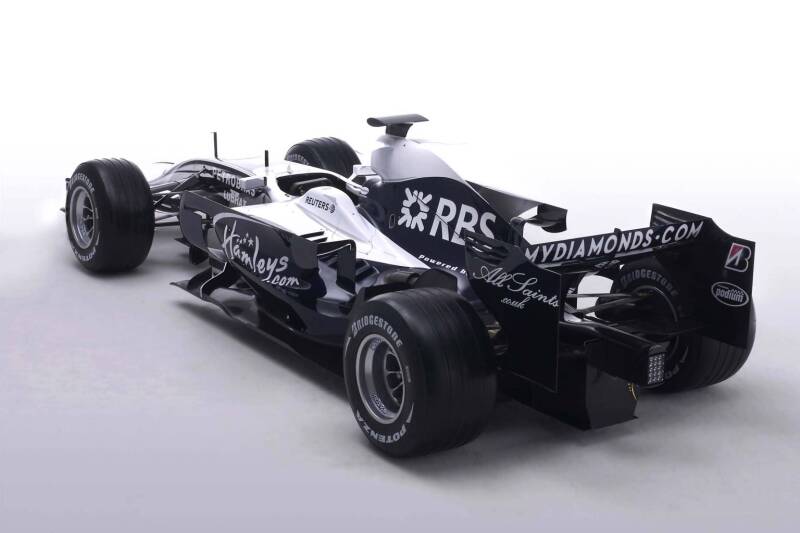
The Williams FW30 is a Formula One racing car, designed by Williams for the 2008 Formula One season. The car is largely an evolution of its predecessor, the FW29.[3] As with its predecessor, the FW30 is powered by engines manufactured by Toyota. The FW30 was unveiled to the public on 21 January 2008 at the Circuit de Valencia, Spain, and made its race debut at the Australian Grand Prix and was driven by Nico Rosberg and Kazuki Nakajima.
In common with all contemporary Formula One designs, the FW30's basic architecture is built around a carbon fibre, aramid and honeycomb composite material monocoque. During the season various additions and modifications were made to the FW30's aerodynamic appendages.
For the first time since the 2005 Formula One season Williams maintained continuity with their engine supplier. The FW30 is powered by Toyota's RVX-08 engine, which conforms to FIA 2400 cc V8 regulations. One major change within the engine package is due to the enforcement of a standardised, FIA-approved ECU, manufactured by McLaren Electronic Systems and distributed under the Microsoft brand. This was introduced to eliminate traction control and engine-assisted braking. Drive is via Williams's own seven-speed, semi-automatic transmission, with an electro-hydraulically activated, seamless shift mechanism.
The team eventually finished the season eighth with 26 points, convincingly beaten by the Toyota F1 team.

Nico Rosberg
Kazuki Nakajima
fw31


2009
The Williams FW31 was a Formula One motor racing car, designed and built by Williams F1. The AT&T Williams team used the FW31 to compete in the 2009 Formula One season. The Williams FW31 was the first British F1 car to use Esso-branded fuel since 1973, as well as the first Williams F1 car to use Mobil 1 lubricants since 1988 season, as they had been using ExxonMobil brands since 1999.
At the first race of the season, an official complaint was launched by other teams against the rear diffusers of the Williams FW31, Toyota TF109 and the Brawn BGP 001 saying that they were illegal,[3] but after analysing the cars, the FIA reported that the cars were not illegal.
The Williams FW31 was a slight improvement compared to previous FW28-30 cars as the team tried to get used to the major new rules in 2009. Rosberg proved to be a consistent challenger for points, though he could not clinch a podium finish.

Nico Rosberg
Kazuki Nakajima

return to cosworth engines (2010–2011)
fw32


2010
The Williams FW32 was a Formula One motor racing car made by Williams for the 2010 season and powered by the sport's brand-new entry-level Cosworth CA2010 engine. The car was driven by Rubens Barrichello and 2009 GP2 Series champion Nico Hülkenberg. The Williams FW32 is the second clean sheet design for the Williams design team in as many years. The car debuted on track on 1 February at Valencia. It was not officially launched to the public before that.
Williams felt the new Cosworth CA2010 was not good enough and demanded Cosworth to improve the new engine in every area.
At Interlagos Hülkenberg gained his first Formula One pole position, by 1.049 seconds over Sebastian Vettel but lost the lead on the first lap and he eventually finished the race in eighth place,
By the end of the season, they beat Force India in the constructors championship by 1 point, coming 6th with 69 points.

Rubens Barrichello
Nico Hülkenberg
fw33


2011
The Williams FW33 was a Formula One racing car developed by Williams F1 for the 2011 Formula One season. It was driven by Brazilian veteran Rubens Barrichello and 2010 GP2 Series champion and rookie driver Pastor Maldonado. The car was shaken down at Silverstone on 28 January 2011, and made its full on-track debut at the Circuit Ricardo Tormo in Valencia, Spain, on 1 February 2011 in an interim testing livery. The definitive livery was released on 24 February, adding white, silver and red to the existing dark blue in a design directly inspired by the Rothmans livery used from 1994 to 1997.
During the course of the season, it became clear that the car was much less competitive than the Williams FW32 as the car tended to lack pace and struggled in races. The team eventually finished the year ninth in the World Constructors' Championship standings, with five points, the team's lowest finish since its inaugural season in 1978.

Rubens Barrichello
Pastor Maldonado

return to renault engines (2012–2013)
fw34

2012
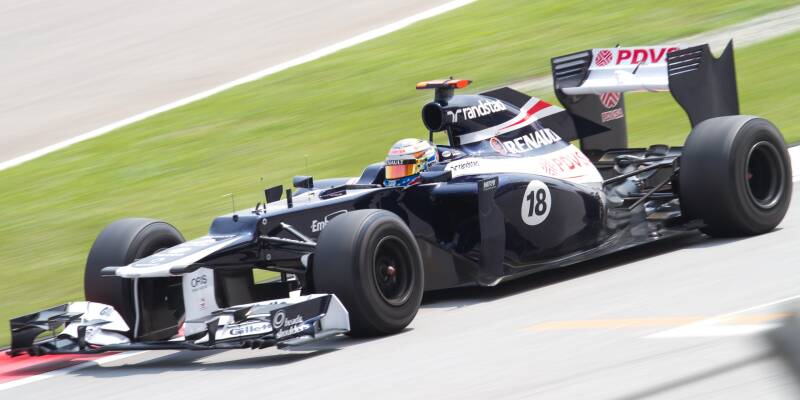
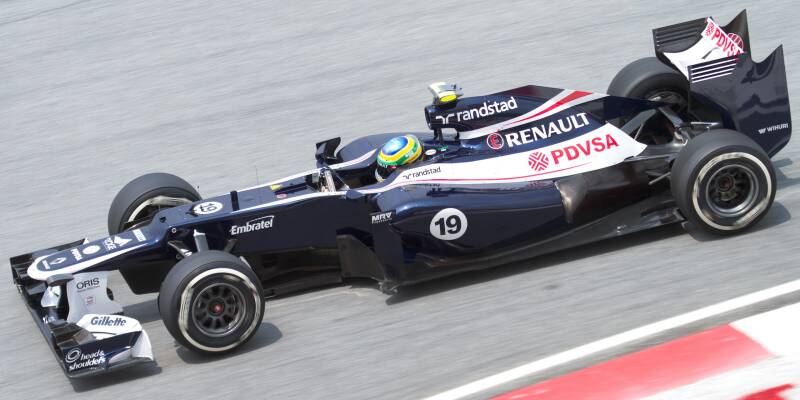
The Williams FW34 was a Formula One racing car designed by Williams F1 for the 2012 Formula One season.
Following their worst season in their thirty-year history—in which they finished ninth in the World Constructors' Championship with just five points—the team underwent a technical review, employing former McLaren designer Mike Coughlan (having served his suspension for his role in the 2007 Formula One espionage controversy) as Chief Designer, and promoting Jason Somerville to Head of Aerodynamics.
The FW34 used the Renault RS27-2012 engine; the team had previously used Renault engines between 1989 and 1997. The car, which was launched on the 7 February 2012, was driven by Pastor Maldonado and Bruno Senna.
At the 2012 Spanish Grand Prix, Maldonado drove the FW34 to pole position and converted it to victory the next day. It was Maldonado's first and only Formula One race win, Williams' first race win since Juan Pablo Montoya won the 2004 Brazilian Grand Prix driving an FW26, and Williams' most recent race win as of October 2025.

Pastor Maldonado
Bruno Senna
fw35


2013
The car was launched on 19 February at the Circuit de Catalunya in Barcelona, Spain, with the team using an interim version of the FW34 for the first test in Jerez de la Frontera. This was also the team's last season using a Renault engine before a new long term deal with Mercedes was activated for 2014.
The FW35 was faced with a difficult debut when the Fédération Internationale de l'Automobile declared its exhaust system to be illegal the day the car was launched, forcing the team to revise design.
2013 was a massive disaster for the team, similar to 2011. The team was eliminated in Q1 mostly along with Marussia and Caterham, and failed to score a point until Hungary, when Maldonado finished 10th. Bottas, on the other hand, qualified an impressive third in Canada, but could only finish 14th, and he failed to score a point until Austin, when he finished 8th. The team finished 9th in the Constructors’ Championship, with 5 points, their equal-worst season.
At the German Grand Prix, Williams celebrated their 600th Grand Prix entries; the logo was present on the sidepods.

Pastor Maldonado
Valtteri Bottas

mercedes power units (2014–present)
fw36


2014
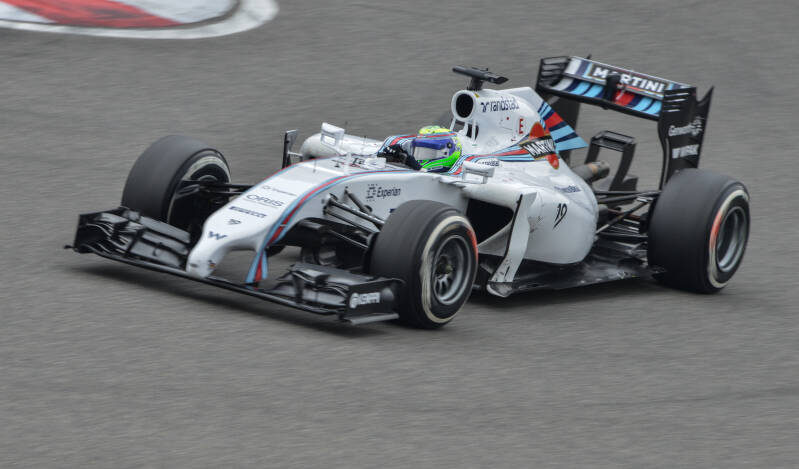
The Williams FW36 is a Formula One racing car designed by Williams Grand Prix Engineering to compete in the 2014 Formula One season.[ It was driven by Valtteri Bottas and Felipe Massa, who replaced the departing Pastor Maldonado.
The FW36 was the first car built by Williams to use a Mercedes engine, a 1.6-litre V6 turbocharged unit, known as the PU106A Hybrid. The FW36 was the first turbo powered Formula One car designed and raced by Williams since the Honda powered FW11B which carried Nelson Piquet and Nigel Mansell to first and second places respectively in the 1987 World Championship.
The car immediately proved to be more competitive than its predecessor, consistently setting the quickest times in preseason testing. It was particularly fast in a straight line, thanks in part to the Mercedes power unit and in part to its low-drag design. The team scored 320 constructors' points in 2014, compared to 5 in 2013, this secured them 3rd in the Constructors' Championship, 104 points ahead of Ferrari. The car was arguably the second fastest on the grid towards the end of the season.
The car sported the Martini Racing livery after securing title sponsorship from Martini & Rossi. It became the first Formula One car to wear this livery since the Lotus 80 in 1979.

Felipe Massa
Valtteri Bottas
fw37
2015
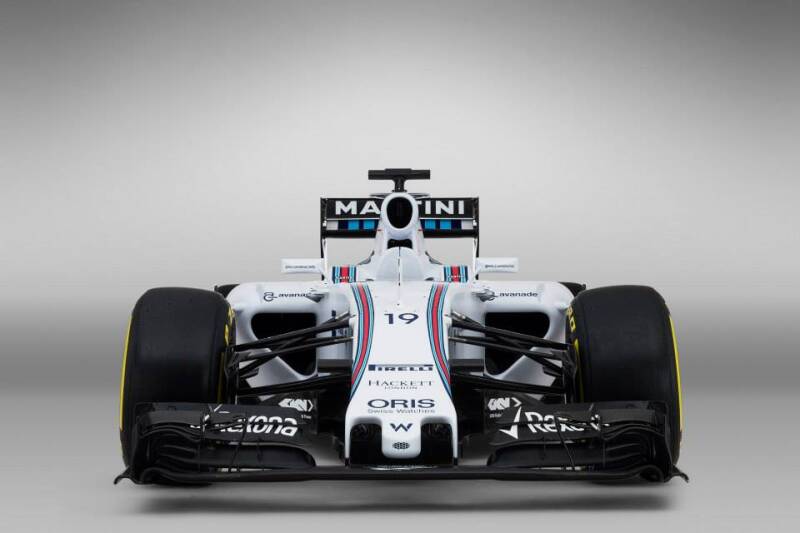
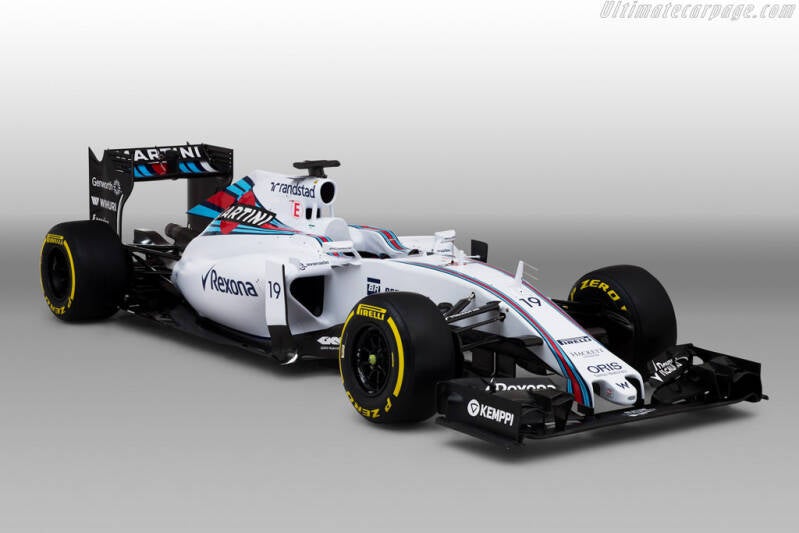
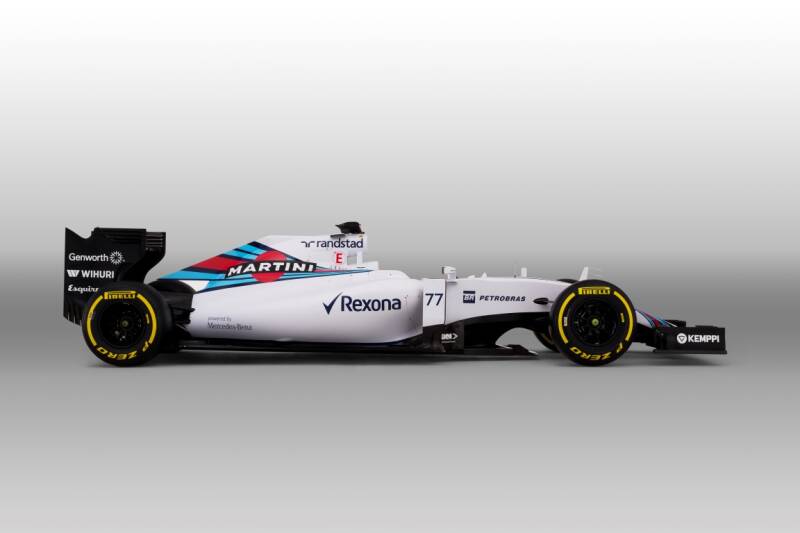
The Williams FW37 is a Formula One racing car designed by Williams Grand Prix Engineering which Williams Martini Racing used to compete in the 2015 Formula One season. It was driven by Valtteri Bottas and Felipe Massa. It proved to be competitive, with the team scoring 4 podiums, and finishing the 2015 season in 3rd.
Williams were first in presenting their 2015 car, releasing a computer rendering on 21 January 2015. The peculiar 'anteater' nose design of the 2014 car was dropped in favour of a lower and shorter one.
A reasonably competitive car that finished in the points at almost every race, it ultimately helped the team secure its second consecutive third-place finish with 257 points in the Constructors' Championship. The team achieved 4 podium finishes, two each for both Massa and Bottas. The team proved arguably less competitive late in the season as they shifted development towards the 2016 car relatively early. The car though was still highly competitive, it did not score as many points as its predecessor and was overshadowed by Mercedes and a resurgent Scuderia Ferrari.

Felipe Massa
Valtteri Bottas
fw38


2016
The Williams FW38 is a Formula One racing car designed by Williams to compete in the 2016 Formula One season. The car was driven by Felipe Massa and Valtteri Bottas.
During qualifying for the 2016 European Grand Prix, an FW38 driven by Bottas set the highest ever recorded speed of a Formula One car during an official session, at 378 km/h. During the 2016 Mexican Grand Prix, an FW38, again driven by Bottas, set the second highest ever recorded speed of a Formula One car during a race, at 372.5 km/h.
The car proved to be competitive in the early stages of the championship, with Massa and Bottas securing points finishes for the first half of the season. However, lack of upgrades on the car meant that the team could not keep up with other teams during the later stages, such as Ferrari, Force India, and Red Bull Racing, and eventually lost 4th place in the constructors' championship to Force India.

Felipe Massa
Valtteri Bottas
fw40


2017
The Williams FW40 was a Formula One racing car designed by Williams to compete in the 2017 Formula One season. The car was predominantly driven by Felipe Massa and Lance Stroll, who made his Formula One début with the team.
The FW40 was the first Williams F1 car featured with a shark fin since the FW32 in 2010.
The number '40' in the chassis name signified the 40th anniversary of the team. In addition, it was the last Formula One car that Massa drove in his career, as he announced his retirement for a second time in November.
Williams started the season as the fourth quickest team ahead of arch rivals Force India. However, the team could not finish consistently in the points, and Lance Stroll finished only thrice in the first 7 races. At the Canadian Grand Prix, Stroll earned his first F1 points by finishing in ninth. Stroll earned his first podium by finishing third in the chaotic Azerbaijan Grand Prix. By doing so, Stroll became the second youngest driver to be on the podium, and the youngest driver on the podium in his debut season. This result brought Williams up to 5th in the Constructors' standings, behind Force India but ahead of Toro Rosso.

Lance Stroll
Felipe Massa
Paul Di Resta
fw41


2018
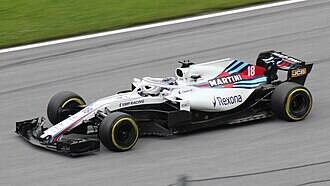
The Williams FW41 is a Formula One racing car designed by Paddy Lowe and Dirk de Beer for the Williams team, to compete in the 2018 FIA Formula One World Championship. The car made its competitive debut at the Australian Grand Prix, and was driven by Lance Stroll in his second season with the team; and Sergey Sirotkin, making his competitive debut in Formula One. The FW41, while reliable, lacked the necessary pace to challenge the other cars over the course of the season.
In signing Sergey Sirotkin, Williams formed an alliance with Russian racing outfit SMP Racing, which came with financial investment in the team. While discussing the investment, SMP Racing revealed that under the terms of the agreement their investment would specifically be spent on technical development of the FW41 instead of being used to cover the costs of day-to-day operations.
The Mercedes-powered Williams FW41 features the mandatory Halo cockpit protection device, painted white so it is incorporated into the team's livery design, which sports blacker on the front wing, bargeboards and around the sidepods for 2018.
The car had problems with its development mainly being cooling, packaging and the aerodynamics which resulted in its uncompetitiveness.
Williams had finished fifth in the Constructors Championship in both 2016 and 2017, but saw their performance decline severely in 2018. They finished 10th and last in the Constructors' Championship, their lowest ever position. However, the seven points they scored exceeded the five points scored in both 2011 and 2013.

Lance Stroll
Sergey Sirotkin
fw42


2019
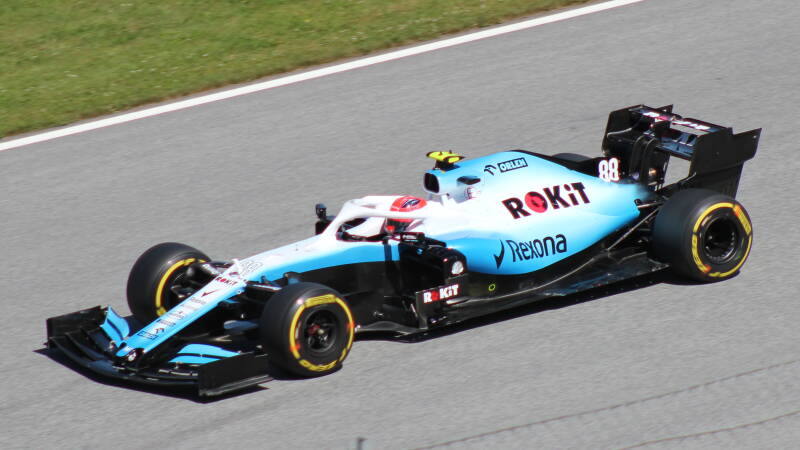
The Williams FW42 was a Formula One racing car designed by Paddy Lowe, Doug McKiernan and Dave Wheater for the ROKiT Williams Racing team, to compete in the 2019 FIA Formula One World Championship. The car made its competitive debut at the 2019 Australian Grand Prix, driven by the reigning 2018 FIA Formula 2 Champion George Russell who was making his Formula One début; and Robert Kubica, who returned for his first racing season in Formula One since 2010, after recovering from life-threatening injuries suffered in a rally car accident in early 2011.
The car was notably suffered with a build quality problems, poor performance and reliability issues, making it the worst Williams car and the worst car of the entire 2019 grid. The Williams FW42 was forced to miss the first two days of pre-season testing as the car had not been completed in time. The car completed 567 laps during the tests, the fewest of any teams, and was unable to match the pace of other competitors. Its fastest time was 1.9 seconds slower than the quickest lap of testing posted by Sebastian Vettel driving for Ferrari, and over half a second behind the rest of the grid.

George Russell
Robert Kubica
fw43/fw43b

2020-2021
fw43b
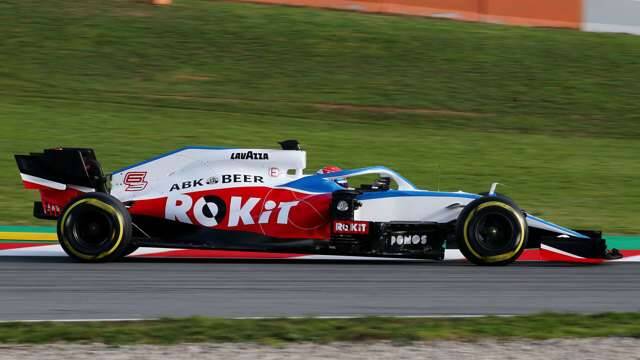
The Williams FW43 is a Formula One car constructed by Williams to compete in the 2020 Formula One World Championship.
Reserve driver Jack Aitken made his Grand Prix debut in the FW43 at the 2020 Sakhir Grand Prix, replacing George Russell who was called up by Mercedes for the same event after Mercedes' regular driver, Lewis Hamilton, tested positive for coronavirus and was forced to miss the event as a result. Russell returned to Williams for the season finale in Abu Dhabi after Hamilton was cleared to race for Mercedes in that event with Aitken returning to reserve driver.
The car was designed by David Worner and Jonathan Carter, both of whom are in their first year in the team having previously worked with Red Bull and Renault respectively.[1] Williams have described the FW43 as being an evolution of its predecessor, believing the FW42 was a good basis on which to design the FW43.
In the end Williams finished in 11th place in 4 races: the Austrian, Italian, Tuscan and Emilia Romagna GPs, 3 courtesy of Latifi, and 1 from Russell. This would be the first time since 1976 where Williams finished pointless in an F1 season.
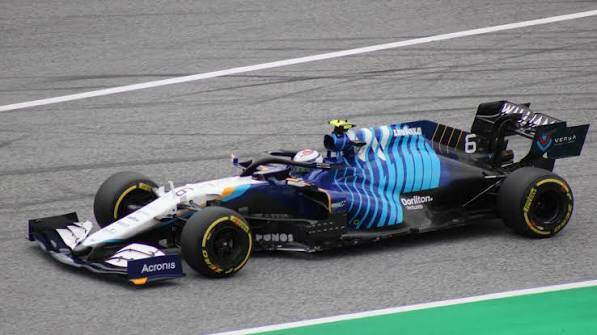
In March 2021, Williams introduced the FW43B, designed to compete in the 2021 season. Williams finished 8th in the Constructors' Championship with 23 points, a massive step forward after finishing last with zero points the year before.

Nicholas Latifi
George Russell
Jack Aitken
fw44


2022
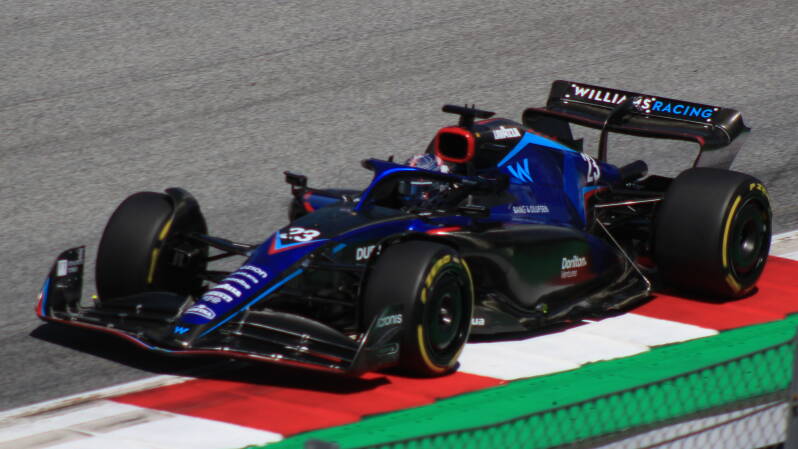
The Williams FW44 is a Formula One racing car designed and constructed by Williams that competed in the 2022 Formula One World Championship. The car was driven by Nicholas Latifi and Alexander Albon, who were in their third and first years with the team respectively. Nyck de Vries participated in the Italian Grand Prix in the FW44, replacing Albon due to the Thai driver suffering appendicitis.
The chassis is Williams' first car under the 2022 technical regulations, and their first to be developed wholly under new owners, Dorilton Capital, with Jost Capito at the helm.
With 2022 featuring new technical regulations, the FW44 is a significantly different design to the FW43. With a notably tight design around the sidepod radiators, aerodynamics from the front pushing air to the floor which will be generating ground effect. The FW44 once again utilised Mercedes AMG engines, however it is the first Williams to also utilise their gearbox.
At the British Grand Prix, a major update for the FW44 was revealed with a new floor, sidepod design and rear wing. The design was similar to that of the Red Bull.

Nicholas Latifi
Alexander Albon
Nyck de Vries
fw46

2024
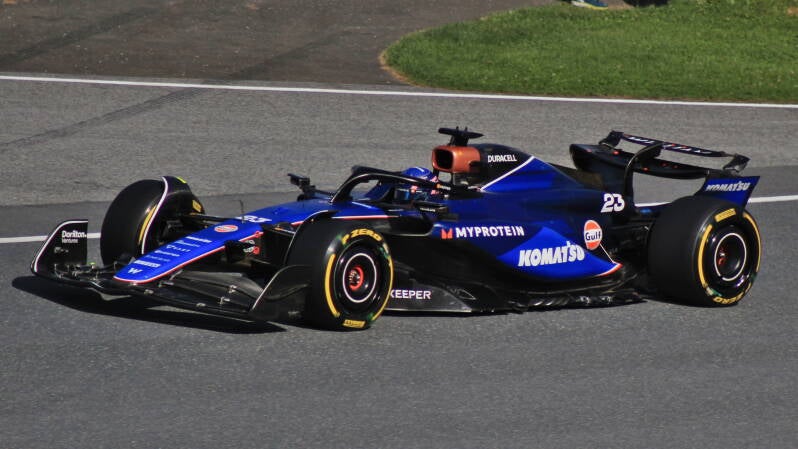
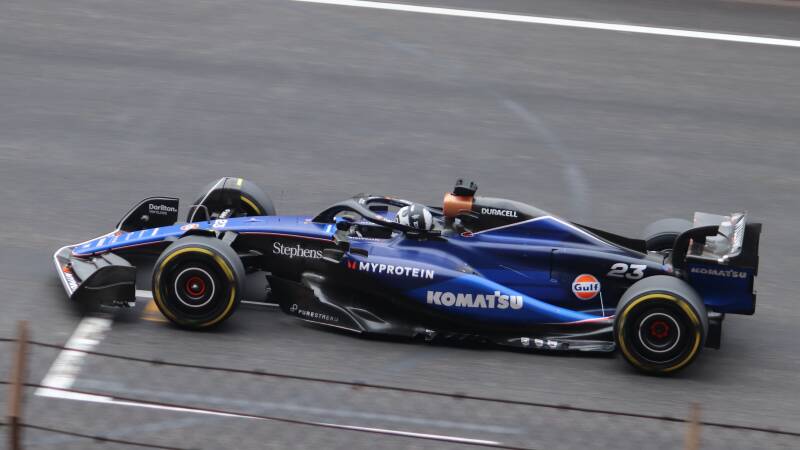
The Williams FW46 is a Formula One racing car designed and constructed by Williams to compete in the 2024 Formula One World Championship. The car was driven by Alexander Albon, Logan Sargeant and Franco Colapinto, the latter of whom replaced Sargeant for the final nine races of the season.
The livery for the FW46 saw minor changes from the FW45. The engine cover design featured a tribute to the Frank Williams Racing Cars logo.
For 2024, the rear suspension is also provided by Mercedes-Benz, with the front suspension being an in-house Williams Racing design.
Sargeant was dropped from the Italian Grand Prix onwards with Williams Academy driver Franco Colapinto stepping up from his Formula 2 campaign to take his place for the remainder of the season.
Throughout the season, which was riddled with numerous incidents, the team scored 17 points.

Logan Sargeant
Alexander Albon
Franco Colapinto
fw48

2026
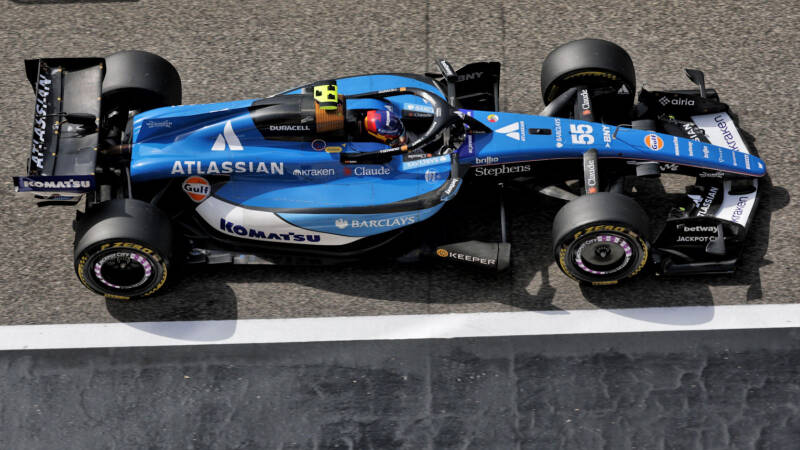
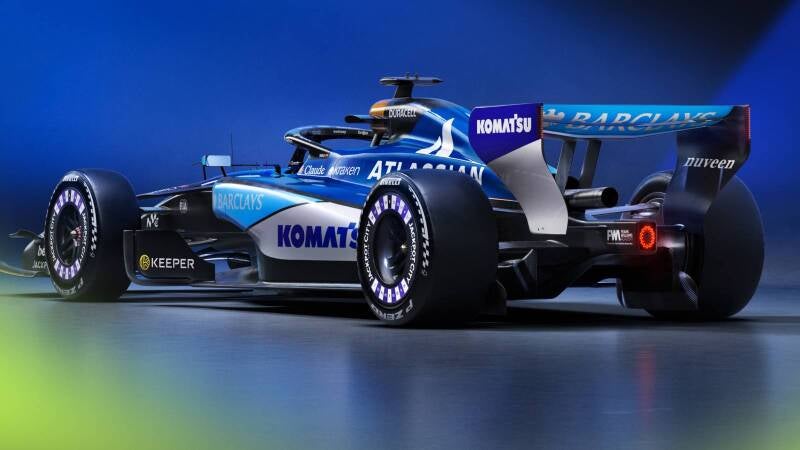
The Atlassian Williams FW48 is a Formula One racing car designed and constructed by Atlassian Williams F1 Team to compete in the 2026 Formula One World Championship. The car is currently being driven by Alexander Albon and Carlos Sainz Jr., both in their fifth and second seasons with the team respectively.
The FW48's lead colour is a vibrant gloss blue and is contrasted with a slowing section of black that sweeps from the chassis side through the rear of the car.
The FW48 is shorter (3400mm wheelbase) and narrower (1900mm) than the 2025 car, designed specifically to handle the increased electrical power output of the 2026 engines.
Williams prioritised the development of the FW48 before any other team, with development of the FW47 cut early, allowing for full focus on the FW48. However, the FW48's development has been marked by production delays that saw the team miss the private shakedown test in Barcelona in late January 2026. While listed at 772.4 kg, the team is currently working to shed excess weight to reach the minimum limit.

Alexander Albon
Carlos Sainz Jr.


Create Your Own Website With JouwWeb