






Opel Automobile GmbH, usually shortened to Opel, is a German automobile manufacturer which has been a subsidiary of Stellantis since 16 January 2021. It was owned by the American automaker General Motors from 1929 until 2017 and the PSA Group prior to its merger with Fiat Chrysler Automobiles to form Stellantis in 2021. Most of the Opel lineup has been marketed under the Vauxhall brand in the United Kingdom since the 1980s. Some Opel vehicles were badge-engineered in Australia under the Holden brand until 2020, in North America and China under the Buick, Saturn (until 2010), and Cadillac brands, and in South America under the Chevrolet brand.


Opel traces its roots to a sewing machine manufacturer founded by Adam Opel in 1862 in Rüsselsheim am Main, Germany. The company began manufacturing bicycles in 1886 and produced its first automobile in 1899. With the Opel RAK program, the world's first rocket program, under the leadership of Fritz von Opel, the company played an important role in the history of aviation and spaceflight: Various land speed records were achieved, and the world's first rocket-powered flights were performed in 1928 and 1929.
After listing on the stock market in 1929, General Motors took a majority stake in Opel and then full control in 1931, making the automaker a wholly owned subsidiary, establishing an American ownership of the German automaker for nearly 90 years. Together with British manufacturer Vauxhall Motors, which GM had acquired in 1925, the two companies formed the backbone of GM's European operations – later merged formally in the 1980s as General Motors Europe.
The first Opel production Patent Motor Car was built in Rüsselsheim early 1899, although these cars were not very successful (A total of 65 motor cars were delivered: eleven in 1899, twenty-four in 1900 and thirty in 1901) and the partnership was dissolved after two years, following which Opel signed a licensing agreement in 1901 with the French Automobiles Darracq France to manufacture vehicles under the brand name Opel Darracq. These cars consisted of Opel bodies mounted on Darracq chassis, powered by two-cylinder engines.
The company first showed cars of its design at the 1902 Hamburg Motor Show. Production began in 1906, with the licensed Opel Darracq version discontinued in 1907.

Opel Darracq 9 HP 1901
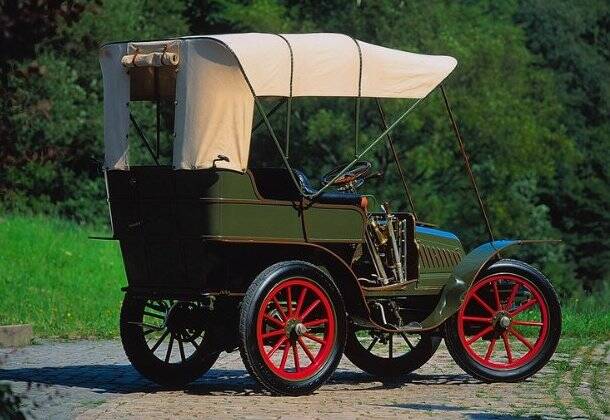
Opel Darracq 9 PS 1902

Opel-Darracq 16/18 PS Doppel-Phaeton 1905
In the early 1920s, Opel became the first German car manufacturer to build automobiles with a mass-production assembly line. In 1924, they used their assembly line to produce a new open two-seater called the Laubfrosch (Tree frog).
Adam Opel led the way for motorised transportation to become not just a means for the rich, but also a reliable way for people of all classes to travel. Opel had a 37.5% market share in Germany and was the country's largest automobile exporter in 1928.
In March 1929, General Motors (GM), impressed by Opel's modern production facilities, bought 80% of the company. The Opel family gained $33.3 million from the transaction.
After acquiring the remaining shares in 1931, General Motors had full ownership of Adam Opel AG and organized it as a wholly owned subsidiary. In 1935, Opel became the first German car manufacturer to produce over 100,000 vehicles annually. This was because of the popularity of the Opel P4 model.
1,2/1.0/p4

1931-1935 1,2

1933 1.0

1935-1937 p4
The Opel 1,2 Liter is a small car manufactured by Opel between 1931 and 1935. The 1,2 Liter was replaced in 1935 by the Opel P4 which was broadly similar but employed a new engine and continued in production until December 1937. For just one year, in 1933, the manufacturer also offered the Opel 1,0 Liter which was a smaller-engined version of the 1,2 Liter. The Opel 1,2 Liter replaced the last version of the Opel Laubfrosch and was itself first complemented and then effectively replaced by the more roomy Opel Kadett, which had itself already entered production in 1935.
Control over Opel had been purchased by General Motors in 1928 and the 1,2 Liter model was developed in America, with the need for efficient inexpensive production built into the development process.
Commercially the car was a success. Possibly on account of the aggressive price reduction accompanying its introduction, the P4 sold even better that the 1,2 Liter model, with 40.405 cars produced in 1936 which was the models best year, and the year in which its production volume equated 19 percent of the German passenger car market.
olympia
The Opel Olympia is a compact car by German automaker Opel, then part of G.M., from 1935 to 1940, and after World War II continued from 1947 to 1953. It was one of the world's first mass-produced cars with a unitary body structure, after the 1934 Citroën Traction Avant; and it was a mass-production success, made in six-figure numbers. Opel achieved this even before the war, all while Hitler promised Germany a "Volkswagen" - a 'People's car', which didn't materialize until 1946. From 1967 to 1970 the Olympia badge was briefly reused on a later car.


1935-1937
At 2500 Reichsmark it offered a true four-seater with 1.3-litre, four-cylinder, side-valve, 24 PS engine capable of 100 km/h. Drive was to the rear wheels through a three-speed gearbox but a four-speed unit became available in 1937. The car had independent front suspension with a live axle at the rear and semi-elliptic leaf springs. This car was also assembled in Tanjung Priok, near Jakarta, in the then-Netherlands East Indies. Assembly there began in 1938 and the car was marketed as the "Opel 1.3".
The car was made available in two versions, as a two-door saloon and as a two-door soft-top convertible.
1937–1940/1947–1949
In 1937, after just a few years, the Olympia received both a new engine, as well as a revised body. The new, larger motor now introduced overhead valves, and a capacity of 1488 cc. It produced some 50% more power, increased to 37 PS, with the car's top speed now reaching 112 km/h.
This engine was to remain in production until 1960 with only minor changes and its architecture was also used for the 2.5-liter "six" installed in the Opel Super 6 and Kapitäns.
The car's body was also altered, not only giving it a facelift and adding a 4-door saloon version, but also making the cars somewhat bigger overall.
1950-1953
In January 1950 the Olympia got a modernized body, but the car was still based on the pre-war Olympia. One change was the seemingly retrograde change to a column-shifted three-sped manual from the floor-mounted four-speed used before. The car was offered as a 2-door saloon, 2-door cabrio-coach and 2-door kombi (estate).
In February 1951, the Olympia was upgraded with more modern 15- rather than 16-inch wheels and a trunk compartment which enclosed the spare tyre. In just over three years of production (until March 1953), about 160.000 cars were made.
In March 1953, the 18-year-old design of the Olympia was finally replaced by the Opel Olympia Rekord.
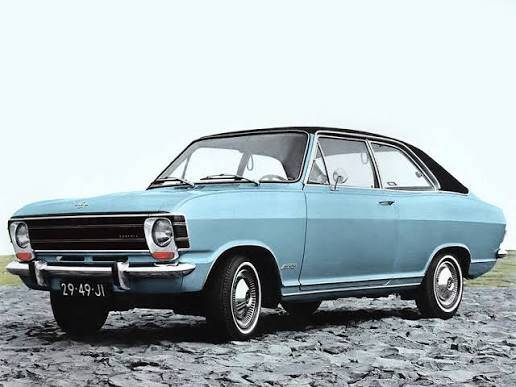
In August 1967 Opel revived the Olympia name with the new Olympia A. The name had last been used, until 1959, for a reduced specification version of the Opel Rekord, but now it was applied to a luxury derivative of the Opel Kadett B, readily distinguishable from the outside by its redesigned front end, together with the word "Olympia" appearing on the body sides behind the front wheels. Olympias were also often equipped with a black vinyl roof to help set them apart from their lesser brethren.
The Olympia was available in saloon and coupé-bodied versions. The saloon, available with two or four doors, shared the fast-back "Limousine" body of the "Kadett LS", while the Olympia coupé used the same body as the "Kadett coupé F". The Olympia was fitted with the "1100 SR" twin carburettor 60 PS engine, and could also be ordered with any one of the three high-compression Camshaft in Head (CIH) engines also fitted in the Kadett and providing 75 PS, 90 PS or, in those export markets where the 1.5-litre version was available, 65 PS. At this time, Opel also provided SAE power figures which were 67 hp for the 1.1 and 76, 84, and 102 hp for the 1.5, 1.7, and 1.9-litre versions.
1967-1970
super 6
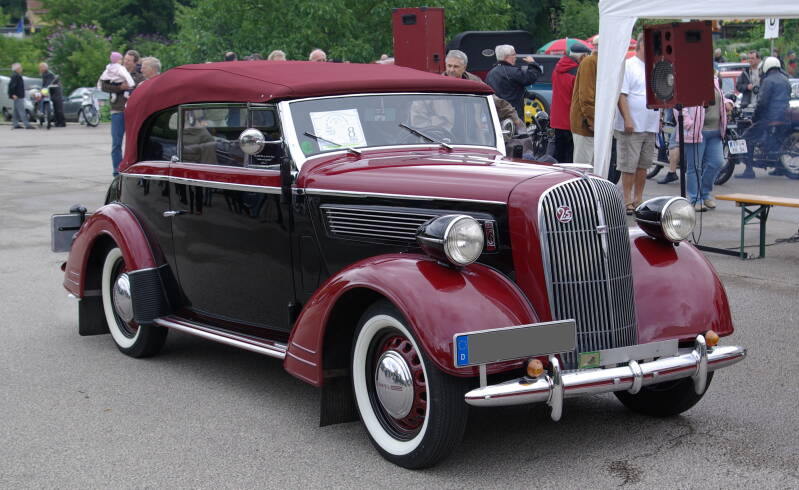


1937-1938
The Opel Super 6 is an executive car which was built by the German car manufacturer Opel between 1937 and late 1938. The car was equipped with a 2.5-litre straight-six engine and had a top speed of 115 km/h. It was available in three different versions: a 4-door sedan, a 2-door coupé, and a 2-door cabriolet. A small number of custom-bodied cars were also made by various coachbuilders such as Karosseriewerke Otto Kühn [de] and Gläser.
The 2473 cc produces 55 PS at 3500 rpm. In total, 46.453 Opel Super Six were built in the two years it was available.
An interesting detail was the windscreen wiper drive which received its power via a mechanical linkage from the camshaft, a solution which Opel continued to use in post-World War II Rekord models until 1957.
admiral
The Opel Admiral is a luxury car made by the German car manufacturer Opel from 1937 until 1939 and again from 1964 until 1977.

1937-1939

1964-1968 admiral A

1969-1977 admiral B
The first Admiral was introduced at the Berlin Motor Show in early 1937, although production did not begin until the end of the year, with only eight units produced in 1937. The model was an attempt to challenge luxury cars in the growing 3.5-litre class from Horch, Mercedes-Benz and Maybach. However, it came with a substantially lower price than the similarly sized and powered cars from these premium manufacturers, which combined with its generously proportioned but technically straightforward chassis to make it a favorite with builders of specialist car bodies.
The car was powered by a newly developed 3626 cc straight-six engine for which a maximum output of 75 PS was quoted, along with a claimed top speed for the standard bodied cars of 132 km/h. The engine was shared with the 3.5-ton Opel Blitz truck produced at the manufacturer's recently opened commercial vehicle plant at Brandenburg an der Havel southwest of Berlin, and similar enough to the Chevrolet and Vauxhall/Bedford straight-sixes of the time that many service parts interchanged, something that was discovered when the Germans and Allies captured each other's vehicles during World War II.
Production ended in October 1939, after 6404 examples had been built. Manufacture was halted more abruptly with the outbreak of the war than for some smaller Opel passenger cars.
In 1964, Opel introduced its KAD (Kapitän, Admiral, Diplomat) "A" series models. The Admiral "A" was the middle model in this three-car range. The cars were first presented in February 1964, but volume production of the Admiral began only in May 1964: Chevrolet powered V8 Diplomats started rolling off the production line three months later, in August 1964.
The 1964 Admiral was equipped with a 2605cc straight-6 OHV of 100 PS providing a top speed of 158 km/h. An unusual feature of this engine was the incorporation of self-adjusting hydraulic tappets. This engine was offered on the Admiral only for its first year.
From September 1965 Opel fitted the newly developed 2784 cc straight-six Opel cam-in-head engine of 125 PS, that enabled the car to reach a top speed of 170 km/h.
From 1964 to 1968, Opel produced a total of 55.876 Admirals (out of a grand total of 89,277 KAD cars, making the Admiral by far the most popular of the three).
Only 377 of the Admiral "A"s were fitted with the "Austrian market special" 2473 cc engine and only 623 came with the expensive Chevrolet sourced V8, leaving the 2.6 and 2.8-litre, six-cylinder engined cars, which found respectively 31.318 and 23.558 buyers, powering more than 98 percent of the Admiral "A"s built.
The Admiral B was introduced just in time for the Geneva Motor Show in March 1969 together with the new Kapitän and Diplomat. While the Kapitän was discontinued after May 1970, the Admiral and Diplomat survived until 1977. They were replaced by the smaller Opel Senator in 1978.
The stylish body came with American flair both on the outside and on the interior but this, especially in respect of the dashboard that confronted the driver, was at the cost of functionality. The design which could be presented in 1969 as flamboyant and futuristic was not in keeping with the more restrained mood that took hold in Germany in the mid-1970s as fuel costs rose following the 1973 oil price shocks.
Like its predecessor, the Admiral "B" came with a 2784 cc six cylinder CIH engine offering maximum output of 132 PS or, where twin down-draft carburetors were specified, 145 PS. The 2784 cc six cylinder unit could also be ordered with Bosch D-Jetronic fuel injection which increased the maximum output further, to 165 PS.
The oil price shock of 1973 knocked sales dramatically. Opel prioritized new investment on less expensive types such as the Ascona.
Opel produced 36.522 Admiral "B" models between 1969 and 1977, together with 4.976 Kapitän "B"s (all between 1969 and 1970) and 21.021 Diplomat "B"s.
kadett
The Opel Kadett is a small family car produced by the German automobile manufacturer Opel from 1936 until 1940 and then from 1962 until 1991 (the Cabrio continued until 1993), when it was succeeded by the Opel Astra.
Originally, the Kadett was Opel's smallest model; however, as it grew in size with each generation (ultimately competing in the European C-segment), the Opel Corsa became GM/Opel's entry-level model.


kadett I (1936–1940)
The first Opel car to carry the Kadett name was presented to the public in December 1936. The new Kadett followed the innovative Opel Olympia in adopting a chassis-less unibody construction, suggesting that, like the Vauxhall 10 introduced in 1937 by Opel's English sister-company, the Opel Kadett was designed for high-volume, low-cost production.
kadett A (1962–1965)
The Kadett was reintroduced in 1962, with deliveries beginning on 2 October, a little more than 22 years after the original model was discontinued in May 1940. The new car (designated the Kadett A) was a small family car like its predecessor, although it was now available in two-door saloon, three-door estate ("Car-A-Van") and coupé versions.
kadett B (1965–1973)
The Kadett B was launched at the Frankfurt Motor Show in late summer 1965, The Kadett B was larger all-round than the Kadett A: longer both overall and in terms of the wheelbase, wider and heavier, albeit 10 mm lower in basic standard "Limousine" (saloon) form. Production ended in July 1973, with the successor model introduced a month later following the summer shutdown, in August.


kadett C (1973–1979)
The Kadett C appeared in August 1973 and was Opel's version of the General Motors' "T-Car". It was the last small Opel to feature rear-wheel drive, and remained in production at Opel's Bochum plant until July 1979, by which time Opel had produced 1.701.076. Of these, 52% had been exported outside West Germany, most of them to markets in other parts of western Europe.
kadett D (1979–1984)
The Kadett D was introduced in the middle of August 1979, with deliveries on the home market beginning early in September 1979. Technologically, the Kadett D was part of a major investment for Opel (and General Motors as a whole) in a new front-wheel drive architecture, with an all-new family of engines and transmissions which would later be applied in the larger Ascona C and the smaller Corsa A in 1981, and 1982, respectively.
kadett E (1984–1995)
The Kadett E (sold as the Vauxhall Astra Mark 2 in the United Kingdom) was introduced in August 1984, and was voted the 1985 European Car of the Year. The car was noted for its advanced aerodynamics and distinctive "teardrop" shape — mirroring the trend in the mid 1980s for swooping aerodynamic styling.
In 1991, GM Europe decided to standardise model names across its two brands, and Opel adopted Vauxhall's name for the Kadett: Astra.
rekord
The Opel Rekord is a large family car which was built in eight generations by the German car manufacturer Opel. Between 1953 and 1986, approximately ten million were sold.
The Series D and E Rekords also spawned derivative versions manufactured by Opel's British sister company Vauxhall and in the case of the Rekord E, GM's Australian arm Holden. In 1986, the Rekord nameplate was replaced by the Opel Omega.

olympia rekord (1953–1957)
The Opel Olympia Rekord was introduced in March 1953 as successor to the Opel Olympia, a pre-World War II design dating back to 1935. The Opel Olympia Rekord was built until 1957 in four different versions. Around 580.000 units were produced. Styling of the 1953–54 sedans resembled scaled-down versions of the contemporary Chevrolet in the U.S. Both cars were of course, products of General Motors.

p1 (July 1957 – July 1960)
The Opel (Olympia) Rekord P1 had a slightly larger, more modern body with wraparound windscreen and rear screen, introducing to Germany the latest American fashion of two-tone paintwork. Initially the car retained the 1488 cc, 45 PS of its predecessor: this was complemented by a 1680 cc, 55 PS;L engine for model year 1960.

p2 (1960–1963)
The Opel Rekord P2 grew in size, if not in wheelbase, and received a totally new body that did away with wraparound windows. It was available in several body versions: 2-door and 4-door saloon, a 3-door estate ("Caravan") plus delivery van, a pick-up, and a convertible. From August 1961 on, a works coupé became available, and in June 1962 a more luxurious "L" version was added.

A (1963–1965)
The Rekord A line-up was a repeat of the Rekord P II (two- and four-door saloon, two-door estate and delivery van, two-door coupé with 1500 or 1700 or 1700 S engines), but the bodies were completely new and the wheelbase stretched to 2620 mm. March 1964 saw the introduction of the Rekord L-6 with the Opel Kapitän's 2.6-litre inline-six.
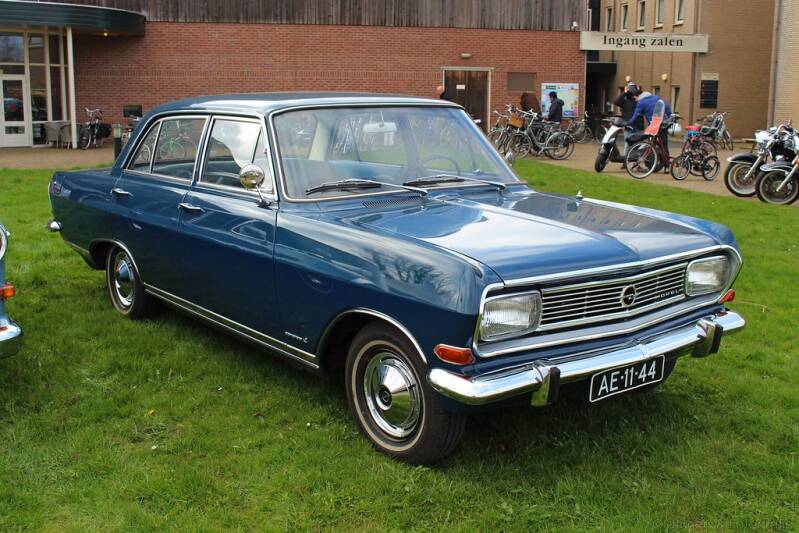

B (1965–1966)
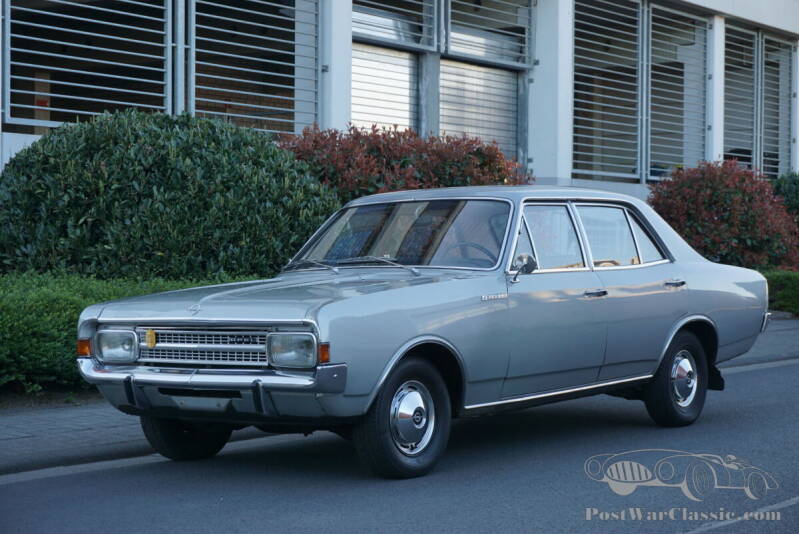
A transition model, the Rekord B offered only a mild facelift of the A but allowed Opel to avoid delay in introducing its new, more oversquare four-cylinder cam-in-head (CIH) engines (1500, 1700 S, 1900 S). The CIH engines were used in all subsequent Rekord generations until 1986, when the Rekord was replaced by the Opel Omega.
C (1966–1971)
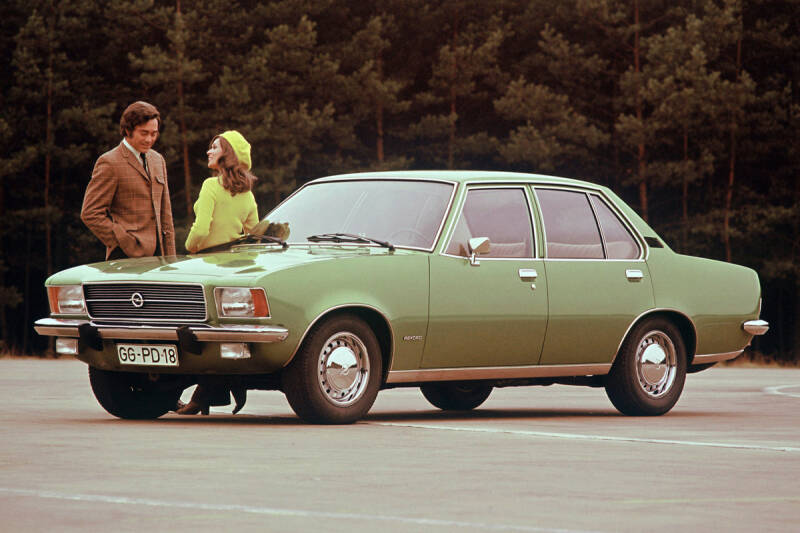
The Rekord C was produced in a wide variety of body styles and inline four- and six-cylinder engines. It was reliable, roomy, and pleasant to look at with its stylish coke-bottle line. A solid hit with the public, its 1.276.681 units sold made it the most successful Rekord to date.
D (1972–1977)
About 1.1 million Rekord Ds were made. Because the name Rekord D was easily mistaken to connote a diesel-powered car, the name Rekord II was often used in sales literature. The engine types available were 1897 cc or 1698 cc CIH (cam-in-head) four-cylinder gasoline engines.
E (1977–1986)
The E model can be subdivided into Rekord E1 (1977–82) and Rekord E2 (1982–86). Over 1.4 million units were made. The Rekord E was available as a two- or four-door sedan, and as a three- or five-door Caravan (station wagon). In some markets where the tax structure was suitable, a three-door van version was also available.
gt
The Opel GT is a front-engine, rear-drive two-seat sports car manufactured and marketed by Opel in two generations separated by a 34-year hiatus.


gt (1968–1973)
gt roadster (2007–2010)
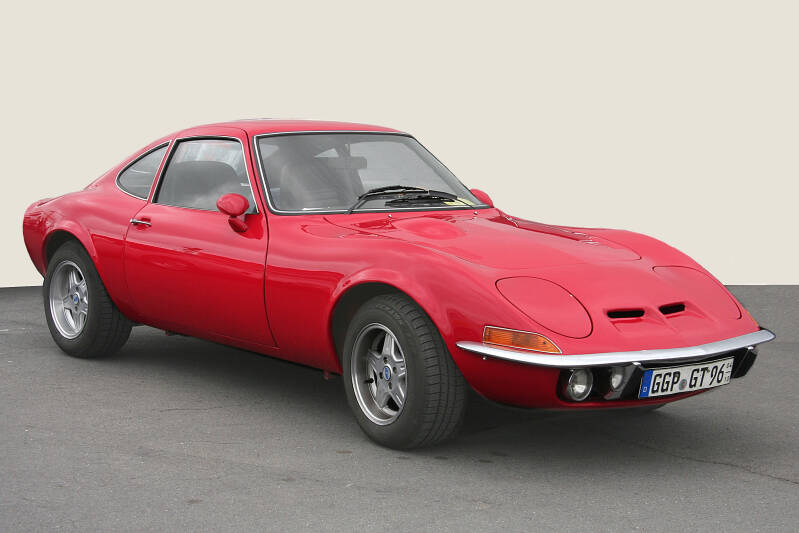
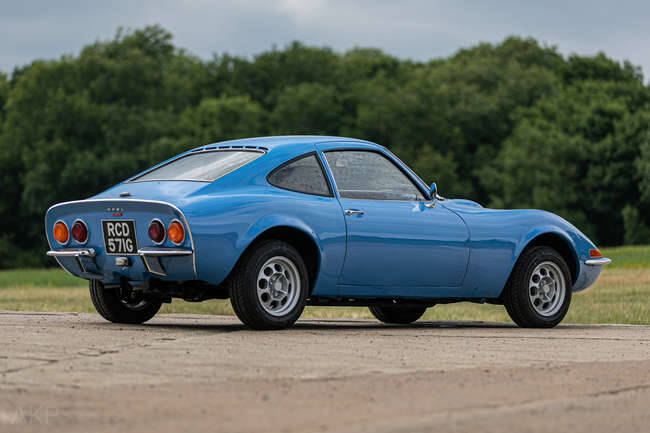
The Opel GT was equipped with a base 1.1 L OHV inline-four engine, which produced 67 hp (SAE) at 6000 rpm. However, most buyers chose an optional 1.9 L camshaft in head engine, which produced 102 hp (SAE) at 5200 to 5400 rpm.
The Opel GT has a steel unibody chassis and a front mid-engined, rear-wheel drive layout. The engine is mounted far back in the chassis to improve weight distribution.
One unusual feature of the Opel GT is the operation of the hidden headlamps. They are manually operated, by way of a large lever along the center console next to the shifter. Unlike pop-up headlights, they both rotate in the same direction (counterclockwise from inside the car) about a longitudinal axis.
During 1968 to 1973, a total of 103.463 were sold — including the first few hundred cars hand-assembled in 1968 and the 1968–1970 models with the 1.1 L engine, which totaled 3.573 cars. Of the later GTs, 10.760 were the cheaper model GT/J model.
The new Opel GT was produced from 2007 to 2009. It was a badge engineered variant of the Pontiac Solstice and the Saturn Sky and was available solely with the 2.0 L, 260 hp direct injection turbocharged Ecotec four-cylinder engine. It has 18-inch alloy wheels. The car replaced the Opel Speedster in the European lineup, but was not sold in the UK under the Vauxhall name, as the Wilmington Assembly Plant where it was produced did not have the necessary tooling for producing right-hand drive vehicles.
Following the General Motors bailout of 2008 and subsequent restructuring of the company, both Saturn and Pontiac were done away with, resulting in the ceasing of all Opel GT production from 2009 onward. Two 2010 model year Opel GTs were produced, albeit in 2009. Following the entry into the 2010s, there would be no production vehicle to bear the Opel GT name.
ascona
The Opel Ascona is a large family car (D-segment in Europe) that was produced by the German automaker Opel from 1970 to 1988. It was produced in three separate generations, beginning with rear-wheel-drive and ending up as a front-wheel drive J-car derivative. The Ascona was developed to fill the gap in the Opel range as the Opel Rekord was gradually growing in size.
The Ascona took its name from the lakeside resort of that name in Ticino, Switzerland, and already in the 1950s a special edition of the Opel Rekord P1 was sold as an Opel Ascona in Switzerland, where the name was again used in 1968 for a locally adapted version of the Opel Kadett B.


A (1970–1975)
In the fall of 1970, Opel presented its completely new vehicle range in Rüsselsheim (internal project code 1.450). The Opel Manta coupé was launched on September 9, followed by the Opel Ascona on October 28 in two- and four-door saloon forms, plus a three-door estate called the Caravan or Voyage. These models were positioned between the existing Opel Kadett and the Opel Rekord, and unlike later Asconas — there was no Vauxhall sister model.
The range featured petrol engines from 1.2 L to 1.9 L, with power between 60 and 90 PS.
B (1975–1981)
The second generation Opel Ascona B was presented in August 1975 at the Frankfurt Motor Show. It was available as a two or four-door saloon. There were related two and three-door coupé models in the Opel Manta range. There was no estate ("Caravan") body available.
The Ascona B retained the same engine range as its predecessor, versions with higher compression ratio and needing 98 octane petrol, dubbed S, were available alongside the 90 octane models.
C (1981–1988)
The Ascona C was launched in August 1981 as part of General Motors' J-car project. This was Opel's second front-wheel drive car since the introduction of the Kadett D in 1979. It was narrowly beaten to the European Car of the Year award by the Renault 9 in 1982.
The base model was the 1.3 L introduced in 1978 in the Ascona B, with 60 PS, followed by a 1.6 L with 75 PS. The top of the line was the sporty GTE model, pushing power to 130 PS.
manta
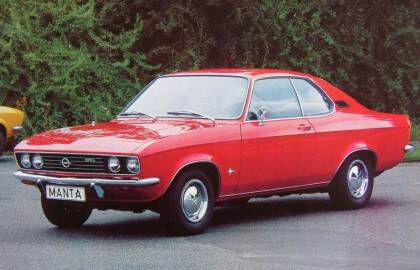
A (1970–1975)
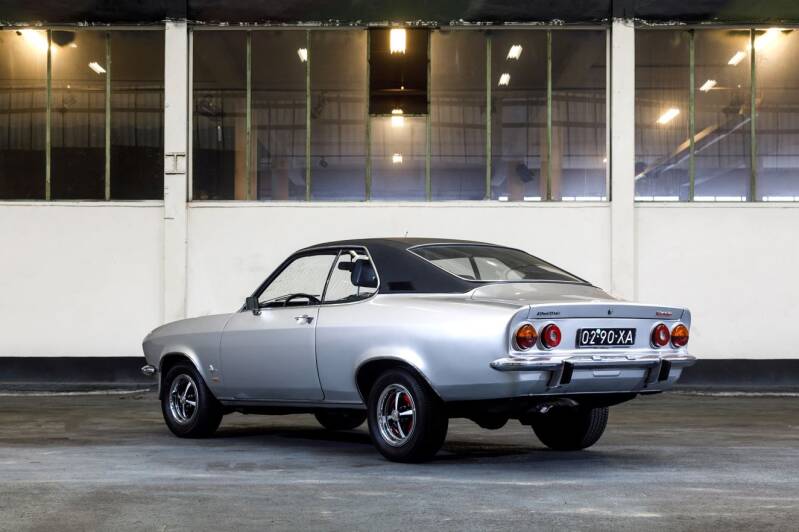

B (1975–1988)

The Manta A was released in September 1970, two months ahead of the then new Opel Ascona on which it was based. A competitor to the Ford Capri, it was a two-door "three-box" coupé, and featured distinctive round tail lights, quite similar to those on the Opel GT and which in fact were used on the GT in 1973, its final model year. It took its name, and a few minor styling cues, from the Manta Ray concept car (1961), which also famously influenced the 1968 Chevrolet Corvette C3 (both Chevrolet and Opel had General Motors as their parent company). 498.553 Manta As were built from 1970 until 1975.
The Manta was normally equipped with a 1.6 or a 1.9-litre CIH engine, although in continental Europe, a small, 1.2-litre, motor was also offered.
The GT/E was a fuel-injected version of the European 1.9 L and the performance figures were very impressive for the time. The most notable special editions models based on the GT/E were the "Black Magic" (with black and plaid interior) and the "Swinger" edition in white with red stripes and a bright red fabric interior.
The second car to use the Manta name was launched in August 1975. This two-door "three-box" car was mechanically based directly on the then newly redesigned Opel Ascona, but the overall design was influenced by the 1975 Chevrolet Monza.
Available engines included the small 1.2-litre OHV engine, the 1.6-litre CIH and the 1.9-litre CIH. Also in 1976, the GT/E engine from the Manta A series was adapted into the Manta B programme spawning the GT/E Manta B series. In 1979 the GT/E had the engine replaced with the new 2.0-litre CIH and Bosch L-Jetronic injection system. Power output was now 110 PS. The 1.9-litre engine gave way to the 2.0 litre S engine which was aspirated by a Varajet II carburettor. This engine was the most used engine by Opel at the time, and was to be found in several Opel Rekord cars as well. Opel also offered a dealer-installed tuning kit for the fuel-injected engine, promising at least 125 PS thanks to a modified camshaft, valve lifters, and exhaust system.
Both Manta versions received a facelift in 1982, which included a plastic front spoiler, sideskirts for the GT/E and GSi models, a small wing at the rear and quadruple air intakes on the grille. Also the 1.2-, 1.6- and 1.9-litre engines were discontinued.
monza
The Opel Monza is an executive fastback coupe produced by the German automaker Opel from 1977 to 1986. It was marketed in the United Kingdom as the Vauxhall Royale Coupé by Vauxhall.


A1 (1977–1982)
A2 (1982–1986)
The Monza was planned as a successor for the Commodore Coupé. In the late 1970s the Commodore C model was made as a two-door version (as was the Rekord E1), but still as a sedan type car. The cars to compete with would be the Mercedes-Benz C123 and later the Mercedes-Benz C124 and the BMW 6 Series (E24) models (coupe models), and any other large luxury coupe.
The engine range for the Monza A1 consisting of the 3.0S, the 2.8S, the newly developed 3.0E and later the 2.5E (the 3.0 had 180 bhp and 248 Nm with fuel injection), gave a wide range. The three-speed Borg Warner automatic transmission from the Commodore range needed to be modified to cope with the new and improved power outputs.
With the 3.0-litre engine, the Monza was at that time the fastest car Opel had ever built. Being capable of speeds as high as 215 km/h, and a 0–100 km/h acceleration time of 8.2 seconds.
Four well-sized adults had plenty of space. Even the boot was large, and the rear seats flipped down to make even more space. The A1 was not a great hit at the customers even though it was relatively cheap.
In 1982, the Monza, Rekord and Senator all got a face-lift and were named the A2 (E2 for the Rekord). The A2 looked similar to the A1 overall but with some small changes to the front end. The headlights noticeably increased in size, and the front was more streamlined than the A1.
At a time of rising fuel prices, the need for fuel efficiency was becoming paramount, and Opel decided to change the engine specifications of the Monza. This meant introducing both the inline four-cylinder CIH 2.0E engine from the Rekord E2 (replaced by the torquier 2.2 in October 1984). However, as the Monza weighs almost 1400 kg, given the 115 PS of the two engines, the cars were considered underpowered and thus unpopular. The 2.5E was given a new Bosch injection system so between 136 and 140 PS was available. The 2.8S was taken out of production. The 3.0E engine stayed the top of the range. The 3.0E was given an upgraded Bosch fuel injection and fuel consumption improved somewhat.
By the time the Senator was updated to the new Senator B and the Monza cancelled, 43.812 Monzas had been built. There was no direct Monza replacement.
senator
The Opel Senator is a full-size executive car (E-segment) produced by the German automaker Opel, two generations of which were sold in Europe from 1978 until 1993. A saloon, its first incarnation was also available with a fastback coupé body as the Opel Monza and Vauxhall Royale Coupé. The Senator was, for its entire existence, the flagship saloon model for both Opel and Vauxhall.
Through the international divisions of General Motors, it was also known in various markets as the Chevrolet Senator, Daewoo Imperial (in South Korea), Vauxhall Royale (until 1983) and Vauxhall Senator.


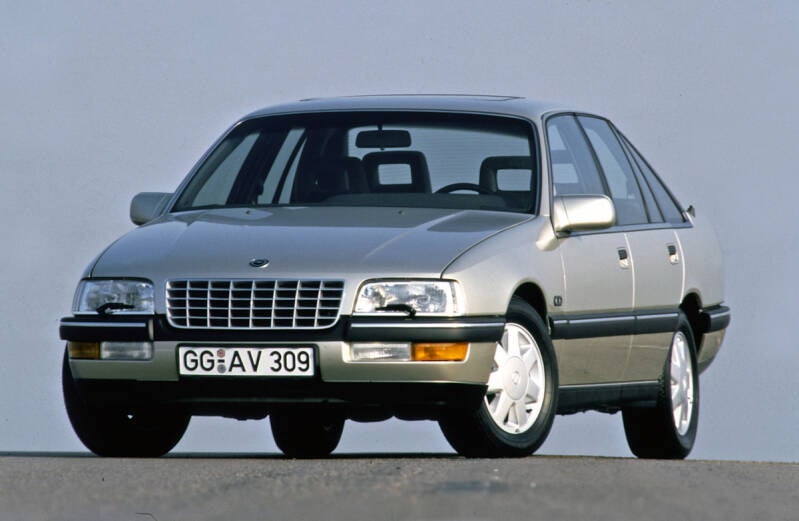
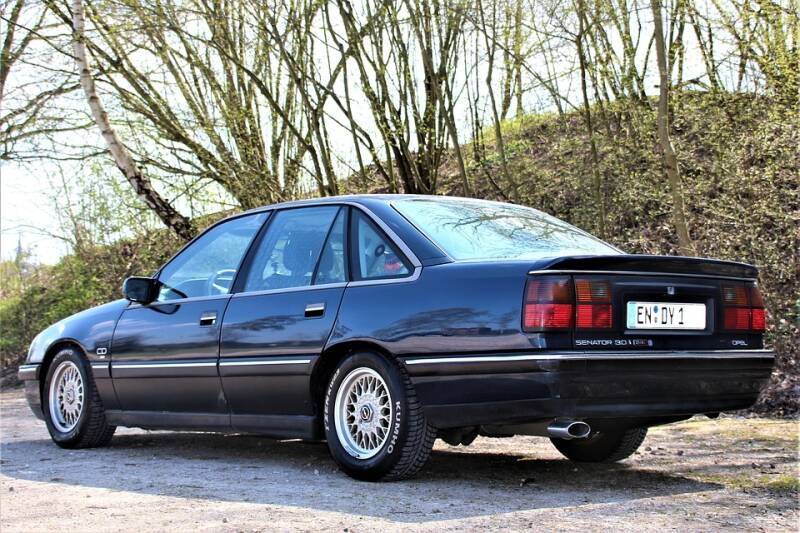
A (1978–1986)
B (1987–1993)
The Senator A was last part of a joint model programme executed by GM in the 1970s to develop a common series of vehicle platforms for both its European brands (and also for the Holden brand in Australia). The Senator emerged as a long wheelbase version of the Opel Rekord E, complemented by a three-door fastback coupé version on the same platform called the Opel Monza, which was intended as a successor for the Opel Commodore coupé.
The engine range for the first phase of the model's life included the 2.8S and the newly developed 3.0E, which had 180 PS with fuel injection. The three-speed automatic transmission was Opel's own design introduced in 1969.
The straight-six engines were all of the Opel cam-in-head engine design, as used in the earlier Commodore models. With the 3.0 litre engine, the Monza was the fastest car Opel had built, capable of 215 km/h.
The original Senator and Monza were facelifted in November 1982. The facelifted car looked similar to its predecessor, with relatively minor changes.
A new model, the Senator B (marketed without the "B" suffix), arrived in the spring of 1987, a longer-bodied version of the Opel Omega. There was no Monza equivalent.
There were various versions of the Senator B: twelve valve 2.5 L and 3.0 L sized engines were released in 1987 along with a luxury "CD" model with the 3.0 L engine. The CD version boasted Electronic adjustable suspension, "ERC", for the first time in a mass-produced European car, air conditioning, heated seats also in the back, genuine walnut panels, leather covered centre console, trip computer and cruise control.
The cars were available with either five speed manual or four speed automatic gearboxes. A digitally controlled 4-speed automatic from Aisin-Warner equipped with three different switching programs Sport, Economy and Winter.
A 24-valve version of the 3.0-litre six was introduced in 1989, generating 204 PS– compared with 177 PS for the older twelve valve version.
Production of the Opel Senator B ended in the autumn of 1993 with only 69.943 cars produced since the car's launch six and a half years earlier.
omega
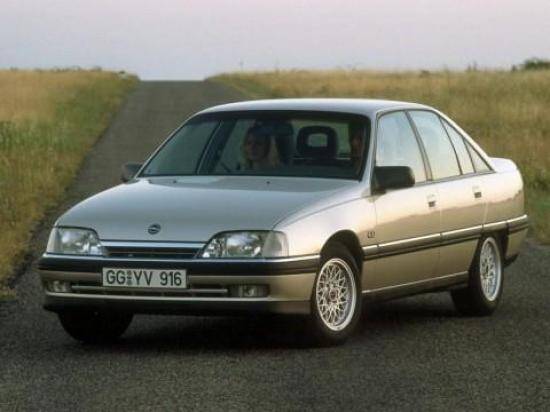
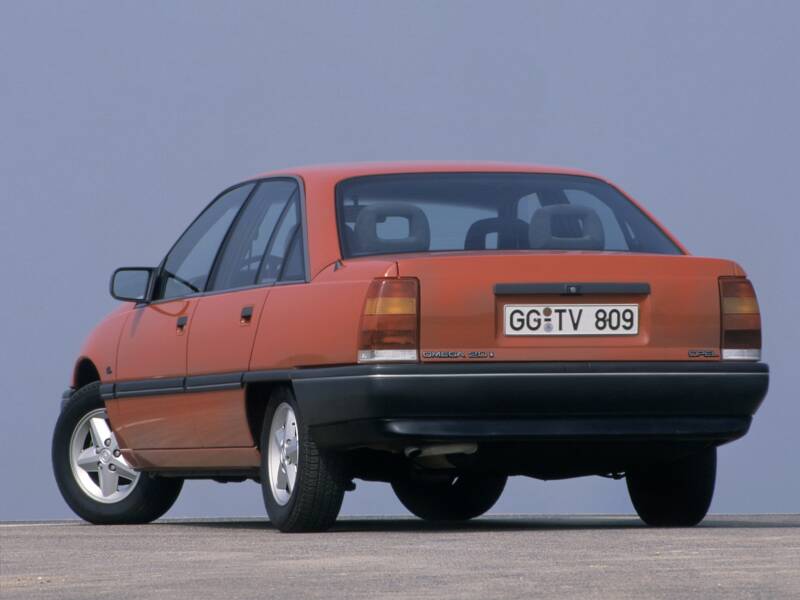
The Opel Omega is an executive car engineered and manufactured by German automaker Opel between 1986 and 2003. The first generation, the Omega A (1986–1994), superseded the Opel Rekord. It was voted European Car of the Year for 1987, and was available as a saloon or estate. The second generation, the Omega B, was manufactured from 1994 to 2003. Production of the Omega was discontinued in 2003. It was succeeded by the Opel Signum.

A (1986–1994)
The body was designed as an evolution of the previous Opel design theme engineered more towards aerodynamics in view of higher fuel prices and the general drive towards more fuel efficiency. Compared to the Rekord, the Omega featured many modern technological advances, which were new to Opel in general, if not to the volume segment European automotive market.
All the Omega models used a longitudinally mounted engine with a rear-wheel drive setup, with a five-speed manual transmission or four-speed automatic transmission. The engine range consisted of 1.8 L, 2.0 L, and 2.4 L four-cylinder units (as well as 2.0 L, 2.3 L diesel, and 2.3 L turbodiesel) to 2.6 L, 3.0 L, and 3.0 L-24v six-cylinder units. The 1.8 L and 2.0 L four-cylinder petrol engines were all based on the Family II design, whilst the six-cylinder units and the 2.4 L four-cylinder were based on the older Opel cam-in-head engine family.
B (1994–2003)
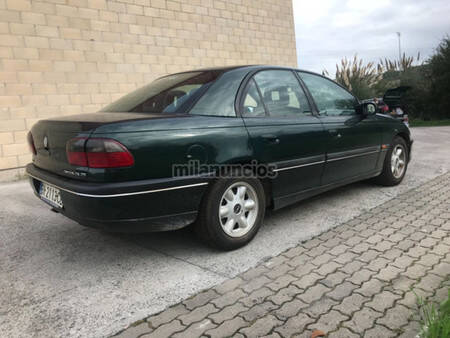
The 1994 Omega B was an all new car with a modern exterior design, but a traditional rear-wheel drive chassis. The engine range was all new. Its MV6 model was rebadged and sold in the United States as Cadillac Catera between 1997 and 2001.
The engines were not a major departure from the Omega A, aside from the shift from Opel's own (outdated) 2.3-liter diesel to BMW's turbocharged inline-six. Originally with the model code U25DT, this was updated to the Euro 2 compliant X25DT engine during 1996. In late 1999, the Omega received a facelift and a 2.2 L 16-valve engine was added to the range as an eventual replacement for the 2.0 L which was discontinued within a year.
The following year, a 3.2 L V6 engine replaced the 3.0 L V6 unit, and a 2.6 L V6 engine replaced the 2.5 L V6 unit. 2001 also brought a brand new diesel 2.5 DTI (M57) engine from BMW, with a "common rail" fuel system.
calibra

1989-1997


The Opel Calibra is a coupé, engineered and produced by the German automaker Opel between 1989 and 1997. In the United Kingdom, where it remained on sale until 1999, it was marketed under the Vauxhall brand as the Vauxhall Calibra. It was also marketed as the Chevrolet Calibra in South America by Chevrolet, and the Holden Calibra in Australia and New Zealand by Holden.
The Calibra was introduced to belatedly replace the Manta and to counter the Japanese sporting coupés of the period. It employs the running gear of the first generation Opel Vectra, which had been launched in October 1988. Calibra production was based in the Opel factory in Rüsselsheim, Germany, and the Valmet Automotive factory in Uusikaupunki, Finland, where production was consolidated in November 1995. The Calibra was initially only available with front-wheel drive, but from November 1990, four wheel drive became available.
The Opel Calibra was styled by GM's designer Wayne Cherry, and German designer Erhard Schnell. As a front-wheel drive three door hatchback coupé based on the Vectra A chassis, its ride and handling are not significantly better than that of the large family car from which it grew.
An innovative design feature was the slim 7 cm high headlamp, which was possible to create using the then new ellipsoid technology developed in conjunction with Hella. The headlamp design was key to the sport coupé's unique design and aerodynamics.
Power was initially from a 2.0 litre 8 valve 117 PS and a Cosworth designed 16 valve fuel injected 152 PS four cylinder redtop petrol engine.
For 1992, a turbocharged 2.0 litre 16 valve engine 207 PS was added to the range. With four wheel drive, a six speed Getrag manual transmission and a claimed top speed of 245 km/h. In 1993, a 170 PS 2.5 litre V6 was introduced, available with both manual and automatic transmissions. The V6 was not as fast as the Turbo, but was rather more civilised.
astra
The Opel Astra is a compact car/small family car (C-segment) developed and produced by the German automaker Opel since 1991, currently at its sixth generation. It was first launched in September 1991 as a direct replacement to the Opel Kadett. As of 2025, the car slots between the smaller Corsa supermini and the larger Frontera subcompact crossover SUV.


first generation Astra F – T91 (1991-1998)
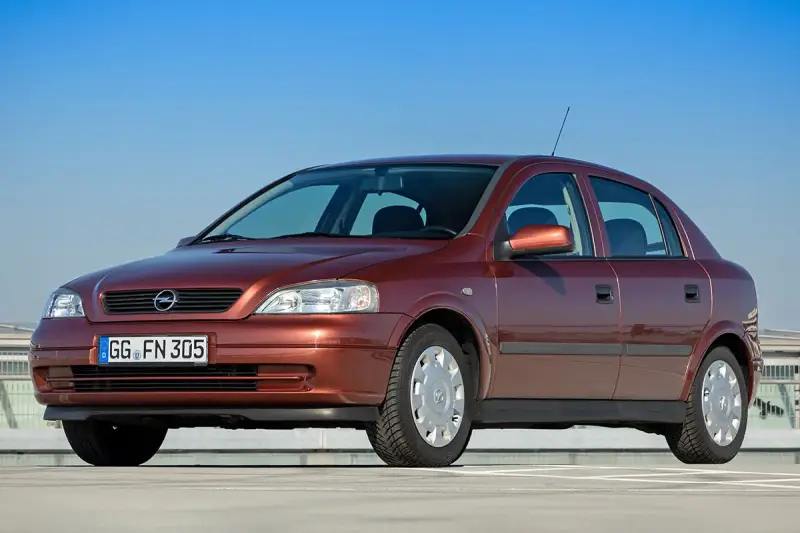
With the Kadett E's successor, Opel adopted the Astra nameplate, which was already used by Vauxhall for the Kadett D and E. It was offered as a three- or five-door hatchback, a saloon (sedan), and an estate (wagon) known as the Caravan and available with five doors only, bringing Opel's run of three-door wagons to an end at long last. A cabriolet was also offered, designed, and built by Bertone in Italy.
The Astra F received a cosmetic facelift in 1994, accompanied by improved rust protection.
Engines ranged from 1389 cc to 1998 cc.
second generation Astra G – T98 (1998-2004)
The Astra G was launched in Europe in Spring of 1998. It was available as a three or five-door hatchback, four-door saloon, five-door estate (in Opel tradition, known as a "Caravan") and two special versions from 2000: the Astra Coupé and the Astra Cabrio, both of them designed and built by Bertone.
Its chassis was tuned by Lotus and formed the base of a 7-seater compact MPV, the Opel Zafira, which was co-developed by Porsche. Approximately 90.000 coupés were produced.
The Astra G was built as Chevrolet Astra in Brazil and was facelifted in 2003.
third generation Astra H – A04 (2004-2009)
The Astra H was launched in March 2004 as a five-door hatchback, whilst a five-door estate launched late 2004 and a sporty three-door hatchback, designated the GTC (Gran Tourismo Compact) for European markets, Sport Hatch in the UK and the Coupé in Australia, launched in 2005.
This generation was kept in production in Bochum alongside the new Astra J and sold as the Opel Astra Classic III in some Eastern European markets such as Poland and Turkey. It was available as a 5-door hatchback, saloon, and estate. Production of the Opel Astra Classic III eventually ended in 2014.
The Opel Astra was revised in January 2007.

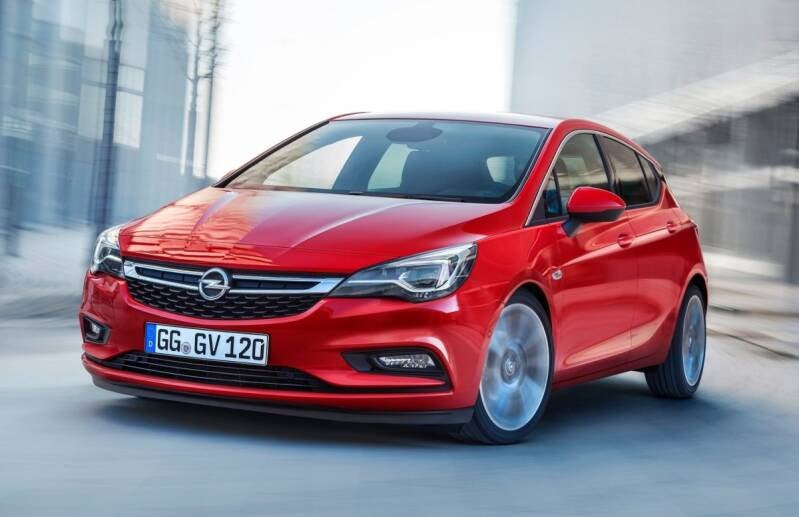

fourth generation Astra J – P09 (2009-2015)
The Astra J has taken most of its styling from the new Opel Insignia, with many of the higher options fitted as standard. The Astra was developed at Opel's 'International Technical Development Center' (ITDC) in Rüsselsheim.
The Opel Astra came third in the European Car of the Year award in 2010.
Engines are available with the 5-speed or 6-speed manual transmission. The only optional available automatic transmission is the 6-speed with active select mode, which can be ordered for the 1.4 turbo, 1.6, 1.6 turbo and 2.0 CDTI depending on region.
fifth generation Astra K – B15 (2015-2021)
The Astra K is smaller (5cm), and lighter (up to 200kg) compared to Astra J, although larger on the inside.
Available engines are 1.0-litre three-cylinder and 1.4-litre four-cylinder petrol engines or 1.6-litre diesels. All engines are new and recently developed by Opel.
In 2019, Opel announced the move to the new GM E-Turbo 1.2-litre, "1.4-litre" (actually a 1.3-litre) three-cylinder petrol engines, and 1.5-litre three-cylinder diesels
A facelift of Opel Astra K released around the summer of 2019. Changes were minimal, both inside and outside.
sixth generation Astra L – C02 (2021-now)
The sixth generation Astra was unveiled on 13 July 2021 and it went on sale on 12 November 2021.
As the first Astra developed by PSA Group, it’s based on the third-generation of the EMP2 platform which made its wheelbase grow by 55 mm. Launched ten months after the merger of FCA and PSA to form Stellantis, the vehicle has been offered as a hybrid for the first time, with a 180-horsepower powertrain. The 225 horsepower hybrid version, taken from the Peugeot 508 and Peugeot 3008, is also available on the GSe version. An all-electric version is also available.
insignia
The Opel Insignia is a large family car (D-segment in Europe) developed and produced by the German car manufacturer Opel from 2008 to 2022. Taking its name from a 2003 concept car, the model line serves as the flagship model, slotted above the Astra and Corsa in size. The Insignia serves as the successor to both the Signum and Vectra model lines, replacing both vehicles under a single nameplate. The model line was offered in four-door sedan/saloon body styles, five-door liftback, and as a five-door station wagon/estate.
Sold worldwide, the Insignia is marketed under multiple nameplates. Under Opel tradition, the model line is marketed by Vauxhall in the United Kingdom, taking on the Vauxhall Insignia name. Both generations of the model line have been marketed in North America and China as the Buick Regal.

first generation G09 (2008-2016)

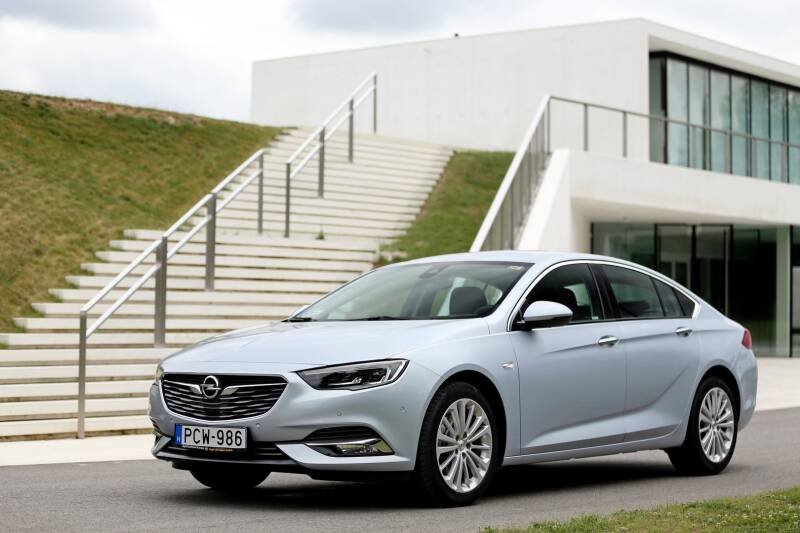
second generation Z18 (2017-2022)

It then went on sale in European dealerships as a five-door liftback and five-door estate dubbed Sports Tourer – a departure for Opel which traditionally used the "Caravan" name to denote the estate bodystyle. It was the first production car to be based on the Epsilon II platform, which was also used on other models such as the 2010 Saab 9-5 and the Chevrolet Malibu.
Design wise, the Insignia offers more knee room than the Vectra. The saloon and liftback variants have the same length, while the estate version is slightly longer. All three models share the same wheelbase.
From launch, the Insignia was offered with four petrol engines and three diesel engines. In early 2009, Opel revealed the Insignia OPC, a high performance variant of the Insignia. Like the preceding Vectra OPC, it is powered by a 2.8 litre single-turbo V6 (Manufactured in Melbourne, Australia) making 325ps.
A major facelift was introduced in June 2013, with new exterior and interior styling, new engines, and new safety features.
The car is based on a moderately updated version of Epsilon II platform and was wholly developed by General Motors. After the sale of Opel to PSA Group, later Stellantis, it is continued to be produced under license.
Opel dropped the OPC designation for its performance Insignia, instead reverting to their older GSi nameplate, last seen on the second generation Opel Vectra. The GSi nameplate also replaces VXR, on the Vauxhall version of the Insignia.
After a 2020 facelift, only the 2-liter four-cylinder petrol engine remained available in Europe, while a new 1.5-liter three-cylinder and a 2.0-liter four cylinder diesel replaced the earlier 1.6 and 2.0.
Opel ended production of the Opel Insignia in 2022. PSA later reversed course and said that the Insignia nameplate will be resurrected as a crossover SUV in 2024 for both Opel and Vauxhall brands; though this never came to fruition.

In March 2017, the PSA Group agreed to buy Opel, its British sister brand Vauxhall and their European auto lending business from General Motors for US$2.2 billion.In return, General Motors will pay PSA US$3.2 billion for future European pension obligations and keep managing US$9.8 billion worth of plans for existing retirees. Furthermore, GM is responsible for paying about US$400 million annually for 15 years to fund the existing pension plans in Great Britain and Germany.
In June 2017, Michael Lohscheller, Opel's chief financial officer, replaced Karl-Thomas Neumann as CEO. The acquisition of Opel and Vauxhall was completed in August 2017.
In the 2018 financial year, Opel achieved an operating income of €859 million. It was the first positive income since 1999.
On 16 January 2021, Opel became part of Stellantis following the merger of its parent company PSA Group with the Italian-American group Fiat Chrysler Automobiles.
adam


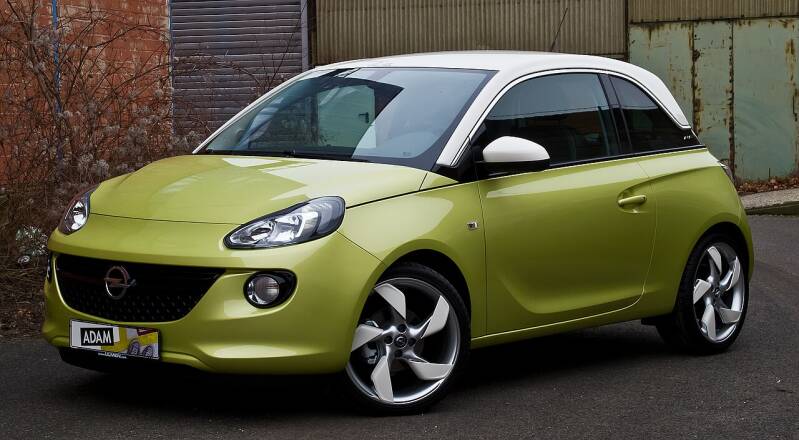
2012-2019
The Opel Adam is a city car engineered and produced by the German car manufacturer Opel, and is named after the company's founder Adam Opel. It was sold under the Vauxhall marque in the United Kingdom. It was launched in France at the 2012 Paris Motor Show, with sales starting in the beginning of 2013.
The Adam is claimed to have over 61.000 combination possibilities for the exterior and over 82.000 for the interior.
From launch, there were a choice of two engines: 1.2 L 70PS, and 1.4 L with 87 PS and 100 PS. All engines are available in ecoFLEX mode with lower CO2 emission. From spring 2014, Opel introduced a 1.0 three cylinder SIDI Turbo engine.


Create Your Own Website With JouwWeb