


Motor Racing Developments Ltd., commonly known as Brabham, was a British racing car manufacturer and Formula One racing team. It was founded in 1960 by the Australian driver Jack Brabham and the British-Australian designer Ron Tauranac. The team had a successful thirty-year history, winning four FIA Formula One World Drivers' Championships and two World Constructors' Championships.
Under Brabham and Tauranac, Brabham won double world championships in 1966 and 1967, with the 1966 drivers' title going to Jack Brabham and the 1967 title going to Denny Hulme. Jack Brabham is the only Formula One driver to win a Drivers' Championship in a car bearing his own name.
Brabham was the first Formula One team to use a wind tunnel to design cars. It became the world's largest manufacturer of open-wheel racing cars sold to customer teams, having built more than 500 cars by 1970. Teams using Brabham cars won championships in Formula Two and Formula Three. The cars also competed in events like the Indianapolis 500 and Formula 5000 racing.
The businessman Bernie Ecclestone owned Brabham during most of the 1970s and 1980s, and later became responsible for administering the commercial aspects of Formula One. Under Ecclestone and chief designer Gordon Murray, the team won two more Drivers' Championships in the 1980s with Brazilian Nelson Piquet. During this period, the team withdrew from manufacturing customer cars but introduced innovations such as carbon brakes and hydropneumatic suspension; it also reintroduced in-race refuelling. Its unique 'fan car' won its only race, in 1978, before being withdrawn. Piquet won his first championship in 1981 in the ground effect BT49-Ford. In 1983, he became the first driver to win a title with a turbocharged car, the Brabham BT52, which was powered by BMW's M12 straight-four engine and won four Grands Prix that season. Ecclestone sold the team in 1988.
bt3

1962


The Brabham BT3 is a Formula One racing car. It was the first Formula One design to be produced by Motor Racing Developments for the Brabham Racing Organisation, and debuted at the 1962 German Grand Prix. The Brabham BT3 was the vehicle with which team owner – then two-time World Champion – Jack Brabham, became the first driver ever to score World Championship points in a car bearing his own name, at the 1962 United States Grand Prix. The following year Brabham also became the first driver ever to win a Formula One race at the wheel of an eponymous car, again driving the BT3, at the 1963 Solitude Grand Prix. The BT3 design was modified only slightly to form the Tasman Series-specification Brabham BT4 cars.
Behind the driver, the engine bay was sized to accept Coventry Climax's 1494 cc FWMV V8 engine, introduced the previous year. Parts of the chassis were removable to allow the engine to fit the narrow chassis. In 1962-specification this engine developed around 157 bhp, which increased to around 190 bhp in its 1963 form.

Jack Brabham
bt7

1963-1965


The Brabham BT7 (also known as Repco Brabham BT7) is a Formula One racing car. It was raced by the Brabham Racing Organisation and several privateers from 1963 to 1966. A development of its predecessor, the Brabham BT3, the car proved to be competitive during 1963 and 1964, taking Dan Gurney to two victories. Technical issues prevented the BT7 from scoring better results. The car was equipped with a more reliable Hewland gearbox compared to the Colotti-Francis in the BT3. Malcolm Sayer from Jaguar Cars was consulted to give input for the revised chassis. The slick aerodynamics proved particularly strong at high speed circuits such as Monza or Spa. Its successor, the BT11, was a slightly altered BT7 aimed for customers such as Rob Walker or Jo Siffert.
It was in this car that Denny Hulme debuted in Grand Prix racing. He would later win the 1967 World Driver's Championship.
The BT7 was also raced in Formula 2 by Hubert Hahne among others using a 2-litre BMW Neue Klasse engine

Jack Brabham
Dan Gurney
Denny Hulme
Jo Bonnier
bt11


1964-1965
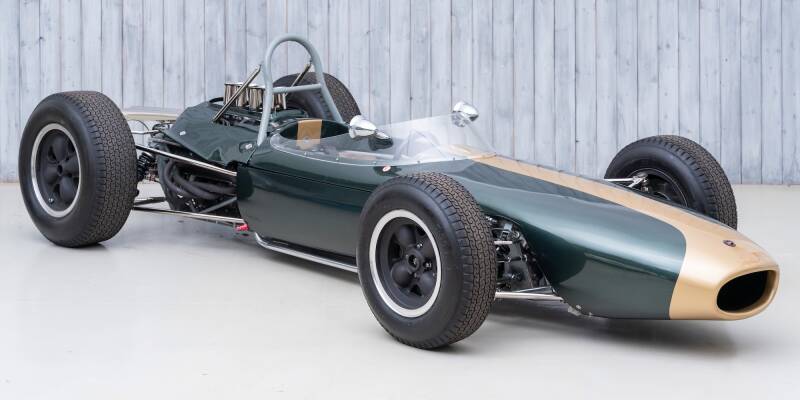
The Brabham BT11 (also known as Repco Brabham BT11) is a Formula One racing car built in 1964, mainly for use by privateers in grand prix racing, but was also used by the Brabham works team during 1964 and 1965. It was the only competitive car of the period available to privateers, recording eight podium finishes in total. The car's best results came at consecutive events in the United States and Mexico 1965, with Dan Gurney qualifying and finishing second in the latter.
It was in a BT11 that 1970 World Champion Jochen Rindt debuted in Grand Prix racing. John Taylor however died four weeks after suffering severe burns in an accident with Jacky Ickx's Matra at the 1966 German Grand Prix.
The BT11 was also raced in the popular off season Tasman Series.

Jack Brabham
Dan Gurney
Denny Hulme
Jochen Rindt
Jo Siffert
Bob Anderson
Chris Amon

The FIA doubled the Formula One engine capacity limit to 3 litres for the 1966 season and suitable engines were scarce. Brabham used engines from Australian engineering firm Repco, which had never produced a Formula One engine before, based on aluminium V8 engine blocks from the defunct American Oldsmobile F85 road car project, and other off-the-shelf parts. Consulting and design engineer Phil Irving (of Vincent Motorcycle fame) was the project engineer responsible for producing the initial version of the engine. Few expected the Brabham-Repcos to be competitive, but the light and reliable cars ran at the front from the start of the season.
The Brabham team took the Constructors' World Championship in 1966 and 1967.
bt19

1966-1967


The Brabham BT19 /ˈbræbəm/ is a Formula One racing car designed by Ron Tauranac for the British Brabham team. The BT19 competed in the 1966 and 1967 Formula One World Championships and was used by Australian driver Jack Brabham to win his third World Championship in 1966. The BT19, which Brabham referred to as his "Old Nail", was the first car bearing its driver's name to win a World Championship race.
The car was initially conceived in 1965 for a 1.5-litre Coventry Climax engine, but never raced in this form.
Australian company Repco developed a new V8 engine for Brabham's use in 1966, but a disagreement between Brabham and Tauranac over the latter's role in the racing team left no time to develop a new car to handle it. Instead, the existing BT19 chassis was modified for the job.
Only one BT19 was built. It was bought by Repco in 2004 and put on display in the National Sports Museum in Melbourne, Australia, in 2008. It is often demonstrated at motorsport events.

Jack Brabham
Denny Hulme
bt20


1966-1967
The Brabham BT20 is a Formula One car used by the Brabham Formula One team in 1966 and 1967, as well as a number of privateers from 1967 to 1969. The BT20 was the direct successor to the Brabham BT19 which was driven to the World Constructors' title in 1966.
The BT20 was driven in 7 out of the 9 races of Brabham's Constructors' Championship winning season in 1966, and the first three races en route to another championship in 1967.
The BT20 was very successful in these seasons, scoring 7 podiums and one win (at the 1967 Monaco Grand Prix) in its first 10 entries.
The BT20 was succeeded by the Brabham BT24.

Jack Brabham
Denny Hulme
Guy Ligier
John Love
Silvio Moser
Peter de Klerk
bt24


1967
The Brabham BT24 was a Formula One racing car design. It was one of three cars used by the Brabham racing team during their championship-winning 1967 Formula One season. Only three chassis were ever raced.
Designed by Ron Tauranac, the BT24 was based on the BT23 Formula Two car and was notably light and compact. Tauranac continued to adhere to the space frame chassis, alone of Formula One designers. The BT24 was designed to take the new Repco-Brabham RB740 V8 engine, which was an all new design entirely built by Repco.
With reigning champion Jack Brabham and Denny Hulme at the wheel, the BT24 took 3 wins to Jim Clark's 4 in the Lotus, but with six 2nd places, two 3rds, a 4th and a 5th the Brabham team comfortably took the Constructors' Championship, while Hulme pipped team-owner Brabham to the Drivers' Championship by 5 points.
In addition to its three championship race wins the BT24 also won the prestigious 1967 International Gold Cup at Oulton Park in the hands of Jack Brabham.

Jack Brabham
Denny Hulme
Jochen Rindt
Dan Gurney
bt26

1968-1969


The Brabham BT26 was a Formula One racing car design. A development of the previous BT24, its Repco engines were unreliable, but following a switch to Cosworth DFV engines it scored two World Championship Grand Prix wins and finished runner up in the 1969 World Constructors' Championship.
Designed by Ron Tauranac, the BT26 was the final incarnation of his spaceframe F1 car, and one of the last F1 cars to be raced of such construction – forthcoming rule changes regarding fuel storage would outlaw spaceframe chassis.
The 1968 season was plagued by a string of retirements and Jochen Rindt left to join Lotus. In 1969 the Repco engines were replaced with Cosworth DFV engines; these variants are designated BT26A.

Jack Brabham
Jochen Rindt
Jacky Ickx
bt33


1970-1972
The Brabham BT33 was a Formula One racing car built for the 1970 F1 season. It was Ron Tauranac's first F1 monocoque design. After a promising start to the season, including a first-race pole and win at the South African Grand Prix, it faded somewhat and ultimately finished fourth in the World Constructors Championship, with drivers Jack Brabham and Rolf Stommelen finishing sixth and eleventh respectively in the Driver's Championship.
The 3.0-liter Ford Cosworth DFV V8 engine produced around 430–436 horsepower at 10.000 RPM, fully stressed as a structural member of the chassis. Only three chassis were ever constructed (BT33/1, BT33/2, and BT33/3). All three original chassis survived and have been actively campaigned in vintage racing and events like the Monaco Historic Grand Prix.

Jack Brabham
Rolf Stommelen
Tim Schenken
Graham Hill
bt34


1971-1972
The Brabham BT34 was a Formula One racing car designed by Ron Tauranac, and used by Brabham during part of the 1971 and 1972 Formula One seasons. Tauranac designed the BT34, which was nicknamed the 'lobster claw', as derived from its twin radiators (claw) mounted ahead of the front wheels. Only one BT34 was built for Hill.
It had a mid-mounted Ford-Cosworth DFV 2993 cc naturally aspirated V8, mated to a Hewland 5-speed manual (FG400) gearbox.
It achieved 1 pole position (Carlos Reutemann at the 1972 Argentine Grand Prix) and took 1 World Championship podium (3rd place finish by Tim Schenken). It finished 9th in the 1971 Constructors' Championship with 7 points.
The single BT34 chassis was sold to the Fittipaldi brothers, later returned to the United Kingdom in 1985, and actively raced in historic motorsport events through 2009.

Graham Hill
Carlos Reutemann
Wilson Fittipaldi
bt37


1972-1973
The Brabham BT37 was a Formula One racing car designed by Ralph Bellamy for the Brabham team to use in the 1972 Formula One season. It was relatively unsuccessful compared to Brabham's earlier and later cars such as the BT19 or the BT44. In the 18 races it was fielded, it collected no wins, no pole positions and no fastest laps. The best results were two fourth place-finishes for Carlos Reutemann and Andrea de Adamich. It generally achieved poor qualifying results, the best being fifth for Reutemann on two occasions.
In 1974 and 1975, it also raced at the RAC British Hill Climb Championship. It is also notable for giving John Watson his Formula 1 debut in 1973.

Graham Hill
Carlos Reutemann
Wilson Fittipaldi
Andrea de Adamich
John Watson

The businessman Bernie Ecclestone owned Brabham during most of the 1970s and 1980s, and later became responsible for administering the commercial aspects of Formula One. Under Ecclestone and chief designer Gordon Murray, the team won two more Drivers' Championships in the 1980s with Brazilian Nelson Piquet. During this period, the team withdrew from manufacturing customer cars but introduced innovations such as carbon brakes and hydropneumatic suspension; it also reintroduced in-race refuelling. Its unique 'fan car' won its only race, in 1978, before being withdrawn. Piquet won his first championship in 1981 in the ground effect BT49-Ford. In 1983, he became the first driver to win a title with a turbocharged car, the Brabham BT52, which was powered by BMW's M12 straight-four engine and won four Grands Prix that season. Ecclestone sold the team in 1988.
bt42


1973-1974
The Brabham BT42 was a Formula One racing car used by Brabham for the 1973 Formula One season. This car marked the team's first design entirely by Gordon Murray after the departure of team co-founder and previous designer Ron Tauranac.
Gordon Murray became chief designer after being offered the role by new team boss Bernie Ecclestone. The car proposed a triangular section alluminium monocoque, with the by then ubiquitous Cosworth DFV as a fully stressed member paired with a Hewland gearbox.
The car featured rising rate pullrod actuated front suspension and a multilink rear suspension. It was fitted with Goodyear tyres. The most striking part of the car being the angular yet simple bodywork design which Murray himself refers to as "triangular".
The car was a marked improvement from the previous years' BT37 with Carlos Reutemann scoring best place results in France and The United States. The BT42 became the base upon which the successful Brabham BT44 would be designed.

Carlos Reutemann
Wilson Fittipaldi
Helmuth Koinigg
Lella Lombardi
Rolf Stommelen
John Watson
Andrea de Adamich
bt44

1974-1976


The Brabham BT44 was a Formula One racing car designed by Gordon Murray, Brabham's chief designer and was using in the 1974 Formula One season, 1975 Formula One season and in 1976 Formula One season by RAM Racing.
An update of the partially successful BT42 of 1973, the BT44 was a simple design with a standard Ford DFV/Hewland gearbox combination, but was very clean aerodynamically. Murray had an eye for clean lines, and the BT44 was particularly graceful. He was also a forward thinker, and tinkered with side skirts and airdams on the car, a precursor to ground effects aerodynamics. Sponsorship came from Martini.
The BT44 was modified for 1975, and Pace won his first and only Grand Prix at his home event in Brazil.
The BT44 was replaced by the Alfa Romeo powered BT45 for 1976 which proved to be a serious step back for the team. The BT44Bs were sold to RAM Racing, who ran them for a variety of drivers in the 1976 World Championship.

Carlos Reutemann
Richard Robarts
Rikky von Opel
Carlos Pace
bt45

1976-1978


The Brabham BT45 was a Formula One car designed by South African engineer Gordon Murray for the 1976, 1977 and 1978 Formula One seasons.
The car was the first Brabham to use Alfa Romeo type 115-12 flat 12-cylinder engine with 500 hp and 340 N⋅m of torque. It was equipped with a Hewland six-speed transmission.
The frame was an aluminium monocoque, while the braking system was constituted by ventilated disc brakes produced by Girling. The front suspension consisted of double wishbones with pull-rods, coil springs and stabilizer bars, while the rear used coil springs and stabilizer bars. For the 1978 season, pending the development of BT46, a C version of the BT45 was created. This model was equipped with a revised radiator.

Carlos Pace
Carlos Reutemann
Rolf Stommelen
John Watson
Hans-Joachim Stuck
Niki Lauda
bt46

1978-1979
bt46b "fan car"

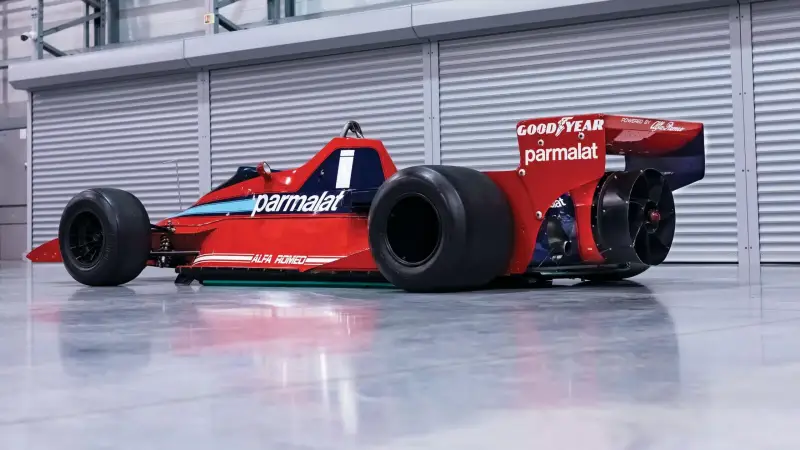
The Brabham BT46 is a Formula One racing car designed by Gordon Murray for the Brabham team, owned by Bernie Ecclestone, for the 1978 Formula One season. The car featured several radical design elements, one of which was the use of flat panel heat exchangers on the bodywork of the car to replace conventional water and oil radiators. It was removed before the car's race debut, never to be seen again. The cars, powered by a flat-12 Alfa Romeo engine, raced competitively with modified nose-mounted radiators for most of the year, driven by Niki Lauda and John Watson, winning one race in this form and scoring sufficient points for the team to finish third in the constructors' championship.
The "B" variant of the car, also known as the "fan car", was introduced at the 1978 Swedish Grand Prix as a counter to the dominant ground effect Lotus 79. The BT46B generated an immense amount of downforce utilizing a fan, claimed to be for increased cooling, but which also extracted air from beneath the car. The car only raced once in this configuration in the Formula One World Championship—when Niki Lauda won the 1978 Swedish Grand Prix at Anderstorp.

Niki Lauda
John Watson
Nelson Piquet
bt48


1979
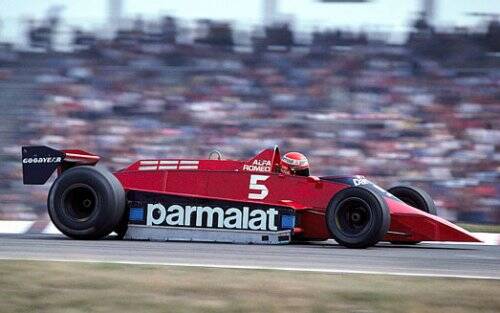
The Brabham BT48 was a Formula One racing car designed by Gordon Murray and raced by the Brabham team in the 1979 Formula One season.
The intended plan was to run the BT47 but the FIA outlawed it because it had a Chaparral 2J-type box rear end with twin variable geometry fans on the rear to maximize ground effect, so Murray designed the BT48 instead.
Although reasonably quick and competitive, the BT48 was a very unreliable car with a very unreliable engine, due to the fact that the Carlo Chiti-designed Alfa V12 engine was very new and had predictable teething troubles. Unreliability was something of an unfortunate hallmark of some of Gordon Murray's Brabham F1 cars. While he won the non-championship Dino Ferrari Grand Prix at the Imola circuit near Bologna, Lauda only finished 2 races he competed in before he announced his retirement in Montreal; and Piquet finished 4 races. A number of these retirements were due to engine failure.

Niki Lauda
Nelson Piquet
bt49
1979-1982
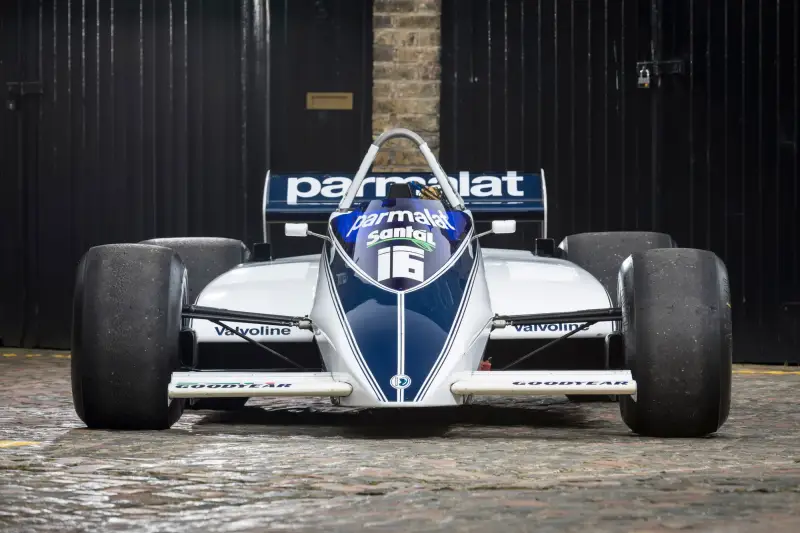
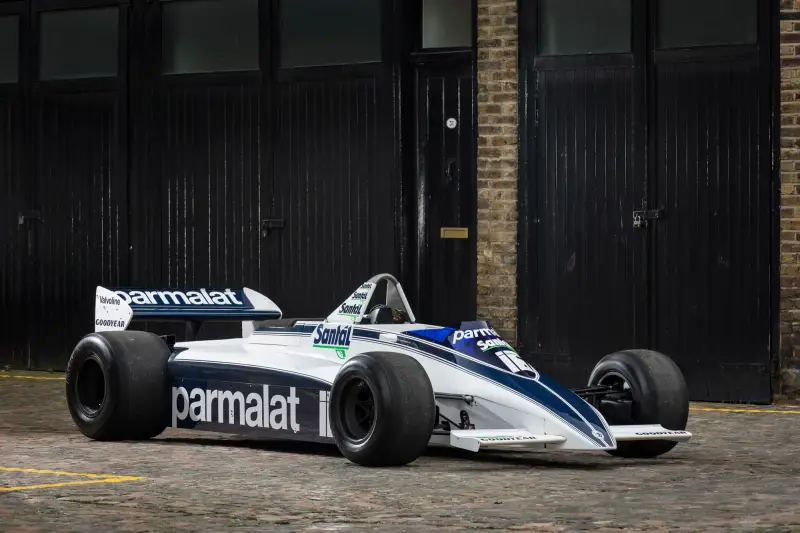
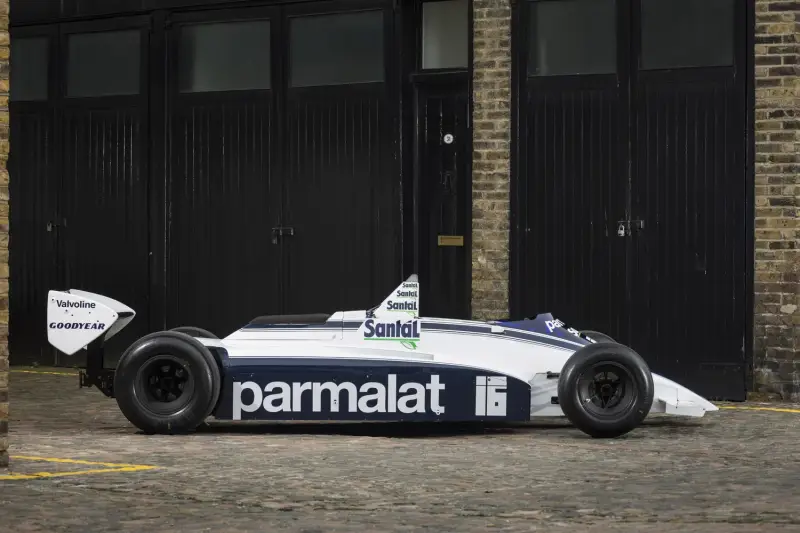
The Brabham BT49 is a Formula One racing car designed by South African Gordon Murray for the British Brabham team. The BT49 competed in the 1979 to 1982 Formula One World Championships and was used by Brazilian driver Nelson Piquet to win his first World Championship in 1981.
The car was initially designed in 1979 as a short notice replacement for the team's Alfa Romeo-engined BT48, after Brabham team owner Bernie Ecclestone decided to end his relationship with the Italian engine manufacturer. The BT49 was created in only six weeks using elements of the BT48 chassis together with the widely used Cosworth DFV engine. The monocoque chassis is made from aluminium alloy and carbon fibre composites. The car was fitted with controversial hydropneumatic suspension and water-cooled brakes at different points in its life.
The BT49 was updated over four seasons taking a total of seven wins, six poles and 135 points. Seventeen were eventually built, most of which survive today. Some are used successfully in historic motorsport; Christian Glaesel won the 2005 FIA Historic Formula One Championship driving a BT49D.

Nelson Piquet
Ricardo Zunino
Héctor Rebaque
Riccardo Patrese
bt50


1982
The Brabham BT50 was a Formula One racing car designed by Gordon Murray and powered by a turbo BMW engine. It was raced by the Brabham team, owned by Bernie Ecclestone, during the 1982 Formula One season. Driven by Nelson Piquet and Riccardo Patrese, it made its debut at the South African Grand Prix before being withdrawn for further development of its engine while the team reverted to the previous year's car, the Brabham BT49. On the reintroduction of the BT50, Piquet finished fifth in the Belgian Grand Prix. A few races later he drove it to a win in the Canadian Grand Prix. Later in the year it achieved three more finishes in the points for the team. During the second half of the season, Brabham implemented the strategy of mid-race refueling. This allowed Piquet and Patrese to start the races relatively light and use their reduced weight to gain track position over their competitors before stopping to refuel. The poor reliability of the BT50 meant that they had only a few opportunities to demonstrate the strategy in practice.
Despite its unreliability, the BT50 was fast, taking one pole and three fastest laps during the season. Brabham finished fifth in the 1982 Constructor's Championship with 41 points although 19 of these were earned with the BT49.

Nelson Piquet
Riccardo Patrese
bt52

1983


The Brabham BT52 was a Formula One car designed for the Brabham team by longtime Brabham designer Gordon Murray for the 1983 season. The car ran on Michelin tyres and was powered by the BMW M12/13 four-cylinder turbocharged engine, which in 1983 produced a maximum power of approximately 850 bhp in qualifying trim, detuned to around 650 bhp for the proper races. Its drivers were 1981 World Champion Nelson Piquet and Riccardo Patrese.
After the ground effect cars were banned at the end of the previous season, the FIA mandated that all F1 cars be designed with flat undersides for safety reasons. With just six weeks until the opening race in Brazil, this left Brabham with three fully built BT51s ready to go that were now useless, so Murray started from scratch and he designed the BT52.
With Piquet winning his second World Drivers' Championship with 59 points, and Patrese finishing ninth on 13 points, Brabham finished third in the Constructors' Championship with 72 points, 7 behind second placed Renault and 17 behind winners Ferrari. The BT52 was updated after the Canadian Grand Prix to the BT52B and proceeded to win three of the remaining seven races of the season.

Nelson Piquet
Riccardo Patrese
bt53


1984
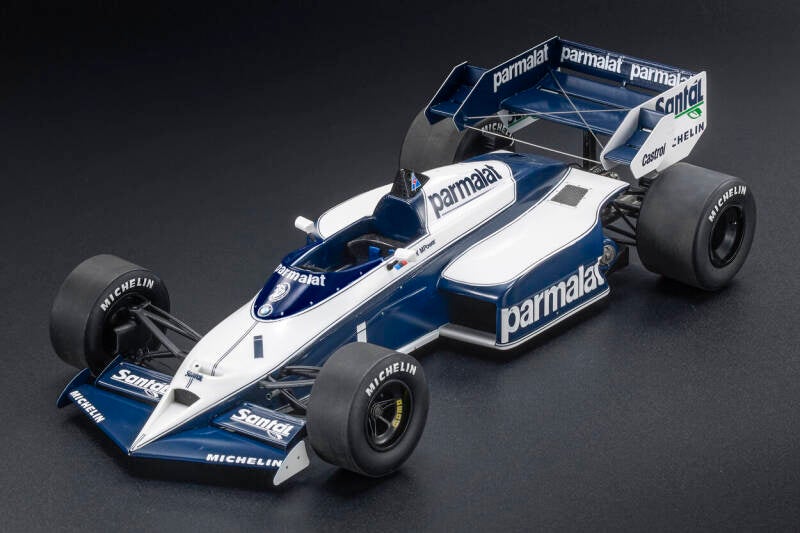
The Brabham BT53 was a Formula One car designed by Gordon Murray for the Brabham team for the 1984 Formula One season and was a development of the BT52 which had carried the team's lead driver Nelson Piquet to the 1983 championship.
The car was almost identical to the final development version of the 1983 car, the BT52B, but featured larger sidepods for improved cooling, and the turbochargers and intercoolers were repositioned for better fuel efficiency as refuelling stops were now banned, leading to the car having to carry an enlarged (220 litre) fuel tank.
The turbocharged BMW M12 engine now produced around 900 bhp in qualifying trim, de-tuned to 800 bhp for the races, making it the most powerful car ever seen in F1 at the time. This power allowed Piquet to record the fastest speed trap of the 1984 season when he clocked 325 km/h on the one km long straight at the old Kyalami circuit during qualifying for Round 2 of the championship in South Africa.
Like all other cars in Formula One in 1984, the rear wings featured smaller winglets on each side of the end plates for extra downforce pioneered by Ferrari in 1983.

Nelson Piquet
Teo Fabi
Corrado Fabi
Manfred Winkelhock
bt54

1985


The Brabham BT54 was a Formula One racing car designed by Gordon Murray for the Brabham team for the 1985 Formula One season. The car was powered by the BMW M12 4cyl turbo engine (generally agreed to be the most powerful engine in Formula One at the time) and used Pirelli tyres.
The car proved to be competitive, but somewhat unsuccessful even in the hands of two time world champion Nelson Piquet. The reason for this turned out to be the Pirelli tyres which proved to be nowhere near as good as the Goodyear tyres used by rivals McLaren, Lotus, Ferrari and Williams.
The car's aerodynamics, paired with its potent BMW engine, saw that the BT54 did well on high-speed circuits and was often the fastest car down the straights, and Piquet often qualified higher up the grid at circuits like Paul Ricard, Silverstone, the Österreichring, Zandvoort, Spa-Francorchamps and Kyalami. However, the car was not as competitive on slow circuits. The BT54 was replaced for the 1986 season by the Brabham BT55, although the team did use the BT54 for the 1986 British Grand Prix at Brands Hatch after the lack of results from the radical lowline BT55.

Nelson Piquet
François Hesnault
Marc Surer
bt55


1986
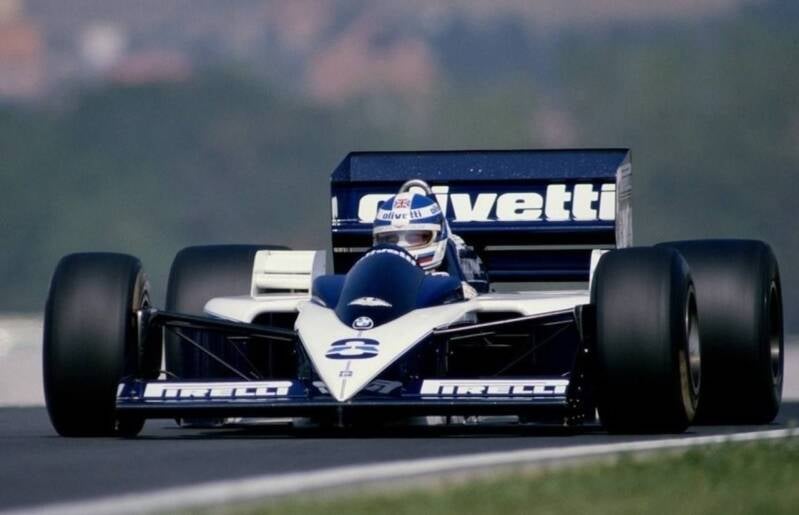
The Brabham BT55 was a Formula One racing car designed by Gordon Murray and David North for the Brabham team owned by Bernie Ecclestone. It used a BMW four-cylinder turbocharged engine tilted over on its side to allow a clear supply of air to the rear wing. The car competed during the 1986 Formula One season. It was not successful and its introduction coincided with the end of Brabham's time as a competitive team.
Famously dubbed the "skateboard" car, it was designed by the legendary Gordon Murray alongside David North. While it was an aerodynamic masterpiece on paper, its unique layout suffered from severe reliability and performance issues on the track. The powerful 1.5-liter four-cylinder BMW M12 turbocharged engine was tilted sideways at a 72-degree angle. The extreme low-line chassis forced drivers (Riccardo Patrese and Elio de Angelis) to sit almost completely flat on their backs inside the cockpit.
While the aerodynamics worked as intended, tilting the mechanical components caused devastating side effects like oil and cooling issues, lack of traction and severe turbo lag.
The BT55 was a statistical failure, scoring only two championship points in 1986. However, its core philosophy proved to be entirely correct. When Gordon Murray moved to McLaren at the end of 1986, he refined this lowline concept to create the McLaren MP4/4 in 1988. Driven by Ayrton Senna and Alain Prost, that car went on to win 15 out of 16 races, becoming one of the most dominant F1 cars in history.

Riccardo Patrese
Elio de Angelis
Derek Warwick
bt56


1987
The Brabham BT56 was a Formula One car designed by John Baldwin and Sergio Rinland and raced by the Brabham team in the 1987 Formula One World Championship. It was driven by Andrea de Cesaris, Riccardo Patrese and Stefano Modena; both de Cesaris and Patrese scored a 3rd place driving the BT56.
After a disappointing 1986 season with the BT55, the team reverted to a more conventional design in 1987. Long time Brabham designer Gordon Murray had moved to McLaren leaving the BT56 as the first Brabham car not designed by Murray since the Ralph Bellamy designed Brabham BT37 that raced in the 1972 and 1973 seasons.
The car was powered by the straight 4 turbocharged BMW engine and raced on Goodyear tyres. Brabham finished 8th in the 1987 Constructors' Championship with 10 points scored. This was the last Formula One Car until 2000 to use BMW engines, not counting the Megatron-badged engines used by Arrows in 1988.

Riccardo Patrese
Stefano Modena
Andrea de Cesaris
bt58


1989-1990
The Brabham BT58 was a Formula One racing car designed by John Baldwin and Sergio Rinland for the Brabham team which raced in the 1989 season. The teams cars were driven by Italian Stefano Modena and the 1988 World Sportscar Champion, the returning Martin Brundle. It made its debut at the 1989 Brazilian Grand Prix and continued until the first two races of 1990. The best result achieved was a third place at the 1989 Monaco Grand Prix driven by Modena. The car was powered by the Judd V8 engine and ran on Pirelli tyres.
After missing the entire 1988 season, the first time since 1961 that the Brabham name wasn't on the F1 grid as a constructor, the team was back without the now banned powerful but expensive, turbocharged engines.
The BT58's lack of straight line speed, and Pirelli's less than competitive race tyres, saw that results were harder to come by. The BT58 was used for the first two races of the 1990 season, with Modena finishing 5th in the season's opening race in Phoenix. The BT58 was replaced by the Brabham BT59

Martin Brundle
Gregor Foitek
Stefano Modena
bt60y

1991


1992 bt60b
The Brabham BT60 was the final series of Formula One racing cars built for the Brabham Formula One motor racing team. Designed by Sergio Rinland, they raced in the 1991 and 1992 Formula One World Championships. The car brought to a close Brabham's 30 years of construction of purpose-built racing cars, which began with Jack Brabham and Ron Tauranac and the Brabham BT1 Formula Junior design in 1961.
The first car, the BT60Y, was powered by the Yamaha OX99 V12 engine. It was driven by Martin Brundle, who was returning to Brabham and Formula One again after driving for Jaguar in the 1990 World Sportscar Championship. The team's second car was driven by Formula One rookie Mark Blundell.
For the 1992 Formula One season the team used a modified version of the car, dubbed the BT60B, which was powered by the Judd GV V10 engine. The cars were driven by Eric van de Poele from Belgium and Italian rookie Giovanna Amati. Part way through the year Amati was replaced by another Formula One rookie, future World Drivers' Champion Damon Hill. The BT60B was the last Formula One car produced by Brabham.

David Brabham
Stefano Modena
Martin Brundle
Mark Blundell
bt60

1991-1992 bt60y
bt60b

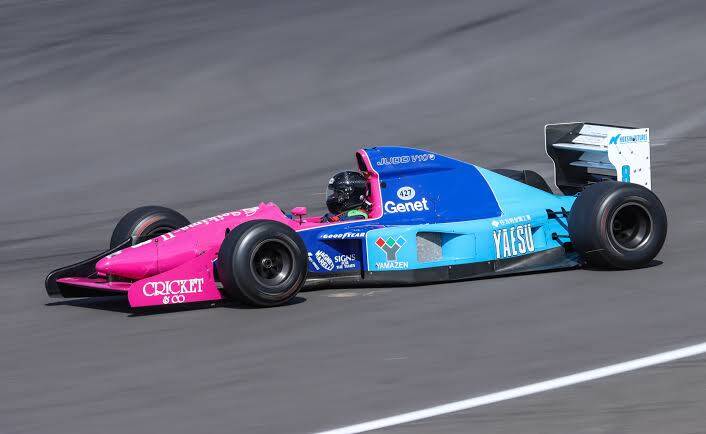
The Brabham BT60 was the final series of Formula One racing cars built for the Brabham Formula One motor racing team. Designed by Sergio Rinland, they raced in the 1991 and 1992 Formula One World Championships. The car brought to a close Brabham's 30 years of construction of purpose-built racing cars, which began with Jack Brabham and Ron Tauranac and the Brabham BT1 Formula Junior design in 1961.
The first car, the BT60Y, was powered by the Yamaha OX99 V12 engine. It was driven by Martin Brundle, who was returning to Brabham and Formula One again after driving for Jaguar in the 1990 World Sportscar Championship. The team's second car was driven by Formula One rookie Mark Blundell.
Brabham only scored three points in 1991, with one 5th-place for Brundle, and Blundell scoring one 6th-place finish. The team finished 10th in the Constructors' Championship.
For the 1992 Formula One season the team used a modified version of the car, dubbed the BT60B, which was powered by the Judd GV V10 engine. The cars were driven by Eric van de Poele from Belgium and Italian rookie Giovanna Amati. Part way through the year Amati was replaced by another Formula One rookie, future World Drivers' Champion Damon Hill. The BT60B was the last Formula One car produced by Brabham.
The 1992 season was a complete disaster for the once great Brabham team.

Martin Brundle
Eric van de Poele
Mark Blundell
Giovanna Amati
Damon Hill
bt61
1993
Brabham fell into administration and attempts were made by RM Motorsports to buy the team. During this time, the company engaged Galmer Engineering to build a successor for the BT60B. The BT61 would have competed in the 1993 season, but development of the car was never completed after RM Motorsport failed to name what engine would be used or pay Galmer Engineering for their work. The company never completed the purchase of the team and the team was eventually liquidated.
the cars....
While the Brabham name is synonymous with legendary Formula 1 victories and purebred racing machines, the iconic brand has also appeared on a handful of highly exclusive road-legal cars. These range from race-tuned British family cars in the 1960s to a modern mid-engined hypercar built in the 2020s.
torana

1967-1969 HB


1968-1969 HB series II
The Torana, launched as a successor to the Vauxhall Viva HA series in the Australian market in 1967, was initially a Vauxhall Viva HB series with only a slight facelift. As of the time, the Torana HB had a midsize two-door body and a small 1.2-liter four-cylinder engine with 56 horsepower coupled to a four-speed transmission. The only differences from the Viva were the grille, headlamps, and wheels, and it could almost be considered badge engineering. Detailed models included Torana, Torana S, and the upper trim, Torana SL.
In October, Australia's legendary F1 racing driver The ' Brabham ' Torana , named after Jack Brabham, was released in a sports trim. This Torana received a carburetor and exhaust tune that increased power to 79 horsepower, and was equipped with wider wheels, red tires, and front disc brakes.
In September 1968, the 1969 Torana was introduced and named HB Series II. Now, the Vauxhall badge engineering method has been abandoned, and body panels and various parts produced in Australia are used, and 4 doors have been added in addition to 2 doors. Brabham Torana has become a standalone model in its own right. A total of 16.318 units of the HB-type Torana were produced until the release of the second-generation Torana LC at the end of 1969.


The Brabham Alfa Romeo 164 "procar" (1988)
In 1988 Ecclestone sold Motor Racing Developments to Alfa Romeo. The Formula One team did not compete that year, but Alfa Romeo put the company to use designing and building a prototype "Procar"—a racing car with the silhouette of a large saloon (the Alfa Romeo 164) covering a composite racing car chassis and mid-mounted race engine. This was intended for a racing series for major manufacturers to support Formula One Grands Prix, and was designated the Brabham BT57.
The engine remains completely unique as it is the only Alfa Romeo 3.5L V10 engine ever built! With 605 bhp and a top speed of over 337 km/h it was actually a bit faster than the F1 cars as its body-shape allowed for much higher top speed.
The 164 Pro Car was never raced, and now remains as a unique reminder of a wild plan. One of motorsport's best kept secrets and a genuine would / could have been.

2018-2024
Brabham Automotive was an Australian automaker launched by David Brabham and Australian investor group, Fusion Capital in May 2018. Brabham Automotive was based in Adelaide, South Australia, with representation also in the United Kingdom.
Its first product was the Brabham BT62, which was initially launched as a track-only vehicle. In November 2019, the company announced a Competition version of the BT62 to coincide with its racing debut in the Britcar season finale at Brands Hatch.
Brabham Automotive's manufacturing base was in Edinburgh Parks, north of Adelaide.
In 2021, Brabham entered competition in the GT2 European Series with the BT63 GT2.
Brabham BT62Brabham BT63 GT2
Brabham ceased operations in January 2024, when Brabham ended relations with a supplier. Brabham Automotive ended due to a strategic difference between its owner Fusion Capital and the company.
bt62

2018-2024


The Brabham BT62 is a mid-engine track-day car produced by Australian car manufacturer Brabham Automotive. It was introduced in 2018 with deliveries expected to start at the end of that year. A planned production of only 70 cars is intended, in honour of the company's 70 year heritage in racing.
The BT62 is powered by a mid-mounted 5.4-litre naturally-aspirated V8 engine that is based on the Ford V8 modular engine architecture of American manufacturer Ford Motor Company. The engine has been extensively modified and has a power output of 700 PS at 7400 rpm and 667 N⋅m of torque at 6200 rpm, giving the car a power-to-weight ratio of 653 hp per ton. Power goes to the rear wheels through a six-speed Holinger sequential-shift racing transmission controlled by steering wheel mounted paddle shifters, and stopping is handled by carbon-to-carbon disc brakes, with carbon pads actuated by six pistons acting on carbon rotors.
The first 35 cars will be finished in the corresponding liveries of Brabham's 35 Grand Prix winning cars, while the rest will be finished to the owner's specifications.
bt63

2021-2024


In 2021 a detuned evolution of the BT62 was announced as the BT63. The car is a racing specification car eligible for GT2 regulations.
The engine capacity was reduced to 5.2 litres with a reduced power output of 600 PS at 7700 rpm and 664 N⋅m of torque at 6200 rpm. The car, known specifically as the Brabham BT63 GT2 is heavier, over 1250 kg. The aim is to meet the requirements of a 2:1 power to weight ratio mandated by GT2 regulations.
The BT63 made its racing debut at Circuit Paul Ricard on October 1, 2021 in the 2021 GT2 European Series run by High Class Racing.



Create Your Own Website With JouwWeb