Peugeot is a family business that preceded the current Peugeot company and founded in 1810, and manufactured coffee mills and bicycles.

Peugeot  is a French automotive manufacturer, part of Stellantis. Armand PEUGEOT, grandson of Jean-Pierre, who was fascinated by anything mechanical, led the company in its quest to produce its first motorised vehicle. In 1889, as a result of a collaboration with steam specialist Léon Serpollet, he succeeded. The vehicle was the Serpollet-PEUGEOT – a steam-powered three-wheeler.


Headquarters: Sochaux, France, 1810-1974


Headquarters: PSA Group, Rueil-Malmaison, France, 1974-2021


Parent: Stellantis, Hoofddorp, Netherlands, 2021-now

404

The Peugeot 404 is a mid-range model that the French manufacturer produced almost three million times between the 1960s and 1975. The 404 is available as a sedan, station wagon, convertible, coupe and even as a pick-up. The car is now considered a fairly popular classic, with fewer and fewer of them on the road. However, if you have a good one, you can still enjoy it. And the fact that it is available in so many different versions means that there is always something to choose from, despite the fact that this car really belongs to the 'oldies'.


set of 404 coupe & convertible    Peugeot 404 Coupé & Cabriolet

cabriolet  1962-1975

The Peugeot 404 Cabriolet (Convertible), introduced at the 1961 Paris Motor Show and produced until 1968, is one of the most highly prized and elegant post-war classic cars built by Peugeot

The 404 Convertible was built in very limited numbers compared to the mass-produced 404 sedan. Exactly 10.389 units of the Cabriolet were produced globally

Combined with its hardtop sibling, the 404 Coupé, a total of 17.223 "C" series units were produced by the factory, making surviving examples incredibly rare and sought-after today.

Just like the later 504 generation, the Italian master designer Pininfarina took complete control over the aesthetic lines and physical manufacturing of the car. However, the production logistics were highly unique and complex. Peugeot stamped the heavy structural rolling chassis and mechanical floorpan in Sochaux, France. These raw floorpans were shipped across the Alps via trains to the Pininfarina factory in Turin, Italy. Pininfarina completely hand-assembled the custom body panels, fitted the convertible top mechanism, and installed the interior. The unpainted, raw body shells were then shipped back to Sochaux, France, to receive their engines, transmission assemblies, and final paint coats.

The 404 Cabriolet was powered exclusively by a 1.6-liter (1618cc) four-cylinder petrol engine, but buyers could choose between a carburetor version (Solex) or a injection version (Kugelfischer).

Power was routed to the rear wheels via a 4-speed manual transmission operated through a distinct, retro steering-column gear shifter.

Unlike tiny British roadsters of the era (like the MGB), Pininfarina purposely elongated the rear body lines to give the 404 a fully usable rear bench seat, making it a comfortable open-air tourer for four adults.


coupé  1963-1975

The Peugeot 404 Coupé was introduced in 1962 (arriving on the market in 1963) to complement the open-top Cabriolet. Exactly 6834 units of the Coupé were produced during its six-year production run ending in 1968

(Note: Together with the 10.389 Cabriolets, Pininfarina manufactured a total of 17.223 hardtop and open-top "C" series units).

While the Cabriolet focused on open-air cruising, the Coupé offered a highly distinct and sleek aesthetic. Pininfarina crafted a remarkably thin, airy glasshouse with slender pillars, giving the driver near-perfect 360-degree visibility. It featured a unique, subtle body crease running along the rear flank right after the door line, a signature styling element that set it completely apart from the sedan. 

The Coupé and Cabriolet shared the exact same length (4.49 meters) and width (1.68 meters), making them slightly longer and wider than the standard 404 sedan.

The car followed the exact same complex manufacturing route across the Alps, traveling back and forth via trains between Pininfarina's factory in Italy and Peugeot's assembly line in Sochaux, France.

It relied on the same 1.6-liter four-cylinder petrol engine. However, the Coupé market heavily favored the high-end Kugelfischer mechanical fuel injection version. This setup produced 96 horsepower and propelled the car to a top speed of 167 km/h, making it a highly capable express grand tourer for its time.

504

The Peugeot 504 is a mid-size, front-engine, rear wheel drive automobile manufactured and marketed by Peugeot from 1968-1983 over a single generation, primarily in four-door sedan and wagon configurations – but also as twin two-door coupé and convertible configurations as well as pickup truck variants. 


set of 504 berline and break   https://www.youtube.com/watch?v=j2O7IF-UMcs

a02 sedan  1968-1983

Marketed as Peugeot's flagship saloon car, the 504 made its public debut on 12 September 1968 at the Paris Salon. The sedan/berline was styled by Aldo Brovarone of Pininfarina

The 504 was a sunroof-equipped four-door saloon, introduced with a carbureted 1796 cc four-cylinder petrol engine 82 PS DIN with 97 PS on tap with the optional fuel injection. At the time of introduction, Peugeot still used the SAE rating, with claimed power numbers of 87 and 103 cv respectively. 

A column-mounted four-speed manual transmission was standard; a three-speed ZF 3HP12 automatic became available with the carburetted engine beginning in February 1969. In September 1969 the automatic's shifter location was moved from the steering column to the floor.

The 504 was elected European Car of the Year in 1969, praised for its styling, quality, chassis, ride, visibility, strong engine and refinement. 

Peugeot 504 production in Europe was pruned back in 1979 with the launch of the Peugeot 505, although the 504 Pickup was introduced as a replacement for the 404 Pickup for the 1980 model year. The last European-made example rolled off the production line in 1983, although the pick up version continued in production, and was available in Europe until 1993. More than three million 504 passenger cars were produced in Europe. The 505 shared most of the Peugeot 504 mechanical parts, similarly to the Peugeot 604 and Talbot Tagora.

Manufacturing continued in Kenya until 2004, and Nigeria until 2006, using the Peugeot knock down kits, which meant that versions of the 504 had been in production in various parts of the world for a total of 38 years.

d11 break 1970-1983

In September 1970 an estate ("Break") was presented, featuring a higher rear roof, lengthened wheelbase, and solid rear axle with four coil springs. Peugeot did not simply add a larger rear box to the 504 sedan; they heavily re-engineered the platform for heavy-duty load carrying.

The estate was sold in three separate configurations tailored to different buyers

  1. The Break (Standard Estate): A traditional 5-seater station wagon focused on cargo capacity. It featured a standard split-folding rear bench seat. 
  2. The Familiale (Family Estate): A highly advanced 7-to-8 passenger people-carrier. Long before modern minivans existed, the Familiale used three rows of seats, with all passengers facing forward. The middle row could fold down seamlessly to allow access to the back row. 
  3. The Commerciale (Commercial Van): A stripped-back, lower-priced utility version.

While it skipped the glamorous Pininfarina styling of the Coupé and Convertible, it became a massive global success—particularly across Africa and South America—earning a reputation for being nearly indestructible.

The Break and Familiale both received the 2-liter petrol engine or 2.1 diesel as per the saloon, but the utilitarian "Commerciale" brought back the 1.8-litre four, now tuned down to 73 PS.

Production in Europe ended in 1983, but the 504 Break continued to be built in places like Argentina, Kenya, and Nigeria all the way until 2006. 650.000 Breaks have been built.


set of 504 coupe and cabriolet   https://www.youtube.com/watch?v=dPFHJu0uKY4

c01 1969-1983

The Peugeot 504 Coupé (produced from 1969 to 1983) is widely considered one of the most beautiful cars ever built by Peugeot. Like the Cabriolet version, the Coupé was designed and completely manufactured by the famous Italian design house Pininfarina in Turin, before being shipped to France for final assembly.

Peugeot had a long-standing relationship with the Italian design house Pininfarina. For the 504 Coupé, Pininfarina did not just sketch the lines; they actually built the bodies at their factory in Turin, Italy.

The styling is defined by:

  • The Front End: A sleek, slanted nose with sharp dual headlights that gave the car a focused, aggressive look.
  • The Silhouette: A perfectly balanced three-box design with thin roof pillars, offering great visibility and an airy cabin.
  • The "Three-Claw" Taillights: Early models featured beautiful, distinctive rear lights split into three separate diagonal strips—a design cue Peugeot still uses on its modern cars today.

The car was built as a Grand Tourer (GT). It was not meant to be a harsh, loud sports car, but rather a fast, exceptionally comfortable cruiser for long European road trips. It featured independent rear suspension, which gave it a smoother ride than almost all of its competitors.

You could choose between two main engine types:

  1. The Four-Cylinder: A highly reliable 1.8-liter (and later 2.0-liter) engine. It offered decent performance, was easy to maintain, and used a reasonable amount of fuel.
  2. The PRV V6: A 2.7-liter V6 engine developed together by Peugeot, Renault, and Volvo. It brought a much deeper exhaust note, smoother power delivery, and a higher top speed, though it was notoriously thirsty.

Peugeot produced exactly 26,629 units of the 504 Coupé during its 14-year production run between 1969 and 1983.

b01  1969-1983

The Peugeot 504 Cabriolet (Convertible) is widely considered one of the most elegant open-top grand tourers of the 20th century. Released in 1969 alongside the Coupé, it offered a high-end, glamorous alternative to the rugged and utilitarian 504 sedan.

While Peugeot engineered the mechanical layout, the Italian styling house Pininfarina designed the entire exterior. The styling was so distinct that it shared almost no visible body panels with the standard 504 sedan.

  • The Stance: Pininfarina shortened the wheel-base of the standard 504 platform to give the convertible sportier, tighter proportions.
  • The Italian Build: The production process was unique. The chassis and body panels were stamped and fully welded by Pininfarina in Turin, Italy. They were then loaded onto trains and sent to the Peugeot factory in Sochaux, France, where the engines, suspension, and drivetrains were bolted in.
  • The Front and Rear Evolution: Early models feature beautiful, angled dual headlights and vertical "three-claw" rear lights. Mid-generation models received wider, single-piece headlights and flat, horizontal tail lenses.

The convertible was offered with two main engine configurations throughout its lifespan:

  1. The 2.0-Liter Four-Cylinder: This was the mainstay of the convertible. It relied on mechanical fuel injection, making it highly reliable, easy to tune, and reasonably fuel-efficient.
  2. The 2.7-Liter V6 PRV: Launched in 1974, this engine was developed jointly by Peugeot, Renault, and Volvo. It sounded incredible and delivered effortless highway power.

The V6 Crisis: When the V6 arrived in late 1974, Peugeot completely discontinued the four-cylinder convertible, thinking buyers only wanted V6 luxury. However, this coincided exactly with the global 1970s energy crisis. Because the V6 was incredibly thirsty, buyers stopped buying the car. By 1977, Peugeot realized their mistake, killed off the V6 convertible completely, and brought the four-cylinder back. This error makes the 960 surviving V6 convertibles incredibly valuable collector items today.

The 504 Convertible was built to be a Grand Tourer, not a track-day sports car. Peugeot produced exactly 8763 units of the 504 Cabriolet globally. This makes the open-top version roughly three times rarer than its Coupé sibling.

304

The Peugeot 304 is a small family car which was produced from 1969 to 1980. The 304 was a success for Peugeot and was noted for several advanced features under its Pininfarina styled exterior. The car was sold until 1980 and was replaced by the Peugeot 305, which had been launched in 1977.


set of 304 sedan and coupe   https://www.youtube.com/watch?v=bh9FWVFpGwc

d18 sedan 1969-1979

The 304 was introduced to the public at the Paris Motor Show in September 1969. Production of the saloon/sedan on the Sochaux assembly lines was discontinued during the summer of 1979, while the "Break" (estate / station wagon) was manufactured until the spring of 1980. The 304 fit into the 7CV tax category, one step above its little sister the 204 (6CV) and significantly below the 9CV 404.

Peugeot conceived the 304, noting a gap in the midsize car market in France, Italy and the rest of Western Europe, and used the smaller 204's midsection, to minimize development costs and maximize return. 

The 304 was launched with an all alloy SOHC four-cylinder 1,288 cc petrol engine (XL3), directly derived from the 1130 cc XK3 engine fitted to the earlier 204. A more powerful S version of the engine, sporting a twin choke/twin barrel carburettor (XL3S), became an option on the coupé and cabriolet in March 1972. The S engines provided a 10 hp output increase to 75 hp and also became available on the 304 saloon in the autumn of 1972.

b11 cabriolet  1970-1975

The 304 was introduced to the public at the Paris Motor Show in September 1969. Production of the saloon/sedan on the Sochaux assembly lines was discontinued during the summer of 1979, while the "Break" (estate / station wagon) was manufactured until the spring of 1980. The 304 fit into the 7CV tax category, one step above its little sister the 204 (6CV) and significantly below the 9CV 404.

Peugeot conceived the 304, noting a gap in the midsize car market in France, Italy and the rest of Western Europe, and used the smaller 204's midsection, to minimize development costs and maximize return. 

The 304 was launched with an all alloy SOHC four-cylinder 1288 cc petrol engine (XL3), directly derived from the 1130 cc XK3 engine fitted to the earlier 204. A more powerful S version of the engine, sporting a twin choke/twin barrel carburettor (XL3S), became an option on the coupé and cabriolet in March 1972. The S engines provided a 10 hp output increase to 75 hp and also became available on the 304 saloon in the autumn of 1972.

d11 break 1970-1980

Peugeot made the most of the 304's rugged underpinnings, spinning off saloon, coupe, cabriolet, estate and utility estate forms, and it was hugely successful - almost 1.2 million were built, and it would stay in production until 1979. 

Originally only offered as a sedan, the Break (station wagon) model appeared in September 1970.

The estate version was also exported to North Africa, where many were deployed as taxis and louages. In Egypt, as of 2009, the estate version of the 304 remains one of the most widespread types of vehicle in taxi service, though the government is hoping to persuade taxi drivers to adopt more recently manufactured, more government-imposed emissions compliant vehicles.

c02 coupe  1970-1975

The 304 sedan was unveiled in 1969 in France, but the Coupé and Cabriolet models were only shown early the following year. These models remained in production until July 1975. Over 60 000 Coupés were built.

The 1288cc petrol engine offered 65ps while the 1.3S has a naturally-aspirated Inline 4 cylinder engine. This engine produces a maximum power of 75 PS and a maximum torque of 101 Nm. The power is transmitted to the road by the front wheel drive (FWD) with a 4 speed Manual gearbox. It only weighs 930 kg.

Behind you, once you’ve flipped forward the front seats, there is space, realistically speaking... for maybe two children. The rear seats can fold flat however, if you need a larger loading space, making it quite a practical car.

104 1972-1988

The Peugeot 104 is a supermini car produced by the French company Peugeot between 1972 and 1988. It was designed by Paolo Martin was initially only sold as a four-door saloon car, with a three-door hatchback variant introduced in 1974 and a five-door hatchback version replacing the saloon in 1976. The 104 was the first model produced at the company's Mulhouse plant.

It was also the first new Peugeot introduced since 1955 not to be offered in a diesel version.

On its launch, the Peugeot 104 was offered as a compact four-door fastback. Although it had a short, sloping rear end that suggested a hatchback, there was originally a separate boot/trunk, as on a conventional saloon.

Power was provided from a 954 cc Douvrin engine called the PSA X engine.

In 1973 a three-door coupé was launched on a shortened chassis, featuring the same 954 cc engine as the saloon.

A facelift in July 1976 saw the four-door saloon replaced with a five-door hatchback. Peugeot had been afraid that a five-door 104 would steal sales from the old-fashioned 204 Break, but with production of the 204 coming to an end in July 1976 this was no longer a concern.

In 1983, the number of models offered was reduced to make way for the new 205 and exports to most foreign markets gradually came to an end. It remained on sale in France until the end of production in 1988.

The Peugeot 104 was one of the most successful European small cars of the 1970s but it was starting to show its age against more modern rivals by the turn of the 1980s.

When Peugeot launched the stylish all-new 205 in 1983, the 104 was withdrawn from most European markets, but it continued in France as a budget choice until production finally ceased in May 1988 after 16 years, in which time 1.624.992 Peugeot 104s had been built. 345.849 of these were the short wheelbase Coupé versions.

205

The Peugeot 205 is a four-passenger, front-engine, supermini (B-segment) car manufactured and marketed by Peugeot over a sixteen-year production run from 1983 to 1999, over a single generation. Developed from Projet M24 and introduced in 1983, the 205 replaced the Peugeot 104 and the Talbot Samba, using major elements from their design.

Peugeot stopped marketing the 205 in 1999 in favor of its new front-engined 206.  When production finally ground to a halt, Peugeot had sold 5.2 million examples of the 205.


set of 205 gti & cti      Peugeot 205 GTI & CTI

m24 gti 1984-1996

Life for the Peugeot 205 began in 1983, when it was launched as the successor to the 104 supermini. Created to fill the gap between the 104 and the larger 305, the 205 was penned in-house by Gerard Welter with interior touches done by Paul Bracq. In its debut year, the Peugeot 205 finished runner-up in the European Car of the Year but was rightfully awarded the 1983 Car of the Year by What Car?

The French manufacturer quickly realised the model’s sporting potential and a year later, in April 1984, released the Peugeot 205 GTi.

Powered by a 105bhp 1.6-litre engine and tipping the scales at less than 900kg, it could shoot from 0-100 km/h in 8.8sec and had a top speed of 186 km/h.

The faster GTi 1.9 was launched at the end of 1986, boasting 130bhp. It was capable of completing the 0-100 km/h sprint in 7.9sec and boasted a top speed of 204 km/h. During 1986 the 1.6-litre version was also upgraded, with peak power now quoted at 115bhp.

Internally these engines are very similar, the main differences on 1.9 litre versions being the longer stroke, oil cooler, and some parts of the fuel injection system. The shorter stroke 1.6 litre engine is famed for being revvy and eager, while the 1.9 litre feels lazier and torquier.

Outside the engine bay the main differences between the 1.6 GTI and the 1.9 GTI are half-leather seats (1.9 GTI) vs. cloth seats (1.6 GTI); and disc brakes all-round (1.9 GTI) vs. discs at the front and drum brakes at the back (1.6 GTI); as well as the 14" alloy (Speedline SL201) wheels (1.6 GTI) vs. 15" (Speedline SL299) alloys (1.9 GTI).

Increasingly stringent emissions regulations meant the 1.6 GTI went out of production in 1992, while the 1.9-litre was sold for a couple more years thanks to re-engineering of the engine to enable it to work properly with a catalytic converter, which dropped power to 122 PS.

The 205 is still often treated as a benchmark in group car tests of the newest GTI models or equivalent. Peugeot itself has never truly recreated this success in future GTI models, although they came very close with the highly regarded GTI-6 variant of the Peugeot 306.

m24 cti 1985-1999

In 1985, Peugeot exploited the skill of Pininfarina to design the 205 cabriolet and a ‘CTi’ version was released partnering the same sportier styling as the GTi, but without its roof, and the 1.6-litre and later, 1.9-litre powerplants.

It would enjoy a better image and a longer high market demand than its competitor. It was one of five important small cars to be launched onto the European market within a year of each other.

The styling of the 205 is often thought to be a Pininfarina design, although Gerard Welter claims it is an in-house design; Pininfarina only styled the Cabriolet.

The 205 was an instant hit, and its styling was echoed in every Peugeot model that was to follow. 

The cabriolet version of the 205, known as the CJ/CT/CTI, was designed and partially assembled by Pininfarina of Italy. The CTI version offered the same plastic arches and wheels as the 1.6 GTI. Some later models incorporated the catalysed 1.9-litre engine.

505 1986-1992

The Peugeot 505 (produced from 1979 to 1992 in Europe, and until 1997 globally) was the last traditional rear-wheel-drive car built by Peugeot. It succeeded the legendary 504 and became famous for its incredible ride comfort, rugged reliability, and aggressive "frowning" front headlights.

The 505 was offered in two highly successful primary body styles:

  • Sedan (Berline): A classic three-box four-door saloon. Its sharp styling was a collaboration between Peugeot's in-house team and Pininfarina.
  • Break (Estate) & Familiale: Launched in 1982, this wagon featured an extended wheelbase. The Familiale version was a highly popular 8-seater family transport with three rows of forward-facing seats.

According to the manufacturer, 1.351.254 505s were produced between 1978 and 1999 with 1.116.868 of these being saloons/sedans.

While standard models were comfortable family cruisers, Peugeot used the 505 platform to build some legendary high-performance variants:

  • 505 Turbo Injection: Powered by a 2.2-liter turbocharged petrol engine, delivering 150 to 180 hp (depending on the year). It featured a limited-slip differential, sporty alloy wheels, two-tone paint options, and was a direct competitor to the BMW 3 and 5-Series.
  • 505 GTI: Equipped with a naturally aspirated 2.2-liter fuel-injected engine producing 130 hp. It offered a perfect blend of everyday usability and sporty handling.
  • 505 V6: Introduced later in production, utilizing the smooth 2.8-liter PRV V6 engine (170 hp) to offer a true luxury flagship executive experience.

The 505 holds a special place in automotive history as the final rear-wheel-drive Peugeot passenger car. Its successor, the Peugeot 605 (introduced in 1989), switched entirely to a front-wheel-drive architecture, marking a permanent shift in how Peugeot engineered its large family cars.

106 rallye 1991-2003

The Peugeot 106 is a supermini produced by French automaker Peugeot between 1991 and 2003. Launched in September 1991, it was Peugeot's entry level offering throughout its production life, and was initially sold only as a three-door hatchback, with a five-door hatchback joining the range in August 1992. Production ended in July 2003.

For the first year of production, the 1.0 and 1.1 petrol engines came with a carburettor, but were replaced by fuel injected engines from the end of 1992, as a result of EEC emissions regulations.

It was updated in July 1996, with changes including the introduction of side impact bars and availability of driver and passenger airbags for the first time, with the new 1.6 GTI joining the range as the spiritual successor to the hugely popular and highly regarded 205 GTI, which had been discontinued in 1994. 

Marketed as having "fewer frills, more thrills", the Rallye version had trademark steel wheels painted white. Power steering, central locking, and electric windows were omitted to keep the weight down to 825 kg.

There were pre and post facelift versions of the 106 Rallye known to enthusiasts as S1 and S2 models, with the latter having a 103 PS, 1.6-litre (TU5J2) engine in place of the original high revving Rallye specific 1.3-litre, 100 PS  TU2J2 engine that was fitted to pre facelift cars.

The S1 Rallye were designed as a homologation special to compete in the 1300 cc rally class. It featured a four-cylinder, 8-valve, high compression engine with an aggressive cam profile designed to come "on song" between 5400 and the 7200 rpm redline.

The 106 was competitive in racing, but also made a practical small family car. All cars had steel wheels, and Rallye decals and seat coverings featuring a one or three colour flash, which again varied between early and late cars.

With facelift came new top model named Peugeot 106 GTI with 1.6 litre 16 valves engine that produce 120 hp. It came with new exterior body kit and new wheels. On some markets in Europe, it was badged S16 or Rallye.

405 t16 1993-1997

The Peugeot 405 is a large family car manufactured by the French automaker Peugeot from 1987 to 1997. Its production continued under license from outside Europe in Iran by Iran Khodro Company until 2020.

It was voted European Car of the Year for 1988 by the largest number of votes in the history of the contest. 

About 2.5 million vehicles have been sold worldwide, both in left and right drive versions, as a saloon and estate. In early 2020, the 33-year production run of the Peugeot 405 was counted as the twentieth most long-lived single generation car in history."

The 405 has been available as a saloon and estate, in front-wheel and four-wheel drive. No coupé model was ever offered, unlike the 504 and later 406: only two examples of the purpose-built, two-door 405 Turbo 16 (not to be confused with 405 T16) were made.

In April 1993, the T16 was introduced to celebrate the successes of the competition model, with a 2.0 litre 16 valve turbocharged XU10J4TE engine with water cooled chargecooler, constant four wheel drive with 53/47% power distribution and self regulating hydraulic rear axle. It was never built in a right hand drive model.

The T16 produced 200 hp at 1.1 bar (16 psi) (normal boost) or 220 hp at 1.3 bar (19 psi) (overboost) which lasts for 45 seconds. 1061 examples were built, with ten of these being delivered for use by the National Gendarmerie. 

306 1993-2002

The Peugeot 306 is a small family car built by the French car manufacturer Peugeot from 1993 to 2002. It was a replacement for the Peugeot 309 (which had broken with Peugeot's normal ascending numbering system partly due to it being released before the older and larger Peugeot 305 was axed).

Peugeot gave the 306 many updates and aesthetic changes to keep up with the competition, and it was replaced by the 307 in 2001. Cabriolet and estate versions continued until 2002. Versions were built in Argentina by Sevel from 1996 to 2002.

Mechanically, the 306 is virtually identical to the Citroën ZX, which was launched two years before the 306: both cars use the same floorpan and core structure. The 306, with its Peugeot 205 derived Pininfarina styling, was a more successful car than its twin. The Citroën Berlingo and Peugeot Partner were also built on the same platform. The chassis used by the 306 and ZX was also used in the ZX's replacement, the Citroën Xsara.

The 306 was released in 1993 as a 3- and 5-door hatchback, with saloon and cabriolet models being introduced a year later. The Phase 1 model was known as the N3.

The 306 underwent the only major revamp of its life in May 1997, with the launch of the "Phase 2" version (N5). The basic shape remained the same, but lights, grille and bumpers were redesigned in an effort to bring the styling into line with the new, more rounded, Peugeot family look established with the Peugeot 406.

Models from mid-1999 (phase 3) saw further improvements and exterior modifications, including clear lenses on the headlamps. XSi, XT and D Turbo models all received the GTi-6's bodykit and interior styling additions but not the cyclone alloy wheels.

The initial petrol engines used were proven four-cylinder units, which had gained a solid reputation in Peugeot models such as the 205, 309 and 405. At first, all mainstream models were powered by derivatives of the TU series 8-valve engine, in 1.1-, 1.4- and 1.6-litre guises. The 1.1 was dropped quickly, but the 1.4 and particularly the 1.6 variants sold well, the latter offering a balance between performance and economy.

Three larger-capacity units were available, but restricted to automatic and performance models. These engines were developments of the larger XU series units which had been used in the 205 GTi 1.9, and larger 405 models. A 1.8-litre version powered cars with both manual (not many 1.8 manuals were produced) and automatic transmission, while two versions of the 2.0-litre engine in 8- and 16-valve guises powered the XSi and S16 models respectively. In Australia, the only engines available were the 1.8 and 2.0 L engines.

The car featured in the Top 10 Best Selling Cars In Britain from 1994 to 1998, only narrowly missing out on the top 10 during its final three years on sale. Sales in France and most of the rest of Europe were also strong.

406

Peugeot has a rich history of building stylish, elegant, and distinctive coupés. For decades, the French brand frequently partnered with the legendary Italian design house Pininfarina to create some of the most beautiful two-door cars on European roads, before shifting to bold in-house designs in the 21st century.

The Peugeot 406 Coupé is widely considered a modern masterpiece of automotive design. Pininfarina did not just design it; they built it in Italy. As the successor to the 406, the 407 Coupé marked a shift where Peugeot brought design duties completely in-house.

Because the iconic 406 Coupé was designed and completely manufactured by the Italian design house Pininfarina at their San Giorgio Canavese factory, it carried an external project development code.

d82 coupe 1996-2004

The Peugeot 406 is a large family car that was produced between 1995 and 2004.

Available in saloon, estate and coupé bodystyles with a choice of petrol or turbodiesel engines, the 406 replaced the Peugeot 405 in Peugeot's lineup, and was itself replaced by the Peugeot 407.

It used the same platform as the Citroën Xantia, though without that car's  sophisticated hydropneumatic suspension system.

The two door coupé, launched at the 1996 Paris Motor Show, was both designed and manufactured by Italian design studio Pininfarina, with choices of a 2.0 L four cylinder engine or a 3.0 L V6, and halfway through 2001, a 2.2 L HDi diesel engine.

V6 models feature an advanced adaptive suspension system that alters the stiffness of each wheel independently 9 times per second to maximize comfort or sportiness.

The coupé has the same platform and suspension as saloon and estate but with some upgrades to enhance ride handling. All models had a wider track of 16mm from coupé specific rims and additional 36mm at the rear from different spindle and lower control arm. Ride height is lowered 16mm. V6 also received a 26 mm front strut brace and 305 mm Brembo 4-pot calipers front brakes.

    The interior had the same dashboard, centre console and steering wheel as saloon and estate. It has a five gauge instrument panel with chrome rings on all models.

    A total of 107.633 coupés were made.

    206 1998-2012

    The Peugeot 206 is a supermini car (B-segment) designed and produced by the French car manufacturer Peugeot since May 1998 as a replacement to the Peugeot 205. Developed under the codename T1, it was released in September 1998 in hatchback form which was followed by coupé cabriolet (206 CC) in September 2000, station wagon (206 SW) in September 2001, and a sedan version (206 SD, which is an abbreviation of the Iranian word sandogh-dar, "sedan", made, produced and sold in Iran) in September 2005, before being replaced by the 207 in April 2006.

    The 206 was originally launched as a hatchback with 1.1L, 1.4L, and 1.6L petrol engines and a 1.9L diesel engine, an HDi version with common rail coming later. In 1999 a 2.0L GTi capable of 210 km/h, and in 2003 a tuned version of the GTi called the Peugeot 206 RC, were added to the range. It did 0–100 km/h in 7.4 seconds and it reached a top speed of 220 km/h with 177 PS. 

    In 2001, two more versions of the 206 were launched – the 206 CC (coupé convertible) with a folding steel roof and the 206 SW station wagon. A 4-door notchback sedan version, developed by Iran Khodro, was unveiled in late 2005, and it is available in the Iranian, North African, Chinese, Russian, Romanian, Turkish and Bulgarian markets.

    The 206 is the best-selling Peugeot model of all time with 8.358.217 cars sold by 2012. The 1.4-litre XR was the best-selling model.

    As of April 2024, the facelifted version of the car (called the 207i) remained in production under license in Iran by IKCO. In 2020, the 206 had been counted as the thirtieth most long-lived single generation car by Autocar magazine.

    607 1999-2008

    The Peugeot 607 is an executive car introduced by the French automaker Peugeot in October 1999, as a replacement to the Peugeot 605.  It was available as a four-door sedan only.

    It used its predecessor's chassis but had an all-new, more modern exterior design. The engine range (2.2 and 3.0 petrol, and 2.2 diesel) was completely new.

    In November 2009, Philippe Varin from PSA announced that the successor of the Peugeot 607 would not be called the Peugeot 608, but instead the Peugeot 508. The 508 also replaced the smaller Peugeot 407.

    407

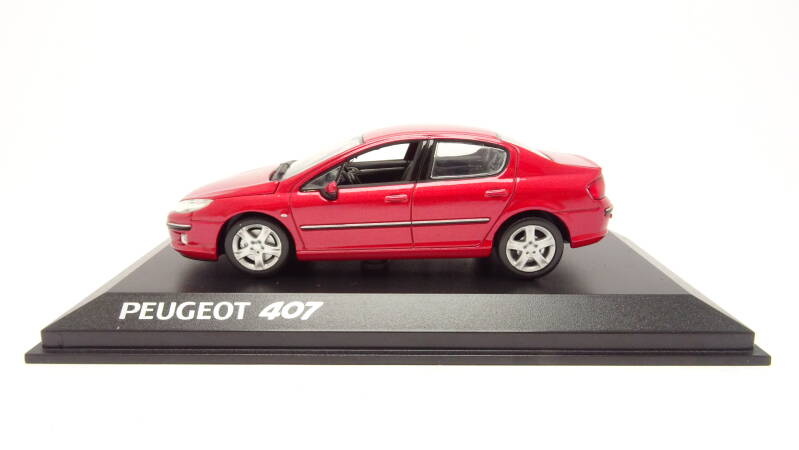
    The Peugeot 407 is a large family car (D-segment) produced by the French automaker Peugeot from 2004 to 2011. It was available in saloon, coupé and estate variants, with both diesel and petrol engines.

    The 407 was introduced in June 2004 as a replacement to the Peugeot 406 and was replaced in April 2011 by the Peugeot 508. The last Peugeot 407 was produced on 5 July 2011, with the coupé model remaining in production until December 2011.

    d23 sedan 2004-2011

    The 407 was the successor to the hugely successful Peugeot 406, and was launched in The Sunday Times Motorshow Live on 27 May 2004. 

    The streamlined design of the car was seen as radical by magazines, such as Autocar, its most distinctive features being its large front grille, and the steeply raked screen pillars. These changes from the more conservative looks of previous models have received both praise and criticism.

    Peugeot offered a wide range of naturally aspirated petrol engines and turbocharged diesel engines:

    • Petrol: Ranging from the entry-level 1.8-liter (116 hp) and the popular 2.0-liter, up to a 2.2-liter four-cylinder and a smooth 3.0-liter V6 flagship engine.
    • Diesel (HDi): Renowned for refinement and fuel economy, with the 1.6 HDi and 2.0 HDi being the most common. A powerful 2.7-liter and later 3.0-liter V6 HDi were available for higher-end trims and the Coupé.

    The models were given a minor facelift in August 2008, resulting in most petrol engine models being withdrawn from sale in the European countries.

    d23 coupe 2005-2011

    The Peugeot 407 Coupé is a grand tourer manufactured by French automaker Peugeot between 2005 and 2011. It served as the direct successor to the widely acclaimed Peugeot 406 Coupé. Unlike its predecessor, which was styled by Pininfarina, the 407 Coupé was designed in-house by Peugeot's own design team.

    The design was defined by a distinctive "shark mouth" front grille, elongated headlights, and side gills on the front bumper. It was substantially larger than the 406, measuring 4.81 meters long and 1.87 meters wide.

    It used the same PSA PF3 platform, which it also shared with the Peugeot 407 sedan, Citroën C5 and C6. However, Peugeot made significant structural changes to fit the Coupé's grand tourer character.

    The vehicle was offered with a mix of inline-four and V6 engines, paired with either manual or automatic transmissions: the petrol engines were the 2.2L and the 3.0L V6. Diesel engines were the 2.0L, 2.7L V6 and 3.0L V6.

    Production ended in December 2011 with roughly 36.000 units built. The entire 407 lineup was replaced by the Peugeot 508, which did not receive a coupe variant, making the 407 Coupé the last traditional large two-door coupe built by Peugeot.

    207 2006-2015

    The Peugeot 207 is a supermini car (B) that was designed and produced by the French automaker Peugeot from 2006 to 2014. It was presented at the Geneva Motor Show in 2006, and entered production in April 2006, as the successor to the Peugeot 206. It shares the same platform with the Citroën C3.

    The Peugeot 207 was replaced in April 2012 by the Peugeot 208, which is built on the same platform.

    The 207 was available as a three- or five-door hatchback, a 207 SW station wagon and the 207 coupé cabriolet (207 CC), which was launched in December 2006, as a replacement for the ageing 206 CC retractable hardtop, with engine choice limited to either the 1.6l HDi or 1.6l Vti.

    Initially, three petrol engines were available: 1.4-litre 8v with 75 or 16v 90 hp and 1.6 litre 16v with 110 bhp. From the end of 2006, the 1.4 and 1.6 16v models were replaced by the new 1.4 vti 95 bhp and 1.6 vti a 120 bhp Valvetronic engines.

    Two turbocharged and intercooled versions, one with 150 bhp, and the other with 175 bhp were also added to the range. A GTI (or RC in some markets) version was also available, with the THP175 175 hp turbocharged 1.6 litre engine.

    908 lemans  2007-2011

    The Peugeot 908 HDi FAP is a sports prototype racing car built  to compete in the 24 Hours of Le Mans endurance race, starting in 2007 and eventually winning in 2009. 

    This was Peugeot Sport's first Le Mans effort since the end of the Peugeot 905 project in 1993. It won 19 from the 28 races in which it raced between 2007 and 2010.

    The Peugeot 908 is powered by a 5.5 L v12 HDi diesel engine with an output  over 730 bhp.

    308cc 2009-2013

    The Peugeot 308 is a small family car produced by French automobile manufacturer Peugeot. It was unveiled in June 2007, and launched in September 2007 in hatchback form, which was followed by station wagon (the 308 SW) in March 2008, coupé cabriolet (the 308 CC) in February 2009, and a sedan version (the 408) in February 2010. The 308 replaced the 307, and positioned below the 508 and above the smallest 208.

    The first generation was largely based on its predecessor, the 307, and utilized modified versions of that car's drivetrain and chassis. 

    The engine range includes a petrol 1.6 16V 110 hp and 143 hp 2.0 16V. In May 2010, Peugeot announced the return of a GTi model, featuring a turbocharged 1.6 L engine with 200 bhp.

    A cabriolet with a retractable hardtop known as the 308 CC replaced the Peugeot 307 CC in February 2009. The roof folds into the boot in twenty seconds, and at up to speeds of 12 km/h. With the roof up the boot space capacity is 465 litres but this reduces to 266 litres with the roof down.

    A facelifted 308 was released in May 2011, following the public launch at the 2011 Geneva Motor Show, with a new front end and minor changes to the rear of the vehicle. Peugeot also launched the 308 e-HDI micro-hybrid model with stop-start technology.

    In November 2007, the 308 was awarded the Goldene Lenkrad (Golden Steering Wheel) in Germany. A panel of automotive professionals chose the 308 as the best compact family car after it finished first in nine of the 15 criteria.

    rcz

    The Peugeot RCZ is a car designed by French car brand Peugeot and assembled in Austria by Magna Steyr from 2009 until 2015. It is a sports coupé with a 2+2 seating layout and a front-engine, front-wheel-drive layout. This car was officially presented in 2009 at the Frankfurt Motor Show. The RCZ won numerous awards, the most important of which are five times the best sports car award by Diesel Car magazine and the 2010 coupe award by Top Gear. The RCZ was developed under code name "T75".

    t75 2009-2015

    The Peugeot RCZ is a sporty 2+2 coupe produced by the French automaker Peugeot between 2009 and 2016. Manufactured by Magna Steyr in Austria, it instantly stood out due to its radical styling, which was heavily inspired by the Audi TT. Its most iconic design feature is the flowing 'double-bubble' roof, where the rear window curves seamlessly to match the contours of the roofline.

    Beyond the unique roof design, the car features prominent aluminum roof arches and an active rear spoiler that deploys automatically at higher speeds to generate extra downforce.

    The RCZ was formally introduced at the Frankfurt Auto Show in 2009 and launched into production late 2009. The vehicle was available in almost 80 countries by 2013. 

    While the RCZ shares its platform with the first-generation Peugeot 308, it sits much lower and wider for a significantly more athletic driving experience. It was available with several engine options:

    • 1.6 THP (Petrol): Developed in partnership with BMW. It came in either 156 hp or 200 hp variants.
    • 2.0 HDi (Diesel): A robust 2.0-liter diesel engine pushing out 163 hp, built for high-mileage drivers wanting sporty torque.
    • RCZ R (Flagship Model): Introduced in 2014 and developed by Peugeot Sport. This hardcore version extracted a massive 270 hp from the 1.6-liter turbo engine, sprinting from 0 to 100 km/h in just 5.9 seconds. It also featured a Torsen limited-slip differential for maximum cornering grip.

    Although designated as a 2+2 coupe, the rear seats are heavily compromised and only suitable for small luggage or young children. However, the boot is surprisingly practical for a sports car and can be expanded further by folding down the rear seats. The interior offers a premium feel, featuring high-quality materials, optional leather-trimmed dashboards, and deeply bolstered sports seats.

    The 30.000th RCZ was assembled in June 2011. The 50.000th RCZ was built on 14 February 2013 and was painted red. After a production period of almost six years, the last Peugeot RCZ was assembled in the Magna Steyr Graz plant in September 2015.

    t75-r 2014-2015

    The Peugeot RCZ R is the ultimate, high-performance evolution of the RCZ coupe. Launched in 2014 and developed by Peugeot Sport (the brand's legendary motorsport division), it was built to turn a beautiful cruiser into a legitimate, track-ready sports car. At the time of its release, it held the title of the most powerful production car in Peugeot's history.

    Peugeot Sport took the standard 1.6-liter turbocharged Prince engine (THP) and heavily re-engineered it to extract a staggering 270 hp and 330 Nm of torque. It achieved 166 hp per liter, which was a higher specific power output than many contemporary supercars.

    It sprints from 0 to 100 km/u in 5.9 seconds and hits an electronically limited top speed of 250 km/u.

    The RCZ R distinguished itself from standard models through highly purposeful styling elements such as a large, fixed rear spoiler which replaces the active pop-up spoiler of the standard car to maximize permanent high-speed downforce. It has matte black roof arches instead of standard aluminum, 19-inch 'R' light-alloy wheels (wrapping wider 235-section tires) and symmetrical dual exhaust pipes integrated into a bespoke rear diffuser.

    Only around 3000 units of the RCZ R were produced worldwide before Peugeot axed the entire model line in late 2015, making it a highly exclusive vehicle. Because Peugeot Sport completely cured the reliability flaws of the lesser 156 hp and 200 hp THP engines with motorsport-grade internals, the RCZ R is widely considered the most reliable, durable, and rewarding version to own.


    508

    The Peugeot 508 is a mid-size/large family car produced by the French automaker Peugeot, and followed by the 508 SW, an estate version, in 2011.

    Production of the 508 began in 2010 as an indirect replacement for the 407 and 607, for which no direct replacement was scheduled. It shares its platform and most engine options with the second generation Citroën C5: the two cars are produced alongside one another at the company's Rennes Plant, and in Wuhan, China, for sales inside China.

    w23 2010-2014

    The 508 was officially launched at the 2010 Paris Motor ShowPSA Peugeot Citroën build the 508 in China in partnership with Dongfeng Motor.

    It was reported in 2011 that Peugeot expected China to be the largest market for the car, at almost twice that of France. If predictions were correct, it would be the first time that the company sold more units in any country other than France for any model that is available in Europe.

    The 508 saloon is 4.79m long, while the 508 SW (estate) is 4.81m long. Compared to the Peugeot 407, the 508 has a shorter front overhang and a longer rear passenger compartment.

    Peugeot has equipped the 508 for the market in Europe with its HDI common rail diesel engines. The 508 range also included PSA's HYbrid4 diesel electric hybrid powertrain. The top GT version comes with a 201 bhp, 2.2-litre turbodiesel engine which generates 458 N⋅m of torque. It comes mated solely to a six speed torque converter automatic gearbox which offers manual shifts via paddles or a central selector.

    The Peugeot 508 has received several international awards including Car of the Year 2011 in Spain (awarded 2012), Next Green Car, and Best Large Family Car 2011. Citations commented on the car "being spacious and well equipped" and that it "represented excellent build quality and has the best fuel economy in its class" or also Auto Zeitung Best Imported Family Car 2011.

    w23 estate 2010-2014

    The Peugeot 508 SW (Station Wagon) introduced in 2011 is a spacious, comfortable mid-size family estate car. Built on the PSA PF3 platform, it replaced both the Peugeot 407 and the larger 607, aiming to deliver a more premium, upmarket cabin experience to rival cars like the Volkswagen Passat.

    It features a highly practical 560-liter boot, which expands significantly with the rear seats folded flat.

    The 2011 model year offered a mix of petrol and diesel powertrains:

    • Petrol: Primarily the 1.6 THP (156 hp) turbo or a non-turbo 1.6 VTi (120 hp).
    • Diesel: Included the highly economical 1.6 HDi/e-HDi (112 hp), a balanced 2.0 HDi (140 hp or 163 hp), and the range-topping 2.2 HDi GT (200 hp).

    Top od the line in the GT version which is only available with the 2.2 HDi engine. It comes with 18-inch wheels, dual chrome exhaust tips, full leather sports seats with a driver massage function, bi-xenon directional headlights, and the pop-up color Head-Up Display (HUD).


      w23 face lift 2015-2017

      The Peugeot 508 was given a facelift in 2015, with the introduction of a vertical grille with the Peugeot lion in the centre. 

      The front of the car was redesigned and full LED headlights became available.

      New engines were also launched, and front-wheel drive introduced for the RXH.

      The Peugeot 508 has received several international awards including Car of the Year 2011 in Spain (awarded 2012), Next Green Car, and Best Large Family Car 2011. Citations commented on the car "being spacious and well equipped" and that it "represented excellent build quality and has the best fuel economy in its class" (Peugeot 508 1.6 e HDi 109g CO2/km) or also Auto Zeitung Best Imported Family Car 2011 (readers' votes).


      set of 508  berline and break   Peugeot 508 & 508 SW (youtube.com)

      r83 limousine & estate 2018-2025

      This second generation 508 was unveiled in March 2018. The estate version was unveiled at the 2018 Paris Motor Show.

      The design is inspired by the Instinct shooting brake concept, shown at the 2017 Geneva Motor Show. It won the "Most Beautiful Car of The Year 2018" award at the International Automobile Festival, where the Peugeot e-Legend also won "The Most Beautiful Concept Car of The Year".

      In terms of powertrain options, the new 508 will have petrol engine options, both 1.6 litre PureTech turbocharged engines, with different power outputs; and three turbodiesel options. The automatic transmission has been updated to an eight speed Aisin EAT8 unit, replacing the older EAT6 units. A plug-in hybrid version was revealed in September 2019.

      The 508 PSA EMP2 platform is related to the Citroën C5 X, DS 9, 
      DS 7 Crossback, Citroën C6 II and the Dongfeng Fengshen A9.

      Unveiled on February 24, 2023, the facelift features a revised front end that includes the brand's new logo alongside a new infotainment system.

      hx1 2011

      The Peugeot HX1 is a radical, high-end concept car unveiled at the 2011 Frankfurt Motor Show. Designed to explore the future of French luxury, it blended the low, sporty silhouette of a shooting brake with the seating capacity of a Multi-Purpose Vehicle (MPV).

      The HX1 was built to challenge traditional vehicle shapes, being exceptionally long, ultra-wide, but incredibly low-slung. Its dimensions are 4.95 meters long, 1.99 meters wide, and just 1.37 meters high. At speeds above 100 km/h, a rear spoiler and side skirts automatically deploy. Even the wheels feature turbine-blade alloy spokes that physically open to create a flat, drag-reducing disc surface. This resulted in an outstanding drag coefficient (Cd) of just 0.28.

      The car features four reverse-opening, half-scissor doors that pull up and outward to create massive, pillarless entry access into the cabin.

      The HX1 showcased Peugeot's advanced diesel-hybrid technology:

      • Front Wheels: Driven by a 204 hp 2.2-liter HDi diesel engine mated to a 6-speed automatic gearbox.
      • Rear Wheels: Driven by a 95 hp electric motor, creating a combined total output of 299 hp via an all-wheel-drive layout.
      • Efficiency: Thanks to its plug-in lithium-ion battery package, it could travel up to 30 kilometers purely on electricity before sipping just 3.2 liters of diesel per 100 km on longer trips.

      208

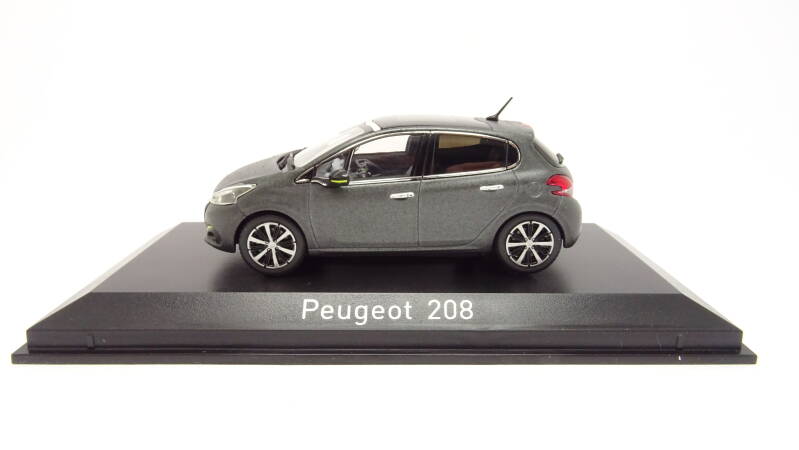
      The Peugeot 208 is a supermini car produced by the French automaker Peugeot. Unveiled at the Geneva Motor Show in March 2012 and positioned below the larger 308, the 208 replaced the 207 in 2012, and the second generation model was introduced in 2019.
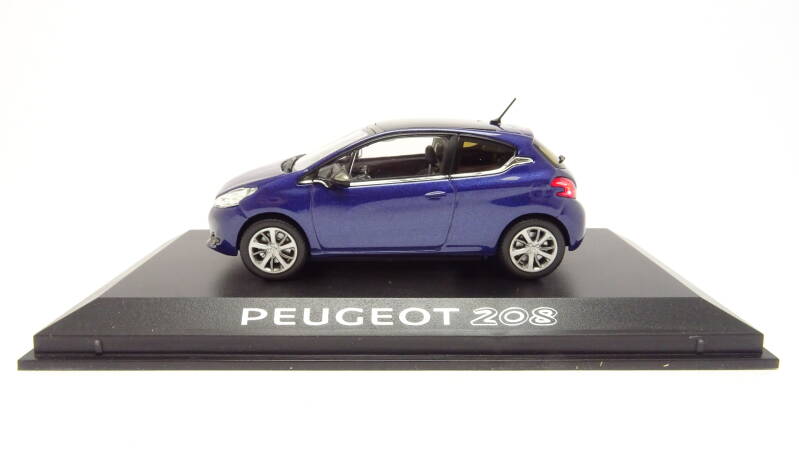
      a9 2012-2019

      The 208 was designed by a team under the direction of Pierre Authier who also designed the Peugeot 2008 Mk1. In November 2011, the initial 208 models were three-door hatchbacks produced at Peugeot's new plant in Trnava, Slovakia. As five-door hatchbacks became available in June 2012, production also started at Peugeot's French plants located in Mulhouse and Poissy.

      The first-generation 208, developed under the code name "A9", is constructed on the PSA PF1 platform. It is 173 kg lighter than the 207, while still providing more room.

      The three-door 208 was discontinued in mid-2018, and Peugeot ceased production of the first-generation 208 in Europe in 2019. From January 2013 to March 2020, the first-generation 208 was produced in Brazil. It was replaced with the second-generation model, which is imported from Argentina.

      In June 2015, the Mk1 208 was given a facelift, which had revised its styling, and added extra safety equipment. The facelift also introduced the top-level GT-Line trim level, which added a touchscreen display, Apple CarPlay and Android Auto compatibility on most models.

      All the petrol engines comply with the Euro 5 norm and the diesel engines have CO2 emissions of 99 g/km or lower. From September 2012, the 208 has been offered with two new three cylinder units with variable valve timing – the 1.0 VTi producing 68 PS and 1.2 VTi 82 PS.

      The second-generation 208 was unveiled at the Geneva Motor Show in March 2019, and officially went on sale across Europe over the summer.

      onyx 2012

      The Peugeot Onyx is a radical supercar concept unveiled at the 2012 Paris Motor Show. It serves as a high-performance laboratory for Peugeot, pushing the boundaries of material sciences, aerodynamics, and racing technology.

      Instead of just being a static design shell, the Onyx is a fully functional vehicle built around professional endurance racing components.

      The defining characteristic of the Onyx is its raw, contrasting bodywork, which intentionally leaves unique materials exposed without any clear coat or paint layers. The front doors and wings are crafted from a single, mirror-polished sheet of raw copper. Because it is unprotected, the copper naturally patinates over time, turning a deep green-brown.

      The rest of the central fuselage and rear panels are constructed from ultra-lightweight, matte black carbon fiber.

      Underneath its dramatic exterior layout, the Onyx is essentially a street-legal race car, borrowing its powertrain directly from Peugeot's legendary 908 HDi Le Mans prototype. The mid-mounted 3.7-liter twin-turbo V8 diesel engine is driving the rear wheels. It is equipped with a kinetic energy recovery system (KERS) that captures braking energy into a lithium-ion battery, allowing an electric motor to automatically deliver an extra 80 horsepower injection on acceleration.

      The setup generates a combined 680 horsepower managed by a 6-speed sequential racing gearboxBecause the carbon fiber monocoque chassis weighs only 100 kilograms, the entire car tips the scales at just 1100 kg, creating a near 1:1 power-to-weight ratio.

      Peugeot used the "Onyx" design identity to showcase a multi-modal transit concept at the motor show. Alongside the supercar, they built two other matching vehicles using the same copper and carbon fiber visual theme.


        instinct 2017

        The Peugeot Instinct is a sleek, highly advanced concept car introduced at the 2017 Mobile World Congress in Barcelona (and later shown at the Geneva Motor Show). It was designed as a futuristic vision of an autonomous vehicle that still honors the joy of driving.

        Instead of a bulky passenger pod, Peugeot wrapped this technology in a beautiful, low-slung Shooting Brake body style.

        The core premise of the Instinct was its deep integration with the Samsung ARTIK™ Cloud Internet of Things (IoT) platform. The car learns your daily routines, syncing directly with your smartphone, smartwatch, and smart home tech. For example:

        • If your smartwatch detects you had an intense workout, the car automatically switches to a relaxed autonomous mode with soothing interior lighting and climate settings.
        • It reads your calendar to ensure you leave exactly on time, configuring the navigation and drive modes based on your schedule and stress levels.

        The car features a split personality controlled through its cockpit, divided into two manual and two fully autonomous modes:

        • Drive Boost: Focuses on maximum performance and dynamic handling, giving full control to the driver.
        • Drive Relax: Keeps manual control active but assists with driver aids to ensure a smoother, calmer journey.
        • Autonomous Soft: Prioritizes total comfort, giving the passengers a peaceful atmosphere where they can read or rest.
        • Autonomous Sharp: Optimizes travel times by taking the fastest, most precise automated routes.

        When changing from manual driving into autonomous mode, the physical cockpit morphs seamlessly to create space. The steering wheel completely retracts into the dashboard structure, and the accelerator pedal folds flat into the floor floorboard. A 9.7-inch screen and a central "i-Device" controller pop up, letting the driver control the car's automated settings with basic hand gestures.

        Underneath its striking matte blue bodywork, the Instinct runs on a high-performance PHEV (Plug-in Hybrid) drivetrain. It generates a combined total output of 300 horsepower channeled through an intelligent all-wheel-drive platform, showing that autonomous cars do not have to lack power or speed.

        Many of the structural styling cues of the Instinct—specifically the sharp vertical LED daytime running lights—successfully transitioned into Peugeot's modern production cars, starting directly with the 508 generation.

        e legend concept  2018

        The Peugeot e-Legend is an all-electric, fully autonomous concept car unveiled at the 2018 Paris Motor Show. It was created as a direct, high-tech tribute to the classic Peugeot 504 Coupé from 1969, perfectly blending retro 1970s muscle car styling with ultra-modern electric technology.

        The exterior lines explicitly mimic the iconic Pininfarina shape of the original 504 Coupé:

        • The Silhouette: A traditional, sharp three-box coupe profile featuring a low stance and an aggressively long hood.
        • The Lighting: Up front, it features twin-set dual LED headlights. At the back, it brings back the legendary "three-claw" taillights.
        • The Logo: The e-Legend was the first modern concept to revive Peugeot's historical 1960s illuminated block-style lion badge on the grille, which inspired the company's current production logo.

        Instead of just being a static design shell, Peugeot equipped the e-Legend with a fully functioning, high-performance electric drivetrain:

        • Power Output: A 100 kWh battery pack powering two electric motors to deliver 456 horsepower (340 kW) and 800 Nm of torque across an all-wheel-drive system.
        • Performance: It accelerates from 0 to 100 km/h in under 4 seconds with a top speed capped at 220 km/h.
        • Range: It boasts a driving range of 600 kilometers (WLTP) and supports ultra-fast charging, capable of adding 500 km of range in just 25 minutes.

        Following its launch, an online petition signed by over 40,000 enthusiasts urged Peugeot to put the car into mass production. However, Peugeot's leadership officially shelved the project because converting the low-slung, bespoke platform into a production-ready vehicle would cost over €250 million—an expense that was financially unviable for a niche coupe.


        9x8 hypercar 2022-present

        The Peugeot 9X8 is a sports prototype racing car built by French car manufacturer Peugeot for the Le Mans Hypercar category in the FIA World Endurance Championship.

        Succeeding the 905 and 908, the 9X8 was designed to take full advantage of the freedoms allowed by the new regulations for the Hypercar category. The first area to benefit from the new regulations is aerodynamics. Indeed, the latter allows the vehicle to have only one adjustable aerodynamic element without specifying what it should be, thus allowing Peugeot to do without the rear spoiler.

        Regarding the engine, the 9X8 is equipped with a 680 hp twin-turbo 2.6L V6 mated to a 272 hp electric motor, all assembled in a 7-speed sequential gearbox. Peugeot explains the name "9X8" for several reasons: the 9 symbolizes the brand's high-performance models, the X represents all-wheel drive and electric drive technologies, and the 8 corresponds to the brand's contemporary models.

        Since 2022, the Peugeot 9X8 are using race numbers 93 and 94, in WEC and at Le Mans. 93 refers to Peugeot's podium sweep at the 1993 24 Hours of Le Mans, their second win in succession, but as #92 was already taken in 2022, #94 is used since.

        On 25 March 2024 Peugeot presented an updated version of the 9X8 car with the introduction of a rear spoiler, since the previous version of 9X8 proved uncompetitive due to its dependency on ground effect, especially harmed by bumpy surfaces, like at Sebring (where WEC did not race in 2024). Peugeot also abandoned equal tyre widths, using 29cm tyres at the front and 34cm at the rear like all its competitors, instead of 31 cm tyres on both axles in the first model.

        1810-1858

        1858-1889

        1889-1910

        1910-1925

        1925-1936

        1927-1936

        1936-1948

        1948-1950

        1950-1955

        1955-1960

        1960-1968

        1968-1970

        1970-1975

        1975-1980

        1980-1998

        1998-2002

        2002-2010

        2010-2021

        2021-now

        Create Your Own Website With JouwWeb