





Haas Formula LLC, competing as TGR Haas F1 Team, is an American-licensed Formula One racing team established by NASCAR Cup Series team owner Gene Haas in April 2014. The team made its debut in the 2016 season. The team principal is Ayao Komatsu, who replaced Guenther Steiner who served in the role from the team's inception until January 2024.
The team is headquartered in Kannapolis, North Carolina, United States – 50 km from Charlotte – alongside sister team and NASCAR entrant Haas Factory Team, though the two teams are separate entities. The team also established a forward base in Banbury, England, to turn cars around between races during the European part of the calendar. The team maintains a design office in Maranello, which is also home to Scuderia Ferrari's headquarters.
In 2026 the team will be renamed to TGR Haas F1 entering in partnership with Toyota as their new title sponsor and Lead Technical partner.

Haas was the first American constructor to submit an F1 entry after the failed US F1 project in 2010, and is the first American constructor to compete since the unrelated Haas Lola outfit raced in the 1985 and 1986 seasons. The Haas Lola team was owned by former McLaren boss Teddy Mayer and Carl Haas, who was not related to Gene Haas.

Following the collapse of Marussia F1 during the 2014 season and the auctioning of their assets, Haas purchased the team's Banbury headquarters to serve as a forward base for their operations.
Unrestricted by testing regulations until the time they actually entered Formula One, Haas shook its new car down in December 2015 ahead of official pre-season testing at Barcelona in early 2016. Haas approached Italian manufacturer Dallara to build their chassis, with a power unit supplied by Ferrari. Former Jaguar and Red Bull Racing technical director Guenther Steiner was the team principal for 10 years until 2024. Haas confirmed its new car had passed the mandatory FIA crash tests in January 2016.
vf-16


2016


The Haas VF-16 is a Formula One car designed and built by Italian chassis manufacturer Dallara on behalf of Haas F1 Team for use in the 2016 Formula One season. The car was powered by Ferrari's 2016-specification power unit, the Ferrari 061.
It was driven by former Lotus driver Romain Grosjean and Esteban Gutiérrez, who had made his return to competition after spending the 2015 season as a testing and development driver for Ferrari. The car made its competitive debut at the 2016 Australian Grand Prix.
The origin of naming the car "VF-16" is derived from the first CNC machine manufactured by Haas Automation, the VF-1, launched in 1988. The "V" stands for vertical, which is an industry standard designation for a vertical mill. Gene Haas, founder of Haas Automation, added "F1" to the name to unofficially designate it as the company's "Very First One".
At the team's debut, at the opening race in Australian, Grosjean finished 6th scoring eight points for the team. This made Haas the first American constructor to win points in its first F1 race.

Romain Grosjean
Esteban Gutiérrez
vf-17


2017


The Haas VF-17 is a Formula One car designed by the Haas F1 team and built by Italian chassis manufacturer Dallara, for use in the 2017 Formula One season. The car was driven by Romain Grosjean and former Renault driver Kevin Magnussen, who replaced Esteban Gutiérrez at the end of the 2016 season. The car made its competitive début at the 2017 Australian Grand Prix.
At the Monaco Grand Prix, the team made a livery change in which the red coloured areas of the car were replaced with a light grey colour. This change was made to make the larger driver numbers more visible. The team also scored their first ever double points finish in their history at this weekend. The team also had another livery change starting from the Belgian Grand Prix, with a more predominantly white front wing combined with a thinner red outline.

Romain Grosjean
Kevin Magnussen
vf-18


2018
The Haas VF-18 is a Formula One car designed by Italian manufacturer Dallara for the Haas F1 Team to compete in the 2018 FIA Formula One World Championship. The car was driven by Romain Grosjean and Kevin Magnussen and made its competitive début at the 2018 Australian Grand Prix.
The focus of the VF-18's design was to produce a more stable chassis than its predecessor, the VF-17, with the aim of building a car capable of producing more consistent performances between rounds. To do this, Dallara worked to reduce the weight of the chassis as much as possible, allowing Haas more freedom in using ballast to influence the car's weight distribution.
Questions were raised over similarities between the VF-18 and the Ferrari SF70H, the car entered by Haas' partner Ferrari in 2017 as the sporting and technical regulations ban the use of "customer cars", or cars developed by one constructor and sold on to another team.
As of 2025, the VF-18 is Haas' most successful car, with 93 points to its name. The team achieved their best-ever combined result with Grosjean and Magnussen finishing fourth and fifth respectively during the Austrian Grand Prix, which coincidentally was their 50th Grand Prix entered.

Romain Grosjean
Kevin Magnussen
vf-19


2019


The Haas VF-19 is a Formula One car designed by Italian manufacturer Dallara for the Haas F1 Team to compete in the 2019 FIA Formula One World Championship. The car was driven by Romain Grosjean and Kevin Magnussen, with additional testing work carried out by Pietro Fittipaldi. The VF-19 made its competitive debut at the 2019 Australian Grand Prix.
Due to the 2019 aerodynamic regulation changes, aimed at improving overtaking on track, the car featured a number of differences, with a wider, simplified front wing, a wider rear wing, and simplified brake ducts, alongside smaller bargeboards.
As with the previous seasons, the team purchased a number of components from its power unit supplier, Ferrari, with the team only manufacturing and designing the monocoque, crash structures and bodywork. This was done to ensure conformity to FIA Sporting and Technical regulations.

Romain Grosjean
Kevin Magnussen
vf-20

2020


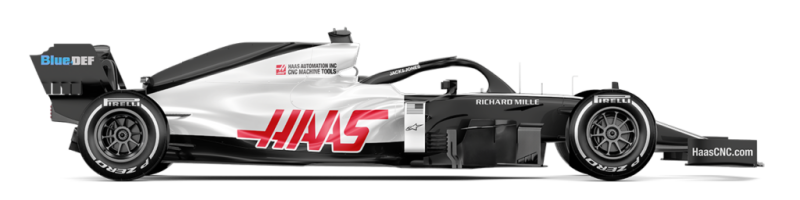
The Haas VF-20 is a Formula One racing car designed and constructed by Haas to compete during the 2020 Formula One World Championship. The car was driven by Romain Grosjean and Kevin Magnussen, who competed for Haas for the fourth consecutive year,as well as Pietro Fittipaldi, due to Grosjean's crash in the Bahrain Grand Prix, where he replaced the Frenchman at the Sakhir and Abu Dhabi Grands Prix. The car was planned to make its competitive debut at the 2020 Australian Grand Prix, but this was delayed when the race was cancelled and the next three events in Bahrain, Vietnam and China were postponed in response to the COVID-19 pandemic. The VF-20 made its debut at the 2020 Austrian Grand Prix.
The Haas VF-20 is powered by the 2020 Ferrari power unit, paired to a 2019 Ferrari 8-speed gearbox. The design features several similarities to the Ferrari SF90 used by Ferrari in the 2019 Formula One World Championship.
As with the previous year's entry, the VF-19, the car struggled with consistency issues.

Romain Grosjean
Kevin Magnussen
Pietro Fittipaldi
vf-21


2021
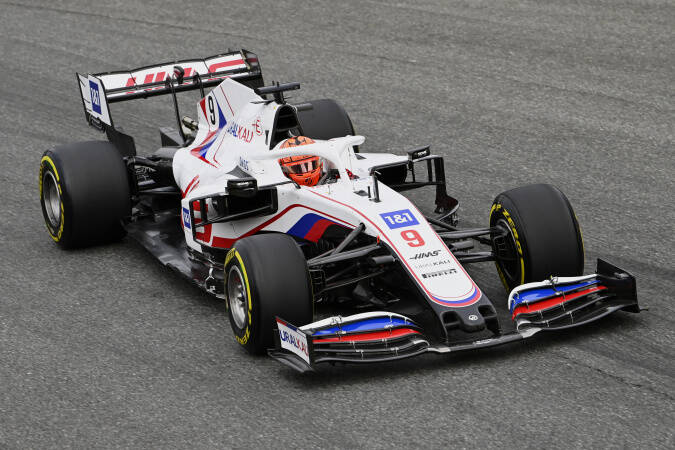
The Haas VF-21 is a Formula One racing car designed and constructed by Haas to compete during the 2021 Formula One World Championship. The car was driven by Nikita Mazepin and Mick Schumacher, both of whom competed in their first season, with additional testing work carried out by Pietro Fittipaldi and Kevin Magnussen.
The Haas VF-21 was powered by the 2021 Ferrari power unit, the 065/6. Ferrari developed an in-season engine upgrade which was introduced to the works team at the Turkish Grand Prix. Haas declined to take the upgrade.
The VF-21 chassis used in the 2021 season are modified VF-20 chassis, rather than new vehicles. The chassis, as it was raced at the Bahrain Grand Prix, was identical to the VF-20 except for the downforce cuts mandated by the 2021 regulations.
When the car's livery was revealed, it was a cause for controversy as it appeared to feature the Russian flag (due to the team having a Russian title sponsor and driver, Uralkali and Nikita Mazepin respectively).

Nikita Mazepin
Mick Schumacher
vf-22


2022
The Haas VF-22 is a Formula One racing car designed and constructed by the Haas F1 Team to compete in the 2022 Formula One World Championship. The VF-22 is Haas' seventh car entry into Formula One. It has been driven by Kevin Magnussen, Mick Schumacher, and Nikita Mazepin, the lattermost who was replaced by Magnussen before the season-opening Bahrain Grand Prix. The car runs on power units supplied by Ferrari.
The VF-22 was the first Formula One car of 2022 to be revealed pre-season. Due to the major change to the Formula One regulations which affected the appearance of the cars, development on the VF-21 used in the 2021 season was cut short, and the team instead focused on the 2022 season.
This car is notable for being the first ever Haas Formula One car to take a pole position, in the hands of Magnussen, at the 2022 São Paulo Grand Prix at Interlagos. Haas had an overall improved season, moving up from 10th in the constructors championship to 8th and back to scoring points regularly.
For a seventh consecutive year, Haas selected a Ferrari engine for its car.
The car was revealed and initially tested in a livery similar to the previous season's VF-21, with the title sponsorship from Russian company Uralkali and designs across the car, particularly on the front wing, resembling the Russian flag. Following the 2022 Russian invasion of Ukraine on 24 February, Haas removed the Uralkali branding from their car and website.

Kevin Magnussen
Mick Schumacher
vf-23


2023
The Haas VF-23 is a race car built by Haas F1 Team that competed in the 2023 Formula One World Championship. In December 2022, the car became the first of the 2023 models to pass FIA homologation. The VF-23 was driven by Kevin Magnussen for his second consecutive year with the team, having also raced for them from 2017 to 2020 and Nico Hülkenberg, who returned to Formula One in 2023 after 3 years without a full-time race contract.
The livery integrates the branding of MoneyGram International Inc., the team's third title sponsor after Rich Energy and Uralkali.
After the first 10 races Haas were 8th in the constructors' championship with 11 points level with Williams. Haas finished 2023 10th and last in the constructors' championship with just 12 points. The team's last place finish was a result of the VF-23's great qualifying pace but high tyre wear during the races. This led to multiple pit stops, losing the drivers time or the drivers would struggle with the tyres during races meaning the drivers were sitting ducks on the straights.

Kevin Magnussen
Nico Hülkenberg
vf-24


2024
The Haas VF-24 is a Formula One racing car designed and constructed by the Haas F1 Team to compete in the 2024 Formula One World Championship. It was driven by Kevin Magnussen, Nico Hülkenberg and reserve driver Oliver Bearman, the former two drivers in their last year with Haas and the latter driving the car for four practice sessions and two Grands Prix: the first in Azerbaijan while Magnussen served a one-race ban, and the second during the 2024 São Paulo Grand Prix while Magnussen was unwell.
It scored its first points with Hülkenberg at the Saudi Arabian Grand Prix, followed by a double-points finish at the following Australian Grand Prix. The team's highest finish was sixth place, both times with Hülkenberg, at the Austrian and British Grands Prix.

Kevin Magnussen
Nico Hülkenberg
Oliver Bearman
vf-25


2025
The Haas VF-25 is a Formula One racing car designed and constructed by the Haas F1 Team which competed in the 2025 Formula One World Championship. It was driven by Esteban Ocon and Oliver Bearman, both of whom were in their first full season with the team following Kevin Magnussen's departure from Formula 1 and Nico Hülkenberg's move to Sauber for the 2025 season as part of its transition to Audi.
Haas unveiled the car at the F1 75 Live event on 18 February 2025. Following the predecessor focusing on a more carbon-based livery, the VF-25 features a larger presence of white colouring.
Haas still used the Ferrari 066/15 1.6 L direct injection V6 turbocharged engine.

Esteban Ocon
Oliver Bearman

In December 2025, Haas terminated their sponsorship agreement with MoneyGram to pursue a title sponsorship with technical partner Toyota Gazoo Racing.
Haas F1 Team and Toyota Gazoo Racing (TGR) have deepened their partnership, with Toyota starting from the 2026 Formula 1 season the title sponsor of the team and acts as a lead technical partner. The team will then officially TGR Haas F1 Team .
The partnership is designed to share knowledge and resources and give young Japanese drivers and technicians the opportunity to gain experience in F1.
Toyota Gazoo Racing, Toyota's motorsport division, is the title sponsor. However, Toyota insists that this partnership does not mean a return to F1 as a full factory team, although the partnership has sparked speculation about future intentions.
vf-26


2026
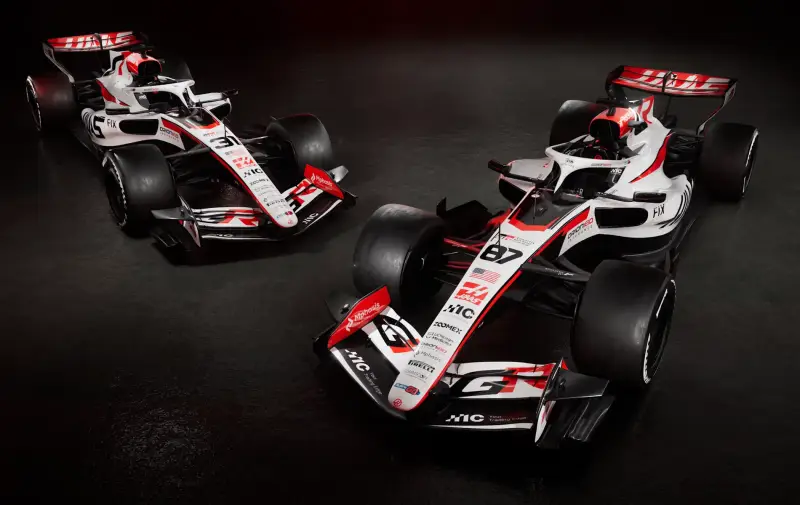
The Haas VF-26 is a Formula One racing car designed and constructed by the Haas F1 Team to compete in the 2026 Formula One World Championship. It is currently being driven by Esteban Ocon and Oliver Bearman, both of whom are going into their second season with the team. Under the TGR Haas F1 Team banner, Haas utilizes Toyota’s design, manufacturing, and simulator services while remaining a Ferrari customer for engines and gearboxes .
The team continues to operate across three hubs: Kannapolis (US), Banbury (UK), and Maranello (Italy), with additional support from Toyota’s facilities in Cologne, Germany.
The VF-26 was developed under the leadership of Technical Director Andrea De Zordo. Development began in the second half of 2024, with a full transition of resources occurring after the 2025 summer break. The VF-26 saw its first mileage at the Barcelona shakedown test in January 2026.
The car has a Ferrari 067/6 1.6 L direct injection V6 turbocharged engine, limited to 15.000 RPM. It has a Ferrari 8-speed transmission.

Esteban Ocon
Oliver Bearman


Create Your Own Website With JouwWeb