


British Racing Motors (BRM) was a British Formula One motor racing team. Founded in 1945 and based in the market town of Bourne in Lincolnshire, it participated from 1951 to 1977, competing in 197 grands prix and winning seventeen. BRM won the constructors' title in 1962 when its driver Graham Hill became world champion. In 1963, 1964, 1965 and 1971, BRM came second in the constructors' competition.
BRM was founded just after the Second World War by Raymond Mays, who had built several hillclimb and road racing cars under the ERA brand before the war, and Peter Berthon, a long-time associate. Mays' pre-war successes (and access to pre-war Mercedes-Benz and Auto Union design documents) inspired him to build an all-British grand prix car for the post-war era as a national prestige project, with financial and industrial backing from the British motor industry and its suppliers channelled through a trust fund.
This proved to be an unwieldy way of organising and financing the project, and as some of the backers withdrew, disappointed with the team's slow progress and early results, it fell to one of the partners in the trust, Alfred Owen of the Rubery Owen group of companies. Owen, whose group primarily manufactured car parts, took over the team in its entirety. Between 1954 and 1970 the team entered its works F1 cars under the official name of the Owen Racing Organisation. Berthon and Mays continued to run the team on Rubery Owen's behalf into the 1960s, before it was handed over to Louis Stanley, the husband of Sir Alfred's sister Jean Owen.
A factory was set up in Spalding Road, Bourne, Lincolnshire, behind Eastgate House, Mays' family home, in a building called 'The Maltings' (the adjacent former ERA works, vacated in 1939). Several people involved with ERA returned to the firm to work for BRM, including Harry Mundy and Eric Richter. The team also had access to a test facility at Folkingham aerodrome.
british racing motors V16

The British Racing Motors V16 is a supercharged 1.5-litre V-16 cylinder racing engine built by British Racing Motors (BRM) for competing in Formula One motor racing in the immediate aftermath of World War II. Designed in 1947 and raced until 1954–55, it produced 600 bhp at 12.000 rpm, although test figures from Rolls-Royce suggested that the engine would be able to be run at up to 14.000rpm.
The very complex engine was exceptionally powerful for the time, but it initially proved a disappointment, possessing poor reliability so that cars either did not start or failed to finish races. In the 1952 Formula One season, after BRM withdrew their V16 engined cars before a race in Turin while attempting to enlist Juan Manuel Fangio, leaving only Ferrari as the main contestants with no effective competition, the racing organisers abandoned the Formula One series and ran the remaining year's races as Formula Two.
The engine was designed by a team consisting of Peter Berthon, Harry Mundy, Eric Richter, and Frank May. It was conceived as basically two 750cc V8 engines back-to-back with cam drives and gears in the centre of the engine.
type 15


1950-1953


The BRM Type 15 was a Formula One racing car of the early 1950s, and the first car produced by British Racing Motors. The car was fitted with a revolutionary and highly complex supercharged 1.5-litre British Racing Motors V16 which produced considerably more power than any of its contemporaries.
The distinctive noise of the car made it a favourite with crowds wherever it appeared, but the initial unreliability of the car, its inability to live up to the hype that the project's leading figures had created around it, and the change to Formula Two regulations in 1952 meant the project never achieved the hoped-for level of success on the Grand Prix stage; the car's complexities meant it had a longer development time than its competitors and was not properly competitive until 1953 (3 years after it first raced), where it saw success at non-championship events.
Designers Berthon and Eric Richter were expecting 500 bhp and at least 12.000rpm from their new British Racing Motors V16 engine, which was a 1.5-litre 135° V16 designed to meet the 1947 "Formula A" or "Formula 1" regulations that would go on to become the formula for the Drivers' World Championship in 1950. A V8 configuration had also been considered but it has been suggested that the V16 was chosen in part to bolster the car's image when approaching potential sponsors
Reg Parnell
Juan Manuel Fangio
José Froilán González
Ken Wharton
Stirling Moss
Peter Collins
p30

1954-1955


For 1954 an updated version of the Type 15 was produced which weighed over 91 kg less than the original car and featured a shorter wheelbase and a much smaller fuel tank, since the car was no longer taking part in long races. Wharton raced the old car in two races in New Zealand but could do no better than two third places because of car problems. The two new P30s, as the Mk.2 cars came to be known, appeared in thirteen races at ten different meetings in the year, driven by Wharton and Ron Flockhart. Between them they won five of the first six races, but various spins and problems prevented them from adding to their tally. By now though the team was working to get back into Formula One and 1955 was the car's last year of racing. From six races Peter Collins took two wins and Flockhart picked up two second places.
Ken Wharton
Ron Flockhart
Peter Collins
A total of four Type 15s were produced, one of which was written off by a collision during the Glover Trophy and salvaged for spares, while another car that crashed at Albi was used as the basis for one of the two P30s produced. One Type 15 is on display at the National Motor Museum in Beaulieu, the other is on display as part of the Donington Grand Prix Exhibition in its original light green paint scheme alongside a P30 and a cutaway V16 engine. The fourth surviving car, another P30, is in the ownership of Bernie Ecclestone, having previously been owned by Pink Floyd drummer Nick Mason. The cars can sometimes be seen in action at the various historic racing events such as the Goodwood Festival of Speed.
type 25

1956-1960


The BRM P25 was a Formula One racing car raced from 1956 to 1960 and the second car produced by the British Racing Motors consortium. After the failure of the complex BRM V16, the P25's design emphasized simplicity. The car was fitted with a 2.5-litre straight-4 engine, producing some 275 horsepower. The P25 would be the foundation of BRM's successes in the late 1950s and early 1960s.
The P25 began racing in non-championship events in September 1955. The car's horsepower proved to be its strong suit, but its handling and reliability problems were quickly revealed.
The engine was mounted to a simple ladder frame steel chassis, with a centre tub monocoque section. The P25 used Lockheed disc brakes at the front wheels, which would later be replaced by Dunlop discs. Uniquely, a single brake disc was fitted to the gearbox at the rear.
Mike Hawthorn
Tony Brooks
Jean Behra
Harry Schell
Joakim Bonnier
Graham Hill
p48
1960-1961
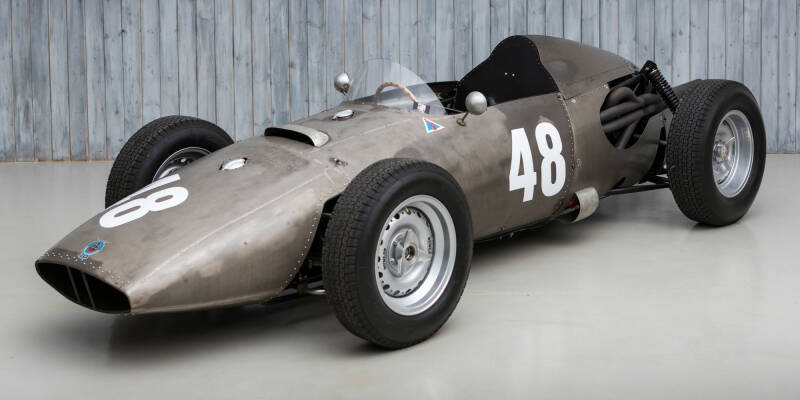
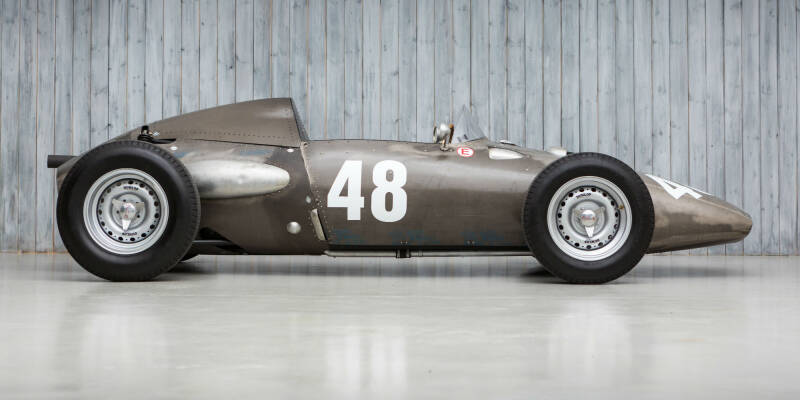
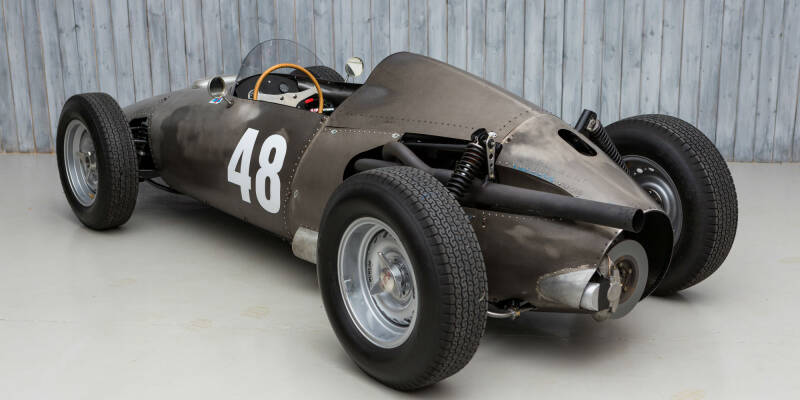
The BRM P48 was a Formula One racing car raced in 1960. It was BRM's first rear-engined car. With rear-engined cars in the ascendancy, BRM hastily reworked the front-engined, now five-year-old P25. The car proved to be slow and unreliable, and was replaced by the P48/57 the following year.
Aside from the placement of the driver and engine, the P48 was mechanically the same as the outgoing P25. It featured the same 2.5 litre straight-4 engine producing 275 horsepower.
During 1960 Tony Rudd designed his Mark II version of the car, with a conventional 2 disc rear brake layout, simple rear wishbone suspension and a much lower profile. This resulted in a much better handling car, and for the 1961 Formula One season BRM based their chassis designs on the Mark II.
Graham Hill
Harry Schell
Joakim Bonnier
Dan Gurney
p57


1961-1965
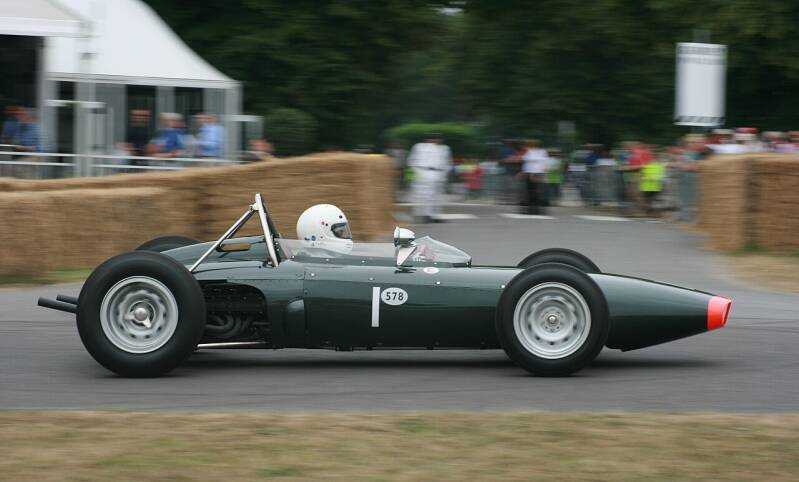
The BRM P57 (originally referred in 1961 as the BRM P48/57 and in 1962 as the BRM P578) was a Formula One racing car raced in Formula One from 1962 to 1965.
Like the other British teams, BRM was caught off-guard by new regulations for the 1961 Formula 1 season that limited engines to 1.5 litres. They had a new 1.5 litre V8 engine on the drawing board, but it was not likely to be ready until late in the season. The Coventry Climax 4-cylinder unit used by Cooper and Team Lotus was chosen as a stopgap solution. It was installed in the first BRM spaceframe chassis, based on the 1960 BRM P48 Mark II designed by Tony Rudd.
The P261 succeeded the P57 in 1964, but privateers such as Scuderia Centro Sud ran P57s until the end of 1965.
Graham Hill
Tony Brooks
Richie Ginther
p61


1963
The BRM P61 was a Formula One racing car built for the 1963 Formula One season. It was BRM's first attempt at the monocoque design introduced by Lotus a year earlier. Fundamental design issues would mean the car only competed 2 Grands Prix before being garaged in favor of the older, more reliable spaceframe P57. A redesigned monocoque car, dubbed the P261, was introduced for 1964.
The P61 was not a true monocoque, a rear subframe was bolted to the front, monocoque half of the car. The subframe housed BRM's type 56 engine, a 1.5 litre V8 and a Colotti gearbox. With approximately 200 horsepower, BRM's V8 rivaled Ferrari for the most powerful engine in F1. BRM's designers, confident in their chassis' rigidity, omitted a rear bulkhead between the driver and engine.
Graham Hill
p61 (mkII)

1964-1968


The BRM P261 was introduced for the 1964 Formula One season, and its design was an evolution of Tony Rudd's one-off BRM P61 car of 1963. The P261 had a relatively long racing career; variants of the car were still being entered for Formula One World Championship Grands Prix as late as 1968. During the course of their front-line career, BRM P261s won six World Championship races, in the hands of works drivers Graham Hill and Jackie Stewart, and finished second in both the Drivers' and Constructors' Championship standings in 1964 and 1965.
The BRM P261 was British Racing Motors's first fully monocoque chassis.
The 1965 Formula One engine was rated at 210 bhp at 11.000 rpm, but was upgraded at Monza to 220 bhp at 11.750 rpm. In its Formula One form the engine had a capacity of 1498 cc, but for the early 1966 Tasman Series races this was increased to 1916 cc.
In an attempt to keep the P261 competitive into 1968, the fifth chassis was fitted with the new, 3-litre V12 BRM engine, but without success.
Graham Hill
Richie Ginther
Jackie Stewart
Bob Bondurant
Innes Ireland
Piers Courage
Chris Irwin
David Hobbs
p67


1964
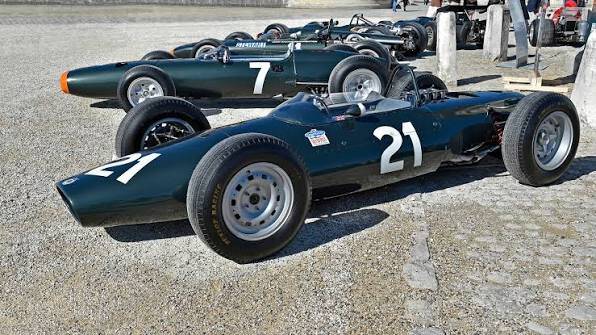
The BRM P67 was an experimental Formula One car, designed by Tony Rudd and built by the British Racing Motors team in Bourne, Lincolnshire, England, for the 1964 Formula One season.
After Ferguson withdrew from racing they offered their 4WD technology to any F1 manufacturer who was interested and, with the approaching switch to 3.0-litre engines in 1966 in mind, BRM decided to try it out. The resulting car consisted of the chassis of a BRM P261, the suspension of a P57, a 1.5-litre BRM P56 engine mounted back-to-front and Ferguson's transmission system, all put together by BRM apprentice Mike Pilbeam, who was later to find fame as a constructor of hillclimb cars.
BRM put their 4WD programme in mothballs, to concentrate on their complicated H16 engine.
Richard Attwood
p83


1966-1967
The BRM P83 was a Formula One racing car designed by Tony Rudd and Geoff Johnson and built by British Racing Motors for the new engine regulations of 1966. It used a highly unorthodox H16 engine which caused problems throughout the car's racing life, and despite the best efforts of Graham Hill and Jackie Stewart took BRM from championship contenders to also-rans, leading it to be regarded alongside the BRM Type 15 as another embarrassing failure for the British marque caused by overcomplicated engineering.
BRM decided to hedge their bets by developing their existing 16 valve 1.5 litre V8 into a 32 valve 3 litre H16 (effectively two flat 8s one on top of the other and geared together) while also developing a new 48 valve 3 litre V12 in partnership with Harry Weslake and opt for whichever turned out to be the better powerplant.
The initial 32 valve engine produced 395 horsepower at 10.250 RPM, with a later 64 valve variant raising this to 420 hp at 10.500 RPM. While these constituted reasonable figures compared to the Ferrari, Honda and Weslake V12s and the Cosworth V8 of 1967, the H16 had an extremely narrow power band and was by some distance the heaviest engine on the grid, starting out weighing 555 lb when introduced in 1966 with the final lightweight version lowering this to 398 lb.
Jackie Stewart
Graham Hill
Mike Spence
Chris Irwin
p115


1967
The BRM P115 was a Formula 1 racing car built by British Racing Motors in 1967. The car was designed by Technical Director Tony Rudd around BRM's complicated 3 litre H-16 engine, known as the P75, which had first raced in France in 1966 in a Lotus 43.
Magnesium alloy was used to reduce weight over the Duralumin P83, but the car and engine combination was still horrendously overweight compared to its F1 contemporaries, weighing over 620 kg compared to cars like the Lotus 49 and Brabham BT24 which weighed not much more than 500 kg.
Only one example was built and it was entered in the last 5 Grands Prix of 1967 in the hands of Jackie Stewart, with Mike Spence driving the car in the first race of 1968. The car failed to finish any of these races due to various engine and transmission failures.
Jackie Stewart
Mike Spence
p126


1968-1969
The BRM P126 was a Formula One racing car which raced in the 1968 and 1969 Formula One seasons. Design was contracted out to former Lotus and Eagle designer Len Terry and the three examples built were constructed by his Transatlantic Automotive Consultants company due to pressure of work at BRM.
The P126 was powered by the 3.0-liter BRM P101 V12 engine, which was the early architecture that eventually evolved into the successful P160 engine. In this early two-valves-per-cylinder layout, the V12 produced roughly 370 to 390 bhp at 9,500 rpm. The car was relatively light and slim, weighing in at approximately 540–565 kg.
The P126 layout was so successful that BRM decided to build near-identical copies within their own factory walls. These in-house cars were designated the BRM P133 and were raced alongside the P126 by drivers like Pedro Rodríguez and Jackie Oliver.
In the 1968 F1 World Championship, the car faced stiff competition from Cosworth DFV-powered machinery.
Pedro Rodriguez
Richard Attwood
Piers Courage
p133


1968-1969
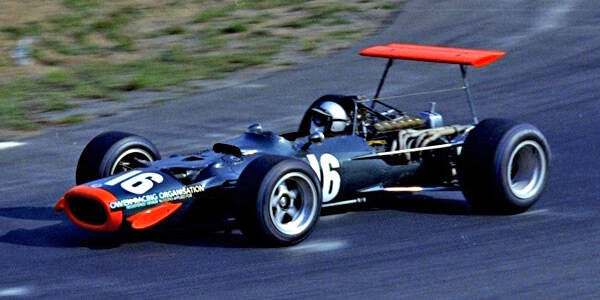
The BRM P133 was a Formula One racing car which raced in the 1968 and 1969 Formula One seasons.
The P133 was visually and structurally almost identical to the P126, utilizing the same slim aluminum monocoque design and a commercial Hewland gear box. While the P126 chassis were built by Len Terry's external company, the P133 chassis (numbered 133-01 and 133-02) were manufactured directly by BRM.
Like its sibling, the P133 relied on the 3.0-liter BRM P101 V12 engine. It delivered around 370 to 390 bhp. Although reliable compared to the older H16 engine, it lacked the outright raw horsepower of the dominant Ford-Cosworth DFV engine used by rivals Lotus and McLaren.
The P133 proved that BRM could still build a competitive conventional chassis, serving as a reliable stepping stone toward the team's early-1970s resurgence.
Pedro Rodriguez
Jackie Oliver
p138


1968-1969
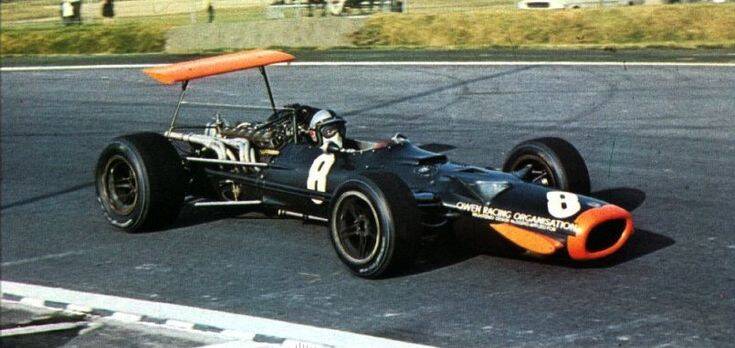
The BRM P138 was a Formula One racing car designed by Len Terry which raced in the 1968 and 1969 Formula One seasons. It was powered by a 3.0-litre V12 engine.
The P138 raced twice in 1968 but retired from both races due to engine failure, with Mexican Pedro Rodríguez at round nine in Italy and American Bobby Unser at round eleven in the United States.
BRM finished the season in fifth place in the Constructors' Championship with twenty eight points, although all had been scored by the BRM P126 and BRM P133.
In 1969 BRM finished the season in fifth place in the Constructors' Championship with seven points for the second season running, although all but two had been scored by the BRM P133 and BRM P139.
Pedro Rodríguez
John Surtees
p139


1969-1970
The BRM P139 was a Formula One racing car designed by Alec Osborn, based on the original P126/133/138 design by Len Terry, which raced during the 1969 and 1970 seasons. It was powered by a 3.0-litre V12 engine.
The car was uncompetitive, which resulted in team boss Tony Rudd being asked to resign, with his position being taken over by Tony Southgate, Tim Parnell and Aubrey Woods. After the team did not attend the French Grand Prix, a redesigned P139 appeared at the British Grand Prix, with a roomier, more bulbous cockpit and additional strengthening, giving the P139 a cylindrical appearance. The revised car was barely an improvement on the original P139, and was replaced by the P153 for the 1970 season. The P139 made one final appearance, at the 1970 South African Grand Prix, driven by George Eaton, who was effectively paying for his drive, and thus did not receive a 'works' P153.
John Surtees
Jackie Oliver
p153

1970-1972


The BRM P153 was a Formula One racing car designed by Tony Southgate for the British Racing Motors team, which raced in the 1970, 1971 and 1972 Formula One seasons. It was powered by a 3.0-litre V12 engine. Its best result was victory at the 1970 Belgian Grand Prix, where Pedro Rodríguez beat the second-placed March of Chris Amon by just 1.1 seconds. The model was first shown in BRM's traditional British racing green, but by the time it appeared on the race tracks it was in the colours of the team's sponsor, Yardley of London.
In contrast to the other British teams, amongst whom the Cosworth DFV V8 had become nearly ubiquitous, BRM chose a different route for the P153's engine. In accordance with their long-standing practice of building both chassis and engine, they installed their existing 3.0-litre, 48-valve V12 engine, that produced approximately 425 bhp, with a redline of 11.500 RPM. Magneti Marelli supplied their Dinoplex ignition system, and Lucas provided mechanical fuel injection.
Pedro Rodríguez
Jackie Oliver
Jo Siffert
Howden Ganley
Peter Gethin
Helmut Marko
Alex Soler-Roig
Reine Wisell
p160

1971-1974
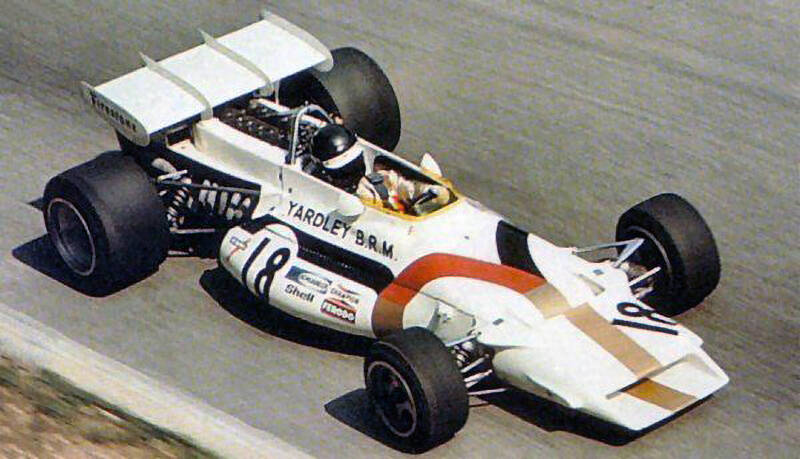
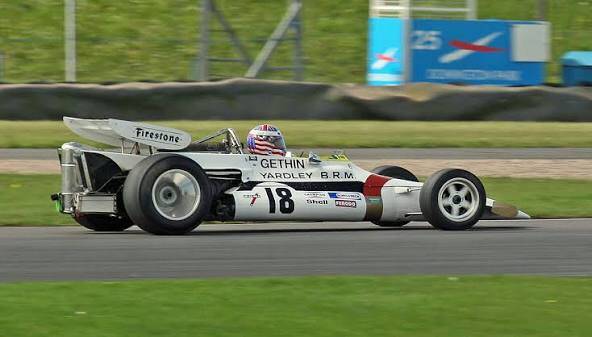
The BRM P160 is one of the most iconic and successful Formula One cars produced by the legendary British constructor British Racing Motors (BRM). Competing between 1971 and 1974, the car is celebrated for its sleek aerodynamic lines, its roaring V12 engine, and its role in some of the most memorable races in F1 history.
Designed by the renowned Tony Southgate, the P160 was an evolution of the earlier P153, utilizing an advanced aluminum monocoque chassis. It was powered by the legendary 3.0-liter BRM P142 V12 engine, producing between 440 and 450 bhp at an astonishing 11.000 to 12.000 rpm.
Because its intended successor (the P180) proved to be an unsuccessful design in 1972, BRM was forced to continuously upgrade and run the P160. It raced through multiple evolutions (B, C, D, and E variants) well into the 1974 season, before finally being replaced by the BRM P201.
Pedro Rodríguez
Jo Siffert
Peter Gethin
Howden Ganley
Jean-Pierre Beltoise
Clay Regazzoni
Niki Lauda
p180


1972
The BRM P180 was a Formula One racing car, built by BRM and designed by Tony Southgate which raced in the 1972 Formula One season. It was powered by a BRM 3.0-litre V12 engine. One of the main features of the P180 was that the radiators had moved to the rear of the car, allowing the nose of the car to be very wide and flat. It competed in five World Championship Grands Prix, with a total of seven individual entries. The car scored no World Championship points, its best finish being eighth at the 1972 Italian Grand Prix.
Peter Gethin
Howden Ganley
Jean-Pierre Beltoise
Brian Redman
p201

1974-1977


The BRM P201 is a Formula One racing car built by British Racing Motors and designed by Mike Pilbeam, which raced in the 1974 and 1975 seasons and in P201B specification in 1976 and 1977. The P201 featured a triangular monocoque, hip-level radiators, outboard front springs and inboard brakes. It used a 3.0-litre V12 engine and competed in 26 races, making 36 individual entries in total. Its best finish was second place for Jean-Pierre Beltoise at the 1974 South African Grand Prix, on the car's debut.
The BRM P201, upgraded to P201B specification, made only one appearance in each of the 1976 and 1977 seasons. At the 1976 Brazilian Grand Prix, British driver Ian Ashley qualified chassis P201/04 in 21st place and retired on lap three, with oil pump failure. BRM did not enter any further races in 1976 and after a non-appearance at the next race, in South Africa, the team was reported to have closed.
However, the team entered nine races in 1977, with the un-competitive BRM P207 qualifying only once. In addition, Australian Larry Perkins drove P201/04 at the South African Grand Prix, qualifying 22nd and finishing 15th, five laps behind winner Niki Lauda and three laps behind the rest of the field.
Of the five P201s built, four survive, and three have appeared in historic racing.
Jean-Pierre Beltoise
Chris Amon
Henri Pescarolo
p207

1977


The BRM P207 was a Formula One racing car, designed by Len Terry and constructed by British Racing Motors, which raced in the 1977 Formula One season. It was powered by a 3.0-litre V12 engine, with a claimed output of 488bhp. London-based Swiss watchmakers Rotary Watches provided sponsorship money. The car failed to score any points during the season. The team made a total of nine entries during the season, but only qualified in one instance, at the 1977 Brazilian Grand Prix. Driven by Larry Perkins, the car retired on lap one due to overheating. Its qualifying time was six seconds slower than that of the second-to-last starter. One British journalist in Brazil exclaimed that he was ashamed of being British. The car failed to appear at the season opening Argentine Grand Prix because it was too wide to fit in the hold of the aircraft that was going to transport it to South America.
The P207 was also BRM's last entry in the Formula One World Championship.
Larry Perkins
Conny Andersson
Guy Edwards
Teddy Pilette
p230

The BRM P230 was an open-wheel Formula One racing car, designed and developed by Aubrey Woods, and built by British constructor BRM, for the 1979 Aurora AFX F1 1979 British Formula One Championship, but never raced. It was due to be driven by Neil Bettridge, and like its predecessor was going to be powered by a nearly 500 hp BRM V12 engine, and run on Goodyear tyres. It later became the basis for the unraced BRM Hepworth GB-1 Can-Am car.
The p230 was finally tested by Neil but sadly never raced.


1979
and finally.....


BRM raced again as part of a project by John Mangoletsi for a Group C sports car known as the P351 with the backing of the Owen family to use the BRM name. Unfortunately the car was short lived and unsuccessful. In 1997 Keith Wiggins and Pacific Racing would resurrect the car as the BRM P301, using the BRM name only because it was technically a BRM built chassis but had no other connection to British Racing Motors. Heavily modified into an open cockpit sportscar, the car was equally unsuccessful.



Create Your Own Website With JouwWeb